



MCI completes delivery of Denver RTD's 42 Commuter Coach order
The delivery follows 2013 and 2015 orders, bringing Denver RTD’s fleet to include 161 newer MCI Commuter Coaches operating on Denver RTD’s regular-route express service and its new Flatiron Flyer BRT service between Denver and Boulder.

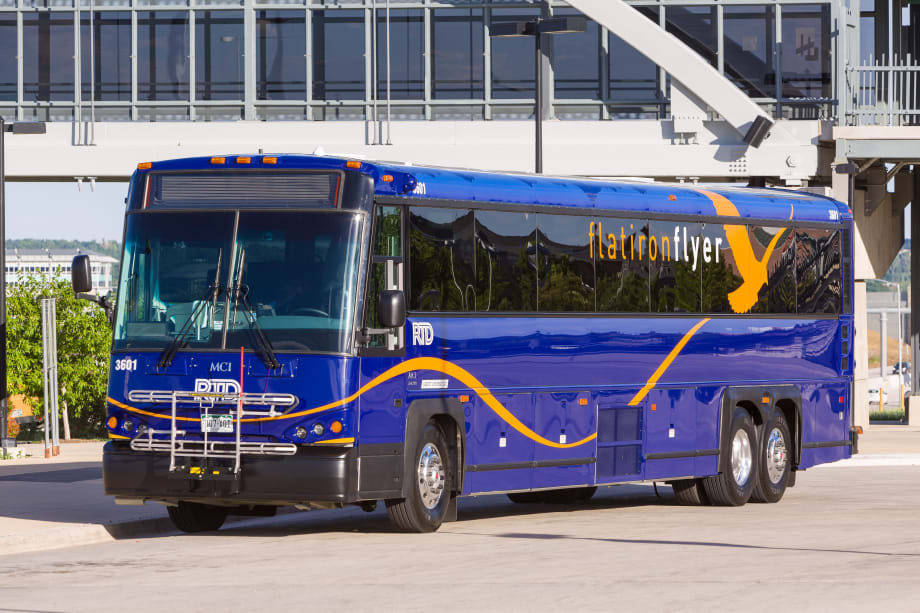
Motor Coach Industries (MCI), a subsidiary of New Flyer Industries Inc., completed the delivery of 42 D-Series Commuter Coaches to the Denver Regional Transportation District (RTD).
The delivery follows 2013 and 2015 orders, bringing Denver RTD’s fleet to include 161 newer MCI Commuter Coaches operating on Denver RTD’s regular-route express service and its new Flatiron Flyer BRT service between Denver and Boulder. The new coaches replace older models past their useful life on regular-route express service.
The Buy America-compliant MCI Commuter Coach features plush, forward-facing seating and overhead parcel racks with individual reading lights and airflow controls. Engineered to provide a comfortable, safe ride on express and highway routes, Denver RTD's new Commuter Coaches are each equipped with 110-volt/USB outlets at each seat, bike racks, a wheelchair lift and the latest clean-diesel engine technology for near-zero emissions.
Denver RTD’s FasTracks transit expansion will add 122 miles of new commuter rail and light rail, 18 miles of BRT service, 21,000 new parking spaces at rail and bus stations, and enhanced bus service across the eight-county district. Denver’s Transit Center in Union Station features light rail, a 22-gate bus concourse, a Greyhound gate and Amtrak all under one roof in a bustling urban setting.
More Bus

Scenes from APTA TRANSform & EXPO 2026
Transit leaders, manufacturers, and industry professionals gathered in Chicago to explore new technologies, share ideas, and discuss the future of public transportation.
Read More →
More Than a Summer Job: Building the Next Generation of Transit Talent
The Delaware River Port Authority and PATCO have transformed their internship program into a hands-on professional development experience that introduces students to the breadth of transportation careers — and creates a pipeline for future employees.
Read More →
LA Metro Board Awards 220 Battery-Electric Bus Contract to ENC
The contract, which is the largest base award of battery-electric buses by a U.S. transit agency, will be built in Southern California, sustaining good jobs as LA prepares to welcome the world in 2028
Read More →
Public Transit Conference Returning to GFX in 2027, Call for Papers Now Open
The Call for Papers is now open, allowing transit agency professionals and industry experts to help shape the PTC educational program by submitting session ideas for consideration.
Read More →
Indian River Transit’s Community-Focused Approach Earns National Recognition
Named APTA’s 2026 Outstanding Public Transportation System in its size category, Florida’s Indian River County transit system continues to grow ridership through fare-free service and a focus on evolving community needs.
Read More →
ENC Lands MATA Contract and More in Biz Briefs
In this edition of Biz Briefs, we spotlight the latest developments shaping the future of mobility.
Read More →
From Surviving to Thriving: Building Stronger Transportation Organizations
Bus Business Consultants founder Brian Dickson shares lessons on leadership, organizational health, and creating options for long-term success in a changing transportation industry.
Read More →
Everett Transit, Community Transit Outline Consolidation Agreement
The proposed agreement calls for a 50% increase in bus service in Everett, a new microtransit zone, continued paratransit service, and the transfer of Everett Transit operations to Community Transit.
Read More →
SEPTA Details Accelerate Vision for Transit System
The plan outlines investments in trolley modernization, new Metro and Regional Rail vehicles, accessible stations, and more frequent bus and rail service.
Read More →
Report: Transit Bus Manufacturing Supports 34,100 Jobs, $5.1B in GDP
The “Buses Mean Business” report examines the transit bus manufacturing industry’s economic footprint, supply chain, and rising demand for vehicle replacements.
Read More →