



Capital Metro retires last University of Texas shuttle bus
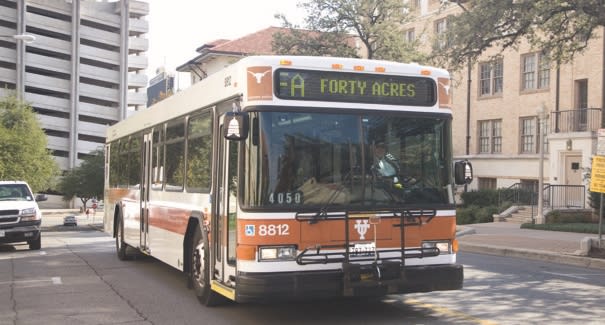
The fleet of burnt orange and white buses has served the UT campus since 1998 and has become a hallmark of Capital Metro’s longstanding partnership with the university.

Capital Metro
Capital Metro
Austin, Texas’ Capital Metro will retire the last burnt orange and white UT Shuttle bus on Tuesday. The UT Shuttles are being replaced with new blue Capital Metro-branded buses to serve The University of Texas at Austin campus.
The fleet of burnt orange and white buses has served the UT campus since 1998 and has become a hallmark of Capital Metro’s longstanding partnership with the university.
Some of the new vehicles have been in use for UT Shuttle service since the summer. They feature many upgrades over the older vehicles, including: cushioned seats; separate air conditioning systems for the bus operator and riders; HD cameras with front, back and exterior side views for added safety; Braille placards to direct visually impaired riders to priority seating; larger, secured wheelchair riding areas; bright, energy-efficient LED headlights; and additional turn signals and brake lights to make the bus more visible to other motorists.
In addition to marking the end of the fleet’s normal life cycle, the move is part of Capital Metro’s rebranding process, which uses the color blue to indicate Local service (of which UT Shuttles are a part). In the past, whenever a Local bus required maintenance or repair, Capital Metro substituted the first available bus to replace it temporarily, occasionally including the orange and white shuttle buses. This sometimes caused confusion among non-UT riders when a UT Shuttle bus pulled up to their stop.
Now that all Local service will use vehicles of the same color, buses will be interchangeable with a simple switch of the digital destination sign. UT Shuttle routes will be differentiated by the display of the interlocking UT logo on the illuminated destination sign at the front of the vehicle.
More Bus

People Movement: Dan Dipert Coaches Adds Third-Generation Leader, Keolis Names New Valley Metro VP/GM, and More
In this edition, we also cover recent appointments and announcements at the Wabtec, SilverRide, HNTB, and more, showcasing the individuals helping to shape the future of transportation.
Read More →
New York MTA Plans Largest Bus Fleet Upgrade in More Than a Decade
The agency is seeking manufacturers for 650 new CNG buses to replace aging vehicles, improve reliability, and advance its broader fleet modernization strategy.
Read More →
Building a Flexible Path to Transit Electrification
John Hroncich discusses BAE Systems’ modular and scalable approach, lessons learned from decades of real-world operations, and how agencies can identify electrification strategies that fit their fleets.
Read More →
Bus Tech Talk: Keeping Transit Technicians Ahead of the Technology Curve
LA Metro’s Obed Mejia discusses technician training, evolving maintenance technology, fleet replacement, and strategies for getting the most out of today’s transit fleets.
Read More →
Biz Briefs: RIPTA Unveils New Frontrunners, Clevland RTA Adds New Siemens, and More
In METRO's latest installment, we take a look at recent news from Siemens, Prevost, Dodge, and more partnerships making headlines across the transportation sector.
Read More →
People Movement: Holly Arnold Joins Transdev and More
In this edition, we also cover recent appointments and announcements at Pace, CamTran, MCI, and more, showcasing the individuals helping to shape the future of transportation.
Read More →
The High Cost of Transit Buses: Industry Leaders Look to Procurement Reform
Transit leaders and policymakers examine how standardized bus designs, streamlined procurement, and predictable funding could help agencies stretch budgets and deliver better service.
Read More →
The Business Voice Behind Public Transportation
As chair of APTA’s Business Members Board of Governors, Ray Melleady explains how more than 850 business members are partnering with transit agencies to advance funding, innovation, and industry-wide collaboration.
Read More →
From Surviving to Thriving: Building Stronger Transportation Organizations
Bus Business Consultants founder Brian Dickson shares lessons on leadership, organizational health, and creating options for long-term success in a changing transportation industry.
Read More →
Finding the ‘Happy Medium’: Optimizing Maintenance Without Sacrificing Reliability
The key to maintenance optimization isn’t doing less work—it’s doing the right work at the right time on the right assets.
Read More →