



Q&A: Capital Metropolitan Transportation Authority's Linda S. Watson
In September, the agency was one of the inaugural winners of METRO Magazine’s Innovative Solutions Awards at BusCon 2015 for its real-time bus and rail tracking initiative. METRO recently spoke to Watson about that project, as well as the first five years of her tenure and the industry’s opportunity to grow its profile in communities across the nation, including in Austin.

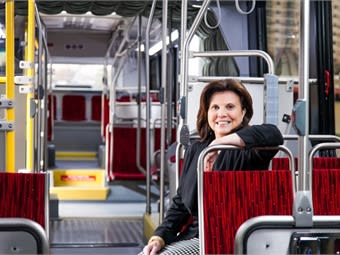
With more than 25 years of transportation-related experience, Linda S. Watson arrived at Austin, Texas’ Capital Metro in 2010, setting a high bar for service, oversight and accountability. During her tenure, MetroRail commuter line ridership has more than quadrupled, while the system has also launched new services, including its MetroRapid bus rapid transit line in 2014, and expanded its frequent service network in high-use corridors in 2015.
In September, the agency was one of the inaugural winners of METRO Magazine’s Innovative Solutions Awards at BusCon 2015 for its real-time bus and rail tracking initiative. METRO recently spoke to Watson about that project, as well as the first five years of her tenure and the industry’s opportunity to grow its profile in communities across the nation, including in Austin.
You recently marked five years at Capital Metro, reflect on what some of your early goals were and how you were able to realize them?
Prior to my arrival, the Texas Sunset Commission performed an audit of Capital Metro recommending improvements in several areas. Many of the recommendations subsequently became legislation so implementing them became a key focus and top priority for the agency. In addition, it was important to address Capital Metro’s image in the community, while strengthening our leadership team. In meeting with employees on day one, I stressed the importance of two things, which became our mantra: ‘raise the bar internally and improve our credibility externally.’ We made a lot of changes to achieve this, which included increasing our financial sustainability and transparency, changing the organizational culture, and strengthening our business practices and policies.
What have been some of your greatest challenges?
The Sunset Audit and subsequent legislation required us to either bring all our operations employees, in-house, as Capital Metro employees or contract out 100 percent of the service to private providers. Because union approval was needed for either option, the path that was chosen was contracting out. This was by far the biggest and most complex challenge the agency had faced in some time. There were conflicting state and federal laws and 13C protections that seemed impossible to overcome: a government-sponsored pension plan that could not be carried over to the private sector, and a significant amount of employee communication that needed to occur with workers concerned about their future. In the end, the board made some very difficult decisions, the employees excelled in addressing the issues and the contractors exceeded our expectations; resulting in a huge success for the organization.
Discuss the importance of making real-time info available to customers?
Real-time information, which became available on the entire Local bus fleet in February, and MetroRapid and MetroRail last year, has allowed us to offer customers the type of technology relevant to their busy lives today. Up-to-the-minute information can now be easily accessed on smartphones and other smart devices, via real-time signage at MetroRapid and MetroRail stations, and on our website, so riders don’t have to wonder when their next bus or train will arrive/depart. This gives our customers a whole new level of reliability and predictability so they can reduce wait times and have more flexibility in their schedules. The real-time data is enabled by GPS technology, which signals a minute-by-minute countdown at each bus or rail stop for the next departures. Capital Metro worked for several years to provide this AVL (Automatic Vehicle Location) technology and, in addition to providing this information to our customers through our systems, it is available to external app developers and other tech companies via the open data portals at the State of Texas, City of Austin and Capital Metro websites.
With more of a focus on sustainability and changing demographics, public transit has an opportunity to grow its profile, what can the industry do to capitalize on this?
We couldn’t agree more and, certainly, the Austin area is both a very ‘green’ community and one that is seeing demographic changes as fast as or faster than any other metropolitan area in the country. Several years ago, we hired a full-time sustainability officer and we’ve been making very good progress in this area. We’re an original signatory to the APTA Sustainability Commitment and have advanced to the Silver Level certification. We have participated in the FTA Environmental and Sustainability Management System training and are working toward ISO 14001-certification. These efforts, as well as the ‘built-in sustainability’ of transit, are an important appeal to our community for using transit.
As for the demographics, we have seen a massive influx of new residents. Many are moving from other communities with strong transit and becoming regular Capital Metro customers, helping grow our ridership. On the other hand, the rapid growth and increasing cost of housing in the core has pushed many of our traditional riders out to suburban areas with little or no transit service, which has hurt our ridership. Adding to this, new mobility options, such as Uber, Lyft and bikesharing, have arrived on the scene, which appeals to our large university and technology sector population. All of these changes have created opportunities to improve the appeal of our services with technology, transit priority treatments and ‘smart trip’ strategies, as well as to develop partnerships with these new options for first- and last-mile collaboration.
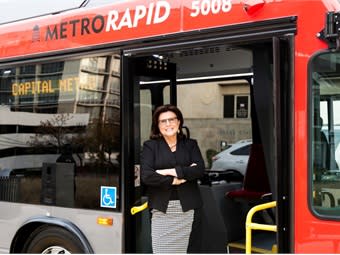
MetroRapid service has been a game changer for the greater Austin area. The two routes, which serve the densest and highest ridership transit markets in the region, crisscross through the heart of Austin, giving people the ability to travel efficiently and quickly, while making easy transit connections to over a dozen other routes downtown. MetroRapid’s routes are positioned in quickly-growing corridors and are an important complement to our greater transit network, including MetroRail and MetroExpress service. MetroRapid has provided over 4.3 million rides in less than two years, and ridership continues to grow. Along with the launch of service, we introduced a mobile app that lets riders buy and use passes on their smart devices, and also plan trips and access real-time data. The app has been downloaded more than 200,000 times and has sold nearly $3 million in passes. Our high-frequency route network, which launched in June, expanded service to every 15 minutes on five of our highest-demand routes. Along with the two MetroRapid routes, we now have a network of frequent service options in every direction of our service area, offering riders multiple transfer points, reliability and convenience. Because of this, we are seeing a steady increase in ridership.
Where would you like to see Capital Metro in the next five years?
Traffic is a daily challenge for our workforce, and it’s only getting worse as hundreds of people and cars move to Central Texas each week. As the region grows, our buses are increasingly stuck in traffic and it is standing-room only on our commuter rail line during peak. We have several projects in the works with the potential for a big impact, however. Thanks to a partnership with the Central Texas Regional Mobility Authority, our MetroExpress service will begin using managed lanes next year, giving buses a significant advantage over autos stuck in traffic. The following year, we will be doubling the capacity and frequency on MetroRail, offering more trips at faster travel times. We also have short and long-term Park & Ride plans involving more than a dozen new or upgraded facilities and are working with the Texas DOT to incorporate Park & Ride facilities convenient to their managed lanes project in a major commuter corridor.
Finally, our hope is that collaboration with the City of Austin will result in additional priority treatments that encourage transit use. Without bus lanes and/or other priority treatment, people must choose between congested automobiles or congested bus travel, not much of a choice these days. Finishing these projects and others, combined with a comprehensive operations analysis and other studies, will help us further define our future services and prioritize the many demands and needs of our rapidly-growing community.
More Management

Brian Dickson on Building Stronger, More Resilient Transportation Organizations
Bus Business Consultants Founder Brian Dickson discusses the leadership principles, operational discipline, and strategic planning that separate transportation companies positioned for long-term success from those stuck in survival mode.
Read More →
LA Metro Breaks Ground on Vermont BRT Project
The 12.4-mile corridor is projected to serve 66,200 daily riders, reduce travel times by up to 24%, and create the nation's busiest bus rapid transit corridor.
Read More →
Building Stronger Leaders, More Resilient Transit Teams
Dr. Carol Parker Walsh discusses leadership development, employee retention, workplace culture, and preparing transit’s workforce for AI and automation.
Read More →
Roman Cornell on ABC Companies’ Evolution and the Future of Passenger Transportation
The company’s CEO discusses carrying forward a third-generation family legacy, ABC’s continued evolution in passenger transportation, support for increasingly complex fleets, and how technology and continued investment could help operators improve uptime.
Read More →
CATS Launches West Charlotte Microtransit Zone, Expands Transit Services
The new microtransit zone connects residents to key destinations as Charlotte Area Transit System rolls out the first phase of its 2055 Transit System Plan.
Read More →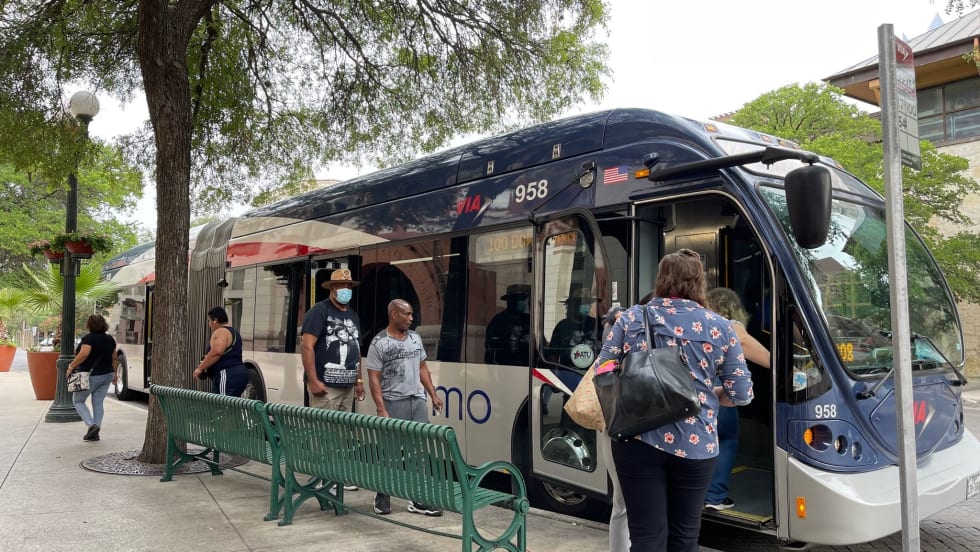
VIA Bus Ridership Grows 10.1% Through August 2026
San Antonio's VIA Metropolitan Transit reported the highest bus ridership growth among major Texas transit systems. Federal Transit Administration data ranked it second among the nation's 50 largest transit systems.
Read More →
CSA Group Releases Climate Resilience Standard for Transit, Passenger Rail
Developed with support from the Standards Council of Canada, CSA D700 guides assessing climate-related risks and planning adaptation measures for transit and passenger rail systems.
Read More →
ETA CEO John Maglio on Transit Technology, Innovation, and Building Agency Trust
ETA founder and CEO John Maglio explores the evolution of transit technology, the importance of reliable systems, and how stronger partnerships can help agencies improve operations and the passenger experience.
Read More →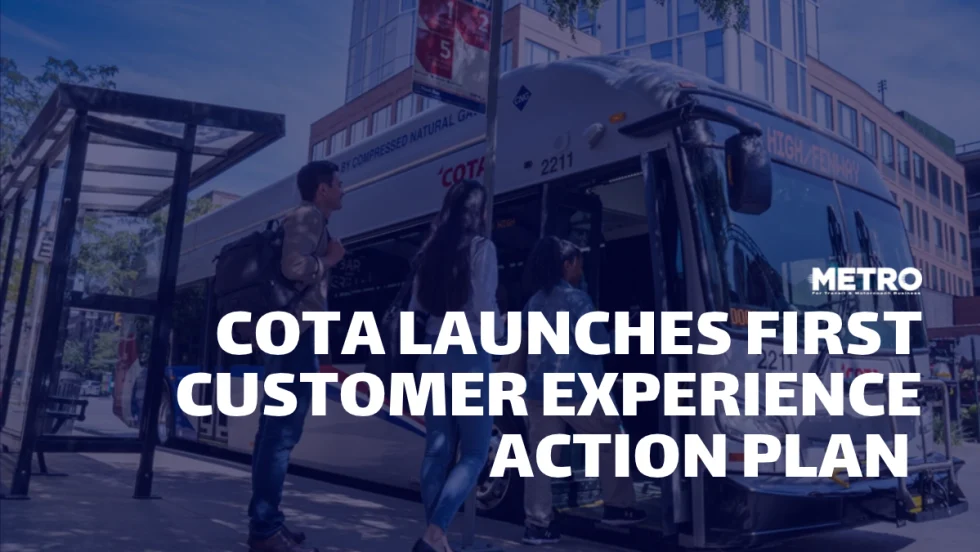
COTA Launches First Customer Experience Action Plan to Improve Transit Service
The new plan outlines improvements to service reliability, accessibility, communication, and the overall rider experience across Central Ohio's transit system.
Read More →
LA Metro September Ridership Climbs 3.9%, Led by Rail Growth
The agency recorded more than 27.2 million boardings, with rail ridership increasing 12.4% year over year and the D Line posting the largest gains.
Read More →