



Sixteen Calif. mayors say their city buses should be zero-emission
The heavy-duty transportation sector contributes a third of California’s smog-forming nitrogen oxides.


The heavy-duty transportation sector contributes a third of California’s smog-forming nitrogen oxides. Photo: Public Domain

The heavy-duty transportation sector contributes a third of California’s smog-forming nitrogen oxides. Photo: Public Domain
More than a dozen mayors from across California sent a letter to the California Air Resources Board (CARB) expressing their support for zero-emission transit buses and strong state action to accelerate deployment in their communities.
Representatives from the Union of Concerned Scientists (UCS) and the Advanced Clean Transit Coalition — a coalition of environmental, public health, science, labor and vehicle technology groups — presented the letter to CARB officials on Jan. 30, 2017. CARB is considering a new state regulation called the Innovative Clean Transit rule that would require zero-emission vehicles to make up at least 25% of transit agency bus purchases by 2020, and 100% of all new purchases by 2029.
“Not only can electric buses help California rise to meet our state’s public health challenges, but a swift transition to zero-emission buses will also help meet California’s goal of reducing greenhouse gas emissions to 40 percent below 1990 levels by 2030,” the mayors wrote. “A strong regulatory signal from CARB would spur increased production and competition, and continue to lower the purchase price of zero-emission buses.”
The heavy-duty transportation sector, which includes transit buses, freight trucks and delivery trucks, contributes a third of California’s smog-forming nitrogen oxides, the largest single source of this type of air pollution, and represents seven percent of California’s global warming emissions.
Compared to diesel and natural gas buses, battery powered electric buses on today’s grid in California emit 70% less global warming emissions, and hydrogen fuel cell electric buses emit 50% less emissions, according to UCS. Both battery powered electric and hydrogen fuel cell buses have no tailpipe pollution.
“Transportation electrification is among the best tools we have to fight climate change, and converting buses is the tip of the spear,” said Jimmy O’Dea, senior vehicles analyst at UCS. “Because they have similar components, if buses can electrify so can heavy-duty trucks.”
In the last two years, seven California transit agencies have committed to 100% zero-emission bus fleets. These transit agencies, including Foothill Transit, Antelope Valley Transit Authority, San Joaquin Regional Transit District, and Los Angeles County Metropolitan Transportation Authority (LA Metro), have committed about 3,500 buses — one-third of all transit buses in California — to be electrified by 2040 or earlier. These seven agencies bring the total number of California agencies already operating or that have zero-emission buses on order to 21.
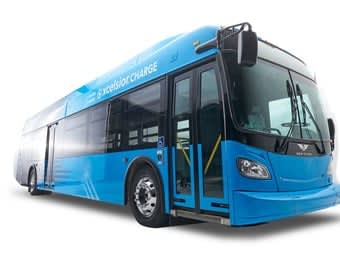
New Flyer CHARGE buses are part of NY MTA electric bus testing and evaluation program. Photo: New Flyer
“The technology exists today to convert our bus fleets from fossil fuels to zero-emission technologies,” said O’Dea. “Last year’s decision by LA Metro, the second-largest bus fleet in the country, to electrify by 2030 added momentum to this statewide effort to reduce air pollution and defend against the worst impacts from climate change.”
The following California mayors, representing nearly eight million people, have signed the letter:
Mayor Jesse Arreguín, Berkeley
Mayor Michael Brownrigg, Burlingame
Mayor Mary Salas, Chula Vista
Mayor Catherine Blakespear, Encinitas
Mayor Rey León, Huron
Mayor Serge Dedina, Imperial Beach
Mayor R. Rex Parris, Lancaster
Mayor Racquel Vasquez, Lemon Grove
Mayor Robert García, Long Beach
Mayor Eric Garcetti, Los Angeles
Mayor Libby Schaaf, Oakland
Mayor Darrell Steinberg, Sacramento
Mayor Sam Liccardo, San José
Mayor Helene Schneider, Santa Barbara
Mayor Michael Tubbs, Stockton
Mayor Erik Nasarenko, Ventura
Both Oakland Mayor Schaaf of Oakland and Imperial Beach Mayor Dedina represent cities that also filed lawsuits in state court last year against petroleum companies for climate change damages.
More Bus

People Movement: Dan Dipert Coaches Adds Third-Generation Leader, Keolis Names New Valley Metro VP/GM, and More
In this edition, we also cover recent appointments and announcements at the Wabtec, SilverRide, HNTB, and more, showcasing the individuals helping to shape the future of transportation.
Read More →
New York MTA Plans Largest Bus Fleet Upgrade in More Than a Decade
The agency is seeking manufacturers for 650 new CNG buses to replace aging vehicles, improve reliability, and advance its broader fleet modernization strategy.
Read More →
Building a Flexible Path to Transit Electrification
John Hroncich discusses BAE Systems’ modular and scalable approach, lessons learned from decades of real-world operations, and how agencies can identify electrification strategies that fit their fleets.
Read More →
Bus Tech Talk: Keeping Transit Technicians Ahead of the Technology Curve
LA Metro’s Obed Mejia discusses technician training, evolving maintenance technology, fleet replacement, and strategies for getting the most out of today’s transit fleets.
Read More →
Biz Briefs: RIPTA Unveils New Frontrunners, Clevland RTA Adds New Siemens, and More
In METRO's latest installment, we take a look at recent news from Siemens, Prevost, Dodge, and more partnerships making headlines across the transportation sector.
Read More →
People Movement: Holly Arnold Joins Transdev and More
In this edition, we also cover recent appointments and announcements at Pace, CamTran, MCI, and more, showcasing the individuals helping to shape the future of transportation.
Read More →
The High Cost of Transit Buses: Industry Leaders Look to Procurement Reform
Transit leaders and policymakers examine how standardized bus designs, streamlined procurement, and predictable funding could help agencies stretch budgets and deliver better service.
Read More →
The Business Voice Behind Public Transportation
As chair of APTA’s Business Members Board of Governors, Ray Melleady explains how more than 850 business members are partnering with transit agencies to advance funding, innovation, and industry-wide collaboration.
Read More →
From Surviving to Thriving: Building Stronger Transportation Organizations
Bus Business Consultants founder Brian Dickson shares lessons on leadership, organizational health, and creating options for long-term success in a changing transportation industry.
Read More →
Finding the ‘Happy Medium’: Optimizing Maintenance Without Sacrificing Reliability
The key to maintenance optimization isn’t doing less work—it’s doing the right work at the right time on the right assets.
Read More →