



Calif. surpasses $500M for zero-emission vehicle investments
The funding is from a statewide program that puts billions of cap-and-trade dollars to work reducing GHGs, strengthening the economy, and improving public health and the environment — particularly in disadvantaged communities.

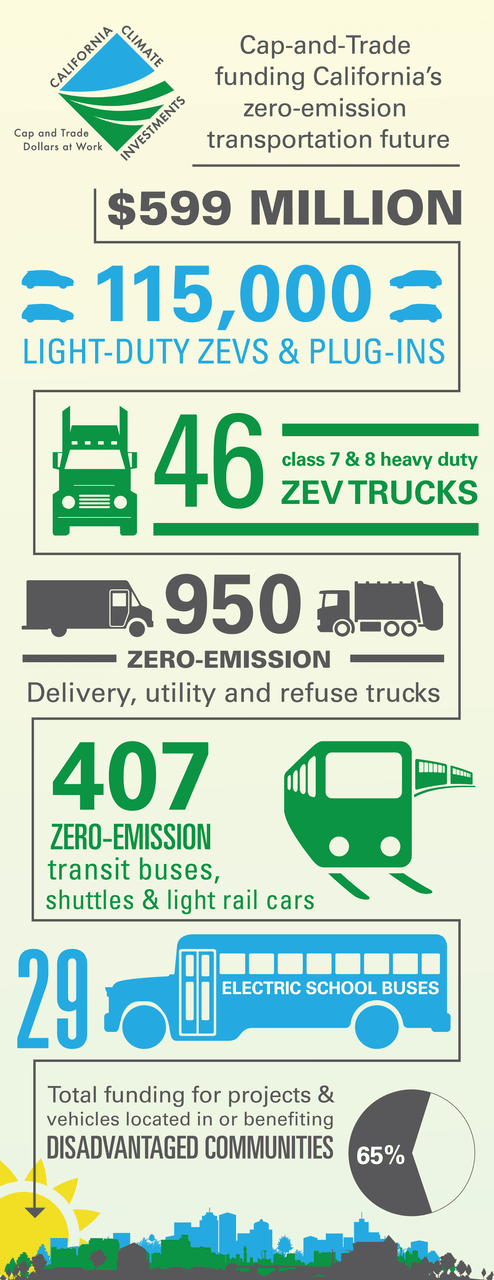
The California Air Resources Board announced that California Climate Investments in zero-emission vehicles have reached $599 million since 2013, putting hundreds of thousands of ultra-clean cars, and entire fleets of zero-emission trucks and buses on California roads and highways. The announcement was made at the annual Advanced Clean Transportation Expo in Long Beach.
The funding is from California Climate Investments, a statewide program that puts billions of cap-and-trade dollars to work reducing greenhouse gas emissions, strengthening the economy, and improving public health and the environment — particularly in disadvantaged communities.
Since the transportation sector overall is by far the largest contributor to the state’s total annual greenhouse gas emissions, a major focus of the climate investment program has been supporting the development and deployment of next-generation zero-emission trucks, cars, and buses.
The investments support a wide range of next-generation vehicles, including electric school buses in Sacramento, electric yard trucks in Fontana, hydrogen-powered buses in the Coachella Valley, and a fleet of electric delivery trucks for Goodwill Industries in the Bay Area. More than 65% of the investments are for projects or vehicles that are in, or benefit, disadvantaged communities.
One major focus of these investments is to accelerate the market for the next generation of clean, heavy-duty trucks, and buses, both those that run on electricity and on hydrogen. Several are demonstration projects, such as putting newly built zero-emission trucks to work side-by-side with existing diesel trucks in rail yards or distribution centers to fully determine their benefits and capabilities in those demanding work environments.
In many cases, it is estimated that the overall operating costs of the zero-emission trucks and buses will be less than fossil-fuel powered trucks over the life of the vehicle because of lower fuel and maintenance costs. The California Climate Investments are designed to help drive down the upfront purchase price of the cleaner zero-emission trucks, and as their numbers increase, that cost will drop even further due to economies of scale.
Another goal of these investments is to support the market for zero-emission cars throughout the state, and making them available to residents of low-income communities. Thanks to the state’s zero-emission regulation and incentives, California — with 283,000 zero-emission and plug-in vehicles to date — comprises more than 40% of national zero-emission car sales, even though the state has only 10% of the nation’s population.
Many of these cars, trucks and buses are built in California. Tesla, which manufactures electric cars in the Bay Area; BYD, which builds buses in Lancaster; and Proterra, which builds zero-emission vehicles in the City of Industry, together employ more than 12,000 workers building the cars and buses that are helping to clean California’s air and fight climate change.
The cap-and-trade program also creates a financial incentive for industries to invest in clean technologies and develop innovative ways to reduce pollution. California Climate Investments projects include affordable housing, renewable energy, public transportation, zero-emission vehicles, environmental restoration, more sustainable agriculture, recycling, and much more. At least 35% of these investments are made in disadvantaged and low-income communities.
More Technology

From Hardware to Digital Partner: Luminator Charts Its Next Chapter
CEO Magnus Friberg discusses Luminator’s shift toward becoming a digital partner, the growing importance of software and interoperability, and how AI can help agencies improve operations and passenger experience.
Read More →
Beyond the Checklist: A Structured Approach to Transit Maintenance
Reliability-Centered Maintenance helps transit agencies move beyond routine checklists to focus limited resources on the assets and failures that have the greatest impact on safety, reliability, and service.
Read More →
NJ TRANSIT Advances Bus Technology Upgrades Across Statewide Fleet
More than 1,500 buses now feature upgraded technology designed to improve arrival predictions and provide free Wi-Fi, with deployment expected to reach nearly 2,000 buses by the end of 2026.
Read More →

Building a Flexible Path to Transit Electrification
John Hroncich discusses BAE Systems’ modular and scalable approach, lessons learned from decades of real-world operations, and how agencies can identify electrification strategies that fit their fleets.
Read More →
Biz Briefs: Alstom Lands Canadian Contract, LYT to Supply California TSP, and More
In METRO's latest installment, we take a look at recent news from Complete Coach Works, Beep, FlixBus, and more partnerships making headlines across the transportation sector.
Read More →
From Legacy Silos to Conversational Intelligence
What if transit leaders could ask any operational question and get a trusted answer in seconds? Conversational AI is transforming how agencies use their data.
Read More →
USDOT Announces Rail Vehicle Replacement Grants, Chattanooga AV Shuttle Funding
More than $191 million in federal funding will help three transit agencies replace aging rail vehicles and support a new autonomous shuttle service in Chattanooga.
Read More →
Bus Tech Talk: Keeping Transit Technicians Ahead of the Technology Curve
LA Metro’s Obed Mejia discusses technician training, evolving maintenance technology, fleet replacement, and strategies for getting the most out of today’s transit fleets.
Read More →
Biz Briefs: RIPTA Unveils New Frontrunners, Clevland RTA Adds New Siemens, and More
In METRO's latest installment, we take a look at recent news from Siemens, Prevost, Dodge, and more partnerships making headlines across the transportation sector.
Read More →
Why Simulating Pedestrian Movement Has Become Essential for Modern Rail Stations
Pedestrian microsimulation is helping rail planners identify bottlenecks, test station designs, and prepare complex transit hubs for growing passenger volumes.
Read More →