



Streetcars: The Transit System America Threw Away
D.C.'s Dupont Circle’s ghostly streetcar station is another reminder that America once had an extensive and efficient interurban transit system. Now, as cities from Buffalo to San Diego look to light rail, it’s worth thinking about the astonishing transit system we built and then threw away.

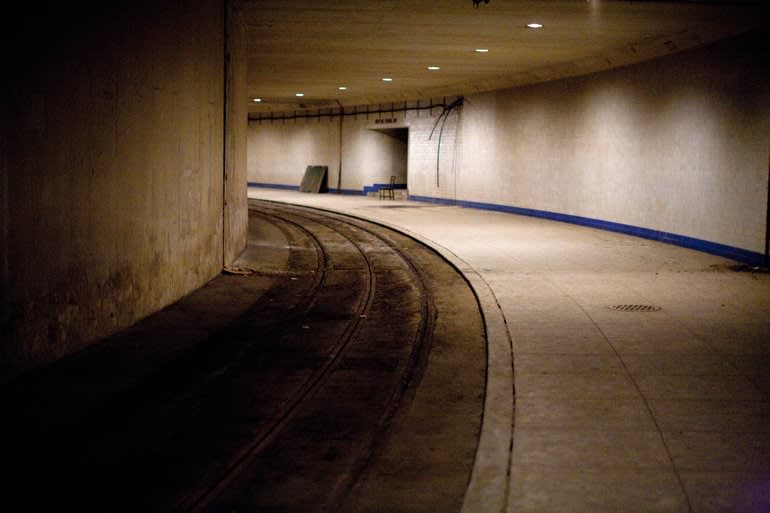
Dupont Circle Station in D.C. David Kidd/Governing
Dupont Circle Station in D.C. David Kidd/Governing
(By John Martin - This story was originally posted by Governing)
In the 1951 sci-fi movie "The Day the Earth Stood Still," pedestrians are seen descending staircases on the edge of Dupont Circle in Washington, D.C. These days, the stairs are still there, but now they’re blocked off. They led to a once-busy 75,000-square-foot below-ground streetcar station built in 1949. The station has been closed since 1962.
Dupont Circle’s ghostly streetcar station is another reminder that America once had an extensive and efficient interurban transit system. Now, as cities from Buffalo to San Diego look to light rail — today’s iteration of the streetcar, which itself evolved from the horse-drawn omnibus — it’s worth thinking about the astonishing transit system we built and then threw away.
RELATED:Light rail vehicle market to reach $11 billion by 2020
A century ago, there were nearly 34,000 miles of streetcar tracks connecting neighborhoods to downtowns, and towns to neighboring towns. (I’ve been told that it was possible to travel from Pittsburgh to Philadelphia on local streetcars and trolleys, although that would have been one long and unpleasant trip.)
Overwhelmingly, those tracks were built by private investors. In the late 19th and early 20th century, it was streetcars, not automobiles, that created the first suburbs.
If you live in an urban area, the evidence is all around you. I live in D.C., not far off Connecticut Avenue, which is broad and gently graded because of the streetcars that once ran along it. The Chevy Chase Land Co. built Connecticut Avenue across miles of farmland to take people from the suburb that still bears the company’s name to downtown D.C., eventually linking up to that now-deserted Dupont Circle station.
Connecticut Avenue’s streetcar tracks are long gone, but down in Georgetown, you can take a bumpy car ride along blocks of cobblestoned side streets where trolley rails remain in place.
Upriver from Georgetown, broad, parklike medians run through the affluent Palisades neighborhood, reminding residents of the trolleys that once rattled past their houses. Here and there, abandoned steel trestles rust away.
You don’t have to be an archaeologist to unearth bits of the transportation system that carried so many of our ancestors around. Some parts of it are still in use: Automobiles now zip under Manhattan’s Park Avenue via the Murray Hill Tunnel, which was built for streetcars. And vestiges of some of America’s original streetcar systems remain in daily operation, most notably in New Orleans and San Francisco.
San Francisco’s cable cars operate mainly for the pleasure of tourists. I rode on one of the successors to the cable cars, the hybrid light rail/streetcar system known as Muni Metro, just after it went into service in 1982. A couple of decades later, I rode it again, and those once-shiny cars were showing some age with dents and graffiti. That’s natural; things fall apart. Which leads me to wonder: Will there come a time when our descendants stumble across the abandoned remnants of the light rail lines that we’re so busy building today?
After the Great Depression, streetcars began a slow decline, falling victim to the automobile. But trolleys and streetcars weren’t a failure. They lasted from the early 1800s into the 1960s. It’ll be a long time before we’ll know if the light rail we’re building now can match a record like that.
More Management

LIT Marks 10-Year Milestone at Annual Summit
Hosted by the COTA from September 10 to 13, the Summit carried the theme “Celebrating 10 Years of Excellence, Leadership, and Impact,” with every part of the program honoring the people, agencies, and partners who built LIT over its first decade.
Read More →
People Movement: Dan Dipert Coaches Adds Third-Generation Leader, Keolis Names New Valley Metro VP/GM, and More
In this edition, we also cover recent appointments and announcements at the Wabtec, SilverRide, HNTB, and more, showcasing the individuals helping to shape the future of transportation.
Read More →
METRO Opens Submissions for 2026 Motorcoach Awards
Nominations are now being accepted for METRO Magazine’s Operator of the Year and Innovative Operator of the Year awards.
Read More →

New York MTA Advances Final Contract for Second Avenue Subway Expansion
Contract Four is the largest in the Second Avenue Subway Phase 2 project and includes construction of station infrastructure, tracks, and signals for the subway expansion, MTA officials said. Work on Contract Four will begin in 2027.
Read More →
Transit Agencies Highlight Safety Gains at National Summit
Leaders from 15 major transit systems shared crime-reduction results and safety initiatives while discussing the role of continued federal support.
Read More →
NITA Names New Leadership, Expands Reduced-Fare Program at First Board Meeting
The new regional transit authority appointed its first board chair and interim executive director while extending reduced fares across CTA, Metra, and Pace for eligible riders.
Read More →
Beyond the Checklist: A Structured Approach to Transit Maintenance
Reliability-Centered Maintenance helps transit agencies move beyond routine checklists to focus limited resources on the assets and failures that have the greatest impact on safety, reliability, and service.
Read More →
APTA 2026 Nominating Committee Selects Leadership Slate, Names Chair and Vice Chair Nominees
Leadership changes will help shape the association’s priorities and its representation of the transportation industry during the 2026–2027 term.
Read More →
DART Launches Major Security, Fare Enforcement Initiative
The 90-day demonstration will deploy coordinated security teams at five light rail stations while testing controlled access and gathering data to guide future investments.
Read More →
Advancing Fare Collection Through Technology and Innovation
Learn about delivering 1300 gates at 91 stations while managing fare evasion. Explore the large scale deployment, solution customization and real-world results that affect the region. Prepare for deployment in your region now.
Read More →