



Americans support gas tax hike, spending revenue on public transit, survey says
One of the proposed federal bills, H.R. 1846, would index the gas tax to inflation and create a bi-partisan, bi-cameral transportation commission that would provide long-term funding of the Highway Trust Fund. Another proposed bill, H.R. 680, would increase the gas tax by five cents per year for three years.


Photo: Alexander Rentsch/Flickr

Photo: Alexander Rentsch/Flickr
Americans are willing to pay increased taxes at the gas pump if the revenue is invested in specific transportation improvements, according to the results of a new Mineta Transportation Institute (MTI) national telephone survey. These results indicate that Americans would likely support proposed federal legislation for funding transportation infrastructure.
The Mineta survey was directed by Asha Weinstein Agrawal, PhD, and Hilary Nixon, PhD. The top-line survey results are available at http://bit.ly/1El8aH3, along with a figure showing the support level for each tax option polled.
One of the proposed federal bills, H.R. 1846, would index the gas tax to inflation and create a bi-partisan, bi-cameral transportation commission that would provide long-term funding of the Highway Trust Fund (HTF). Another proposed bill, H.R. 680, would increase the gas tax by five cents per year for three years.
Photo: EROL/Flickr
“Conventional wisdom says that Americans strongly oppose any increase in the federal gas tax,” said Dr. Agrawal. “However, this survey shows that significant majorities want the government to provide better transportation infrastructure, are willing to pay for improvements, and want gas tax revenue spent on public transportation as well as on roads and highways.”
Voters will support targeted purposes
For example, one section of the survey tested whether people would support a ten-cent increase in the federal gas tax, which is currently 18.4 cents per gallon. Only 31% of respondents supported a gas tax increase for general transportation improvements, with no other information given. By contrast, 50% or more supported gas tax increases dedicated to more targeted transportation purposes such as improving maintenance (71% support), improving safety (64%), or reducing local air pollution (52%).
When asked whether or not gas tax revenue should be used to pay for public transit, a near “supermajority” (65%) said yes. This and other survey findings confirm that Americans desire a transportation system that includes good public transit as well as safe and well-maintained roads and highways.

Photo: Patrick Emerson/Flickr
“They envision a transportation future with a multimodal, safe, and well-maintained system,” said Dr. Agrawal. “More than 80% of respondents said that government should prioritize expanding and improving local public transit. Also, 91% want government to improve the safety of the transportation system, and 97% want government to prioritize maintenance of streets, roads, and highways.”
MTI has conducted several similar surveys
The random-digit-dial telephone survey tested national support for federal gas, mileage, and sales tax options to raise revenue for transportation purposes. Multiple variations on the mileage-tax and gas-tax concepts were presented to test relative support levels among the options. Mineta Transportation Institute has conducted similar surveys annually since 2010.
A total of 1,503 adults completed the survey in either English or Spanish between February 26, 2015, and March 31, 2015. For the full sample, which included both land-line and cell-phone numbers, the margin of error was +/- 2.53 percentage points at the 95% confidence level.
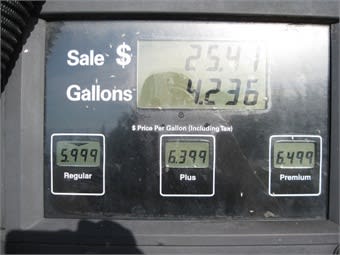
AmeriCo Gas Station in Gorda, Calif. Photo: Charles Hathaway/Flickr
The full research report, to be issued Thursday, June 25, will provide in-depth analysis of the survey results, reviewing trends in support across the six annual surveys, and investigating how the revealed opinions may vary according to respondents’ socio-demographic, political, and travel-behavior characteristics.
More Management
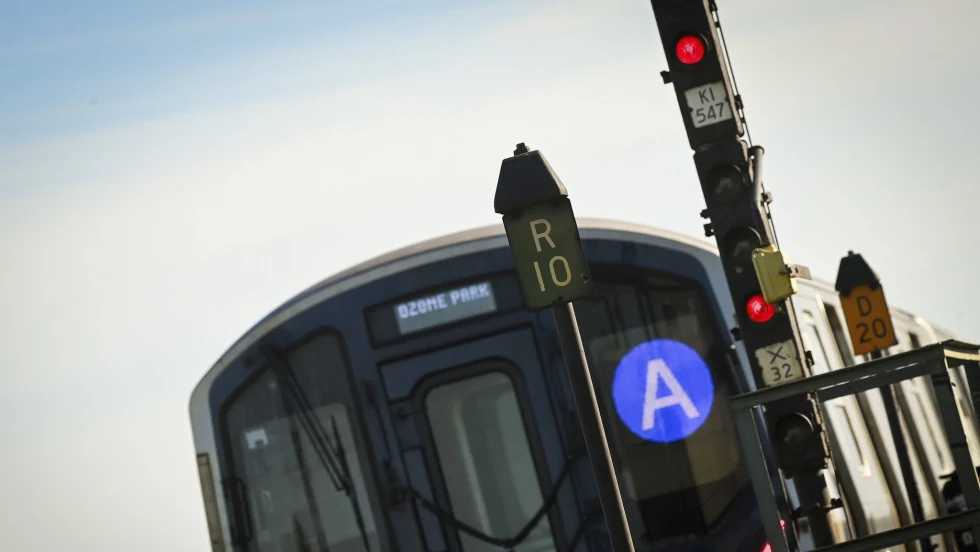
New York MTA Launches Historic $1.9B Signal, Track Modernization Project
Funded in part by congestion pricing revenue, the project will replace nearly century-old signals along the A and C lines in Brooklyn and Queens.
Read More →
Brian Dickson on Building Stronger, More Resilient Transportation Organizations
Bus Business Consultants Founder Brian Dickson discusses the leadership principles, operational discipline, and strategic planning that separate transportation companies positioned for long-term success from those stuck in survival mode.
Read More →
LA Metro Breaks Ground on Vermont BRT Project
The 12.4-mile corridor is projected to serve 66,200 daily riders, reduce travel times by up to 24%, and create the nation's busiest bus rapid transit corridor.
Read More →
Building Stronger Leaders, More Resilient Transit Teams
Dr. Carol Parker Walsh discusses leadership development, employee retention, workplace culture, and preparing transit’s workforce for AI and automation.
Read More →
Roman Cornell on ABC Companies’ Evolution and the Future of Passenger Transportation
The company’s CEO discusses carrying forward a third-generation family legacy, ABC’s continued evolution in passenger transportation, support for increasingly complex fleets, and how technology and continued investment could help operators improve uptime.
Read More →
CATS Launches West Charlotte Microtransit Zone, Expands Transit Services
The new microtransit zone connects residents to key destinations as Charlotte Area Transit System rolls out the first phase of its 2055 Transit System Plan.
Read More →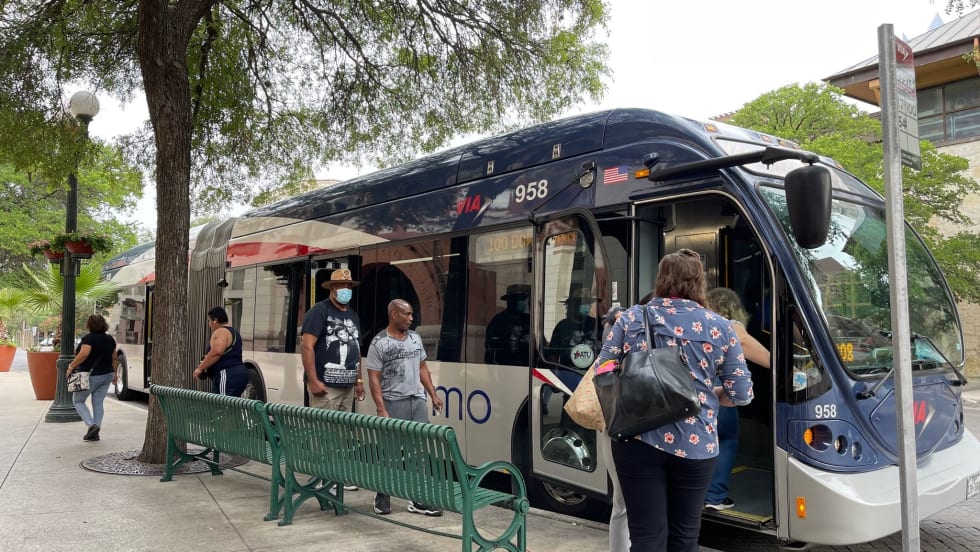
VIA Bus Ridership Grows 10.1% Through August 2026
San Antonio's VIA Metropolitan Transit reported the highest bus ridership growth among major Texas transit systems. Federal Transit Administration data ranked it second among the nation's 50 largest transit systems.
Read More →
CSA Group Releases Climate Resilience Standard for Transit, Passenger Rail
Developed with support from the Standards Council of Canada, CSA D700 guides assessing climate-related risks and planning adaptation measures for transit and passenger rail systems.
Read More →
ETA CEO John Maglio on Transit Technology, Innovation, and Building Agency Trust
ETA founder and CEO John Maglio explores the evolution of transit technology, the importance of reliable systems, and how stronger partnerships can help agencies improve operations and the passenger experience.
Read More →
COTA Launches First Customer Experience Action Plan to Improve Transit Service
The new plan outlines improvements to service reliability, accessibility, communication, and the overall rider experience across Central Ohio's transit system.
Read More →