




Related: Are big-city transit systems too complex for human minds?
APTA: Investment in public transportation will deliver double the return
The "Public Transportation's Role in the Knowledge Economy" study looks at the economic impact of public transportation in select regions and does a deeper dive into how public transit supports emerging tech scenes in three areas.
March 11, 2016
All Aboard Ohio
3 min to read
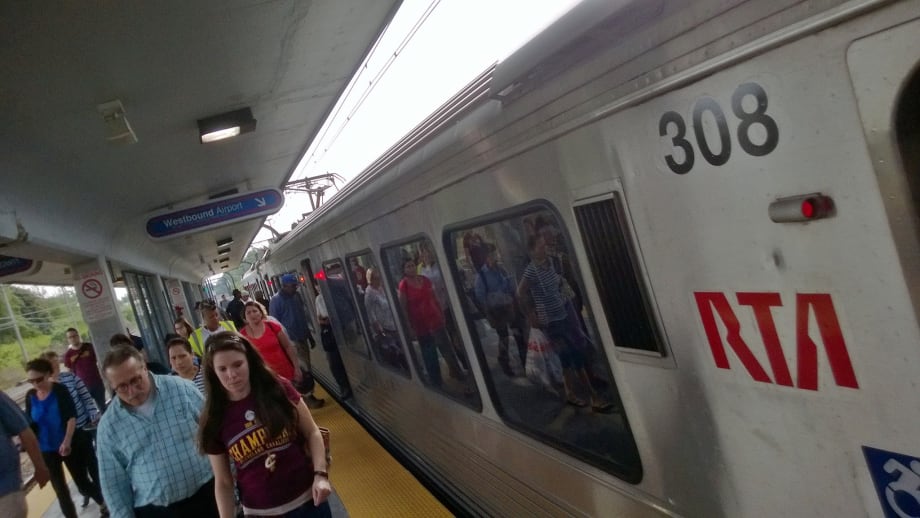
If one were to view a community as a business, a new study shows that planned public transportation investments will yield a two-to-one return while helping to generate income for local businesses, its workers and neighborhoods. In fact, this investment will yield more than $174 billion in business sales in the three cites examined in a new study commissioned by the American Public Transportation Association called "Public Transportation's Role in the Knowledge Economy."
The study authors examined the emerging tech sectors in Silicon Beach, Calif.; Austin, Texas; and Durham, N.C. and looked at public transportation's role in enhancing access to employees and promoting entrepreneurial infrastructure. The authors noted in this research that communities across America are creating "Innovation Districts," which are areas that include business incubators, anchor institutions and startups.
The study emphasizes that these districts are becoming an important engine of U.S. economic growth. These Innovation Districts require both robust business and transportation infrastructure to be sustained over the long-term.
"Public transportation is the catalyst that attracts knowledge workers who show a preference to be connected with multiple transportation options to high-growth business centers," said APTA Chair Valarie J. McCall. "It allows these Innovation Districts to create dense business infrastructure that preserves key community benefits while mitigating congestion issues and providing businesses greater access to labor."
All Aboard Ohio
APTA designed the study and commissioned the Economic Development Research Group to conduct the research. The study looks at the economic impact of public transportation in select regions and does a deeper dive into how public transit supports emerging tech scenes in three areas: Silicon Beach in Southern California, the Historic Technology District in Austin, Texas; and the Research Triangle in North Carolina. According to the analyisis, if the three cities' long-range transportation plans are fully implemented by 2035, the transportation savings and accompanying productivity enhancement will generate:
More than $174 billion of cumulative business sales.
$76.1 billion in wage income.
$106.5 billion in additional gross domestic product (GDP) for the U.S. economy.
"Ultimately investment in local public transit helps generates new economic activity and yields a huge profit to local companies in the area," said APTA President/CEO Michael Melaniphy. "It also provides tremendous benefits for the entire community, even after subtracting the cost of the ongoing investment in the local public transit system.
"This data shows how use of public transportation provides an alternative to a car dependent congested network in these tech corridors and it provides savings to both businesses and households as a result from reducing workers out-of-pocket travel costs and travel time," Melaniphy added. "Public transportation relieves pressure on the road system — whether you use public transit or not. It also helps improve the movement of goods, and most importantly the investment helps grow the community."
More Management
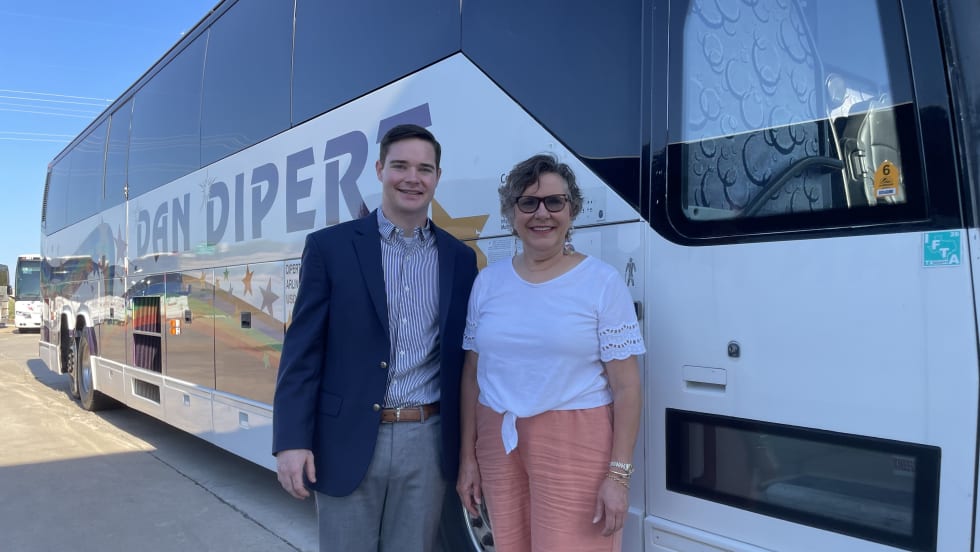
People Movement: Dan Dipert Coaches Adds Third-Generation Leader, Keolis Names New Valley Metro VP/GM, and More
In this edition, we also cover recent appointments and announcements at the Wabtec, SilverRide, HNTB, and more, showcasing the individuals helping to shape the future of transportation.
Read More →
METRO Opens Submissions for 2026 Motorcoach Awards
Nominations are now being accepted for METRO Magazine’s Operator of the Year and Innovative Operator of the Year awards.
Read More →
New York MTA Advances Final Contract for Second Avenue Subway Expansion
Contract Four is the largest in the Second Avenue Subway Phase 2 project and includes construction of station infrastructure, tracks, and signals for the subway expansion, MTA officials said. Work on Contract Four will begin in 2027.
Read More →

Transit Agencies Highlight Safety Gains at National Summit
Leaders from 15 major transit systems shared crime-reduction results and safety initiatives while discussing the role of continued federal support.
Read More →
NITA Names New Leadership, Expands Reduced-Fare Program at First Board Meeting
The new regional transit authority appointed its first board chair and interim executive director while extending reduced fares across CTA, Metra, and Pace for eligible riders.
Read More →
Beyond the Checklist: A Structured Approach to Transit Maintenance
Reliability-Centered Maintenance helps transit agencies move beyond routine checklists to focus limited resources on the assets and failures that have the greatest impact on safety, reliability, and service.
Read More →
APTA 2026 Nominating Committee Selects Leadership Slate, Names Chair and Vice Chair Nominees
Leadership changes will help shape the association’s priorities and its representation of the transportation industry during the 2026–2027 term.
Read More →
DART Launches Major Security, Fare Enforcement Initiative
The 90-day demonstration will deploy coordinated security teams at five light rail stations while testing controlled access and gathering data to guide future investments.
Read More →
Sponsored•September 9, 2026
Advancing Fare Collection Through Technology and Innovation
Learn about delivering 1300 gates at 91 stations while managing fare evasion. Explore the large scale deployment, solution customization and real-world results that affect the region. Prepare for deployment in your region now.
Read More →
Game Day in Motion: Moving Millions During the 2026 World Cup
Between packed transit stations and team motorcoaches, see how agencies and operators across North America tackled the transportation demands of the 2026 FIFA World Cup.
Read More →