




RELATED: Changes to safety oversight bill to boost public access
FTA to withhold funding from D.C., Md. and Va. pending safety oversight program
The funds will be withheld until the jurisdictions pass identical legislation and meet related requirements in order for FTA to certify a new SSOP for WMATA Metrorail.
February 13, 2017
Larry Levine
3 min to read
Larry Levine
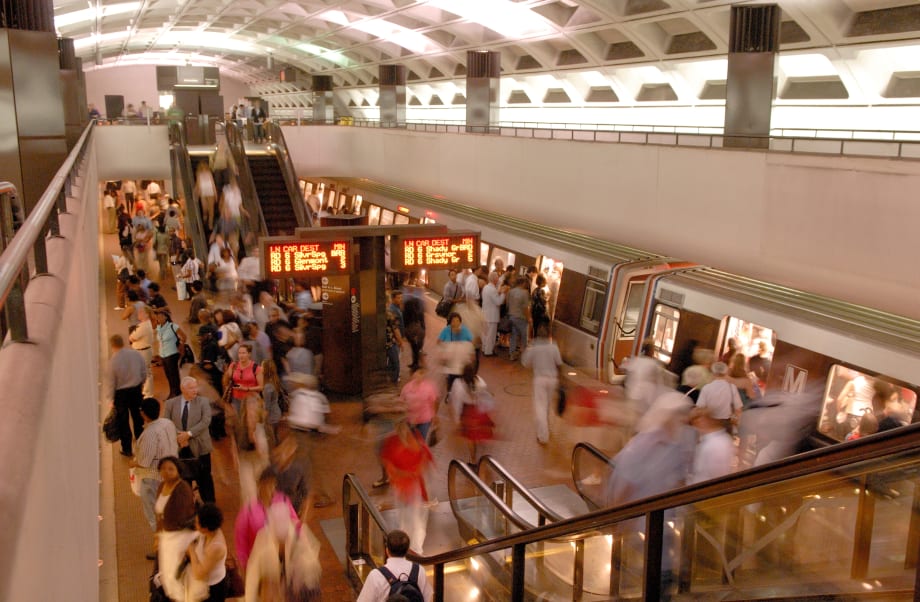
The Federal Transit Administration (FTA) notified the transit systems in the District of Columbia, Maryland, and Virginia that effective immediately it will withhold 5% of Fiscal Year 2017 transit formula funds until a new State Safety Oversight Program (SSOP) is certified for the rail operations of the Washington Metropolitan Area Transit Authority (WMATA). The funds will be withheld until the jurisdictions pass identical legislation and meet related requirements in order for FTA to certify a new SSOP for WMATA Metrorail.
In accordance with Federal law, on Feb. 8, FTA informed the Governors and the Mayor that failure to obtain a certified SSOP for the WMATA Metrorail system by Feb. 9, may result in the withholding of federal transit funds. These funds can be restored once the jurisdictions establish a federally-compliant, FTA-certified SSOP.
The action means FTA immediately will withhold 5% of Fiscal Year 2017 Urbanized Area formula funds from eight recipients of FTA funds in the District of Columbia, Maryland, and Virginia. These recipients allocate the funding to transit agencies in their respective areas. Under the current continuing budget resolution through April 28, 2017, this amounts to approximately $8.9 million, in total, for the two states and the district. Based on a full-year appropriation, the total amount that may be withheld in Fiscal Year 2017 is estimated at approximately $15 million.
"By law, states have the primary responsibility for overseeing the safe operation of their rail transit systems, not only for riders but for transit operators and workers," said FTA Executive Director Matthew Welbes. "FTA has been providing oversight for WMATA Metrorail since October 2015, but the role is temporary. We will continue to direct safety oversight of Metrorail only until the District of Columbia, Maryland and Virginia step up and establish an FTA-certified State Safety Oversight Program."
The June 2009 Fort Totten collision of two Metrorail trains, resulting in nine fatalities and dozens of injuries, exposed the inadequacy of the Tri-State Oversight Committee (TOC), the State Safety Oversight Agency (SSOA) established and operated by Virginia, Maryland, and the District of Columbia. Since April 2010, the three jurisdictions have recognized the need for the creation of a new, stronger, and more effective oversight program for Metrorail, but nearly seven years later it has not been established. During this period, serious safety incidents continued to occur on the Metrorail system. Notably, the jurisdictions did not undertake meaningful efforts towards establishing a new SSOP and crafting supporting legislation until after the FTA assumed safety oversight responsibilities from the TOC.
On October 9, 2015, following a number of accidents, incidents and a demonstrated pattern of safety lapses involving WMATA’s Metrorail system, the U.S. Department of Transportation determined that the TOC was ineffective at providing adequate safety oversight consistent with prevention of substantial risk of death or personal injury and FTA immediately assumed the lead responsibility for safety oversight until the three jurisdictions replaced the TOC with a fully compliant SSOA.
In order for FTA to certify a State Safety Oversight Program for WMATA Metrorail, the jurisdictions must still take several key actions, including:
Passing identical legislation by Maryland and Virginia state legislatures and the District of Columbia, and signed by the state Governors and District Mayor.
Submitting a certification application and documentation to FTA showing that the SSOA has independence from the rail transit system it oversees; enforcement and investigation authority; adequate staffing and training; FTA grant recipient status; and has met general program requirements.
Participating in a transitional hand-off period whereby FTA officials work side-by-side with new SSOA officials to ensure they are capable of conducting all oversight responsibilities required by Federal law.
Verifying with FTA that the new SSOA’s enforcement and oversight capabilities, as well as their inspection, investigation and audit activities are adequate and meet all statutory requirements.
Strengthening State Safety Oversight is part of a comprehensive public transportation safety program that Congress required FTA to establish in MAP-21 and reauthorized and strengthened in the FAST Act.
More Management

METRO Opens Submissions for 2026 Motorcoach Awards
Nominations are now being accepted for METRO Magazine’s Operator of the Year and Innovative Operator of the Year awards.
Read More →
New York MTA Advances Final Contract for Second Avenue Subway Expansion
Contract Four is the largest in the Second Avenue Subway Phase 2 project and includes construction of station infrastructure, tracks, and signals for the subway expansion, MTA officials said. Work on Contract Four will begin in 2027.
Read More →
Transit Agencies Highlight Safety Gains at National Summit
Leaders from 15 major transit systems shared crime-reduction results and safety initiatives while discussing the role of continued federal support.
Read More →

NITA Names New Leadership, Expands Reduced-Fare Program at First Board Meeting
The new regional transit authority appointed its first board chair and interim executive director while extending reduced fares across CTA, Metra, and Pace for eligible riders.
Read More →
Beyond the Checklist: A Structured Approach to Transit Maintenance
Reliability-Centered Maintenance helps transit agencies move beyond routine checklists to focus limited resources on the assets and failures that have the greatest impact on safety, reliability, and service.
Read More →
APTA 2026 Nominating Committee Selects Leadership Slate, Names Chair and Vice Chair Nominees
Leadership changes will help shape the association’s priorities and its representation of the transportation industry during the 2026–2027 term.
Read More →
DART Launches Major Security, Fare Enforcement Initiative
The 90-day demonstration will deploy coordinated security teams at five light rail stations while testing controlled access and gathering data to guide future investments.
Read More →
Sponsored•September 9, 2026
Advancing Fare Collection Through Technology and Innovation
Learn about delivering 1300 gates at 91 stations while managing fare evasion. Explore the large scale deployment, solution customization and real-world results that affect the region. Prepare for deployment in your region now.
Read More →
Game Day in Motion: Moving Millions During the 2026 World Cup
Between packed transit stations and team motorcoaches, see how agencies and operators across North America tackled the transportation demands of the 2026 FIFA World Cup.
Read More →
Surface Transportation Extension Averts Shutdown, Leaves Transit Funding Gap
The stopgap keeps federal transportation programs moving, but missing advance funding could complicate the transit and rail projects agencies are planning next.
Read More →