



RELATED: Bill would ban use of fed funds for Chinese rolling stock
House passes bill banning usage of Fed funds for Chinese rolling stock
The authors assert Chinese state-owned and state-supported enterprises have used subsidized “bargain prices” well-below competitive market price to win contracts throughout the U.S.
by Alex Roman, Managing Editor
July 12, 2019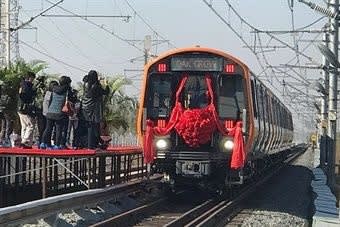
During a October 2017 media event, dignitaries took a ride on one of the four pilot cars to be sent to Boston for testing. Photo: CRRC
2 min to read
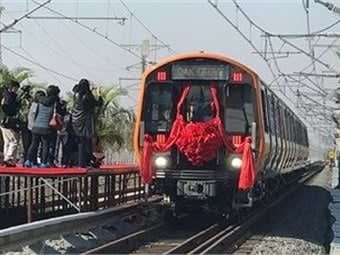
During a October 2017 media event, dignitaries took a ride on one of the four pilot cars to be sent to Boston for testing. Photo: CRRC
The House voted to pass H.R. 2500, the National Defense Authorization Act (NDAA) for Fiscal Year 2020. In the bill’s base text was a provision blocking federal transit dollars for procurement of electric railcars from Chinese State Owned Enterprises (SOEs), and other state-supported companies, originally introduced in the Senate by Sen. John Cornyn (R-TX), and the House by Rep. Harley Rouda (D-CA), as part of the Transit Infrastructure Vehicle Security Act (TIVSA).
“China’s ‘Made in China 2025’ initiative is an unmistakable effort to harm American manufacturers by subsidizing Chinese rail and bus industries,” said Rep. Rouda. “Chinese companies misrepresent themselves as benevolent actors, but let’s be clear: this is an attack on our economy and national security.”
Specifically, the provision prohibits financial assistance to be used in awarding a contract or subcontract to an entity for the procurement of rail rolling stock for use in public transportation if the manufacturer is owned, controlled by, or legally or financially related to corporations under certain conditions identified in the bill that designate the corporation to be a state-sponsored or owned enterprise located in adversarial non-market economies like China.
According to the bill’s authors, the Chinese government continues to use a range of state subsidies and predatory practices to support its market ascension in certain sectors of this country’s economy. Two of these sectors, rail manufacturing and bus manufacturing, are included as part of China’s “Made in China 2025” initiative, a plan targeting global dominance in areas that the Chinese government considers most strategic to its global aims.
The authors also assert that Chinese state-owned and state-supported enterprises have used subsidized “bargain prices” well-below competitive market price to win contracts throughout the U.S., with a number of large, metropolitan areas having recently awarded rail rolling stock procurements to a Chinese state-owned enterprise. They believe there are a number of threats these procurements pose, including impeding economic competitiveness and overtaking the supply chains that support U.S. public transportation agencies. Finally, it is believed that Chinese state-owned and state-supported enterprises have increased security vulnerabilities and create new risks for rolling stock procurements.
More Management
VIA, MBTA Reach Pre-Pandemic Ridership Milestones as Transit Use Climbs
VIA surpasses three million monthly trips for the first time since 2020, while the MBTA tops one million average weekday trips as both agencies report continued ridership growth.

People Movement: Metrolink's Kettle Announces Retirement, Feakins to CEO at UZURV, and More
In this edition, we also cover recent appointments and announcements at King County Metro, SilverRide, and more, showcasing the individuals helping to shape the future of transportation.
How Gen Z's Changing Mobility Habits Are Reshaping Public Transit
As younger generations embrace multimodal mobility over private vehicles, transit agencies can rethink station design, the passenger experience, and public transportation's role in building connected communities.
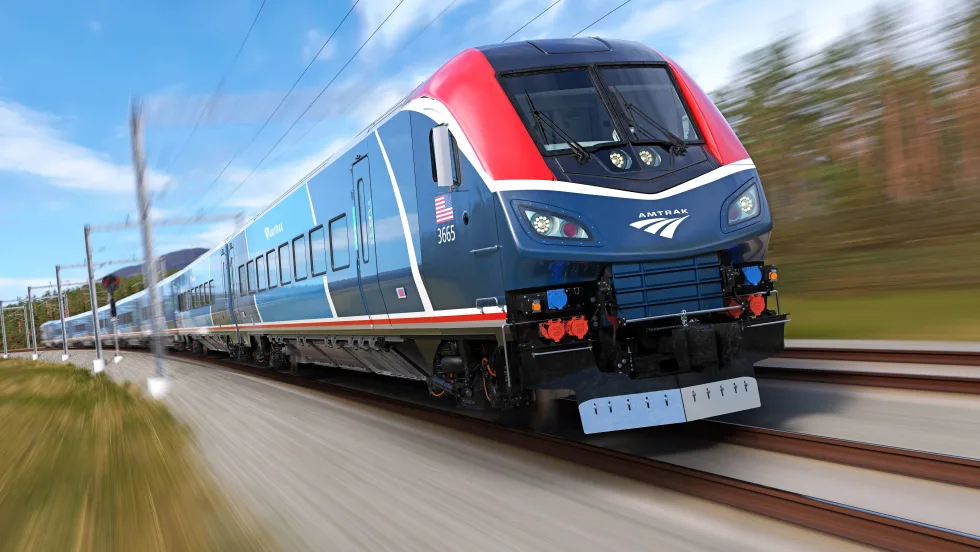
Amtrak Expands Airo Fleet with Eight Higher-Capacity Trainsets
The new 10-car trains, expected to enter service in 2031, will provide about 34% more seating capacity to meet growing demand on the Northeast Corridor.

APTA Urges FTA to Withdraw Proposed Capital Investment Grants Guidance
The association warns that proposed changes could delay transit projects, reduce federal funding, and create new hurdles for 47 projects currently in the CIG pipeline.

Amtrak, NJ TRANSIT Launch Full Service on New Portal North Bridge
The completion of the two-track bridge over the Hackensack River eliminates a longstanding source of delays for NJ TRANSIT and Amtrak customers. It marks a major milestone for the Gateway Program.
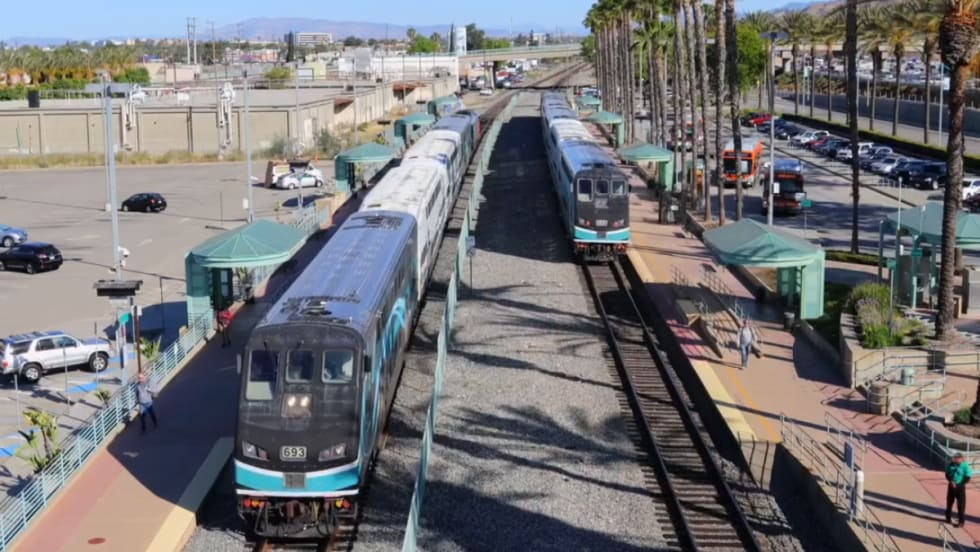
Southern California’s Metrolink Approves $508.8M Budget, Avoids Service Cuts
A $20 million state allocation allows the regional rail agency to maintain existing weekday and weekend service through fiscal year 2028, although longer-term funding challenges remain.
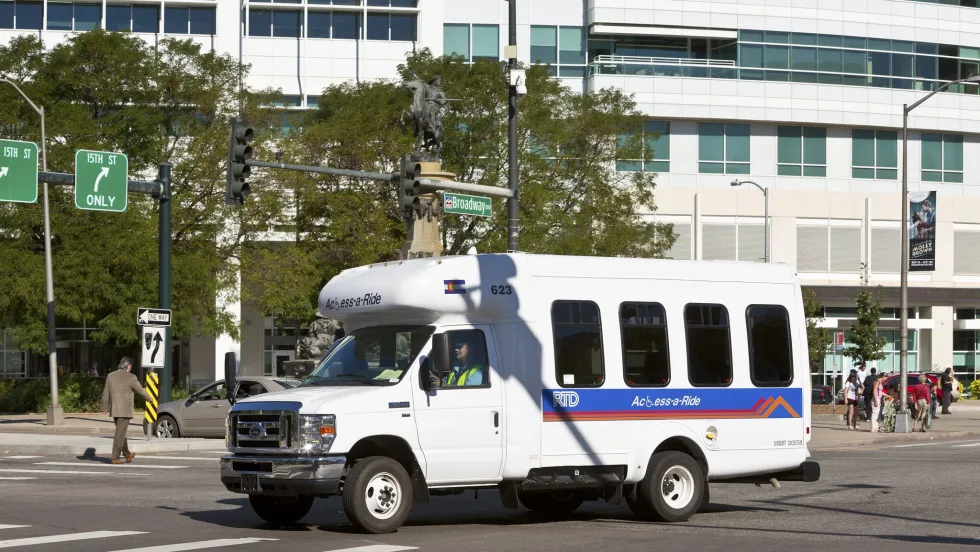
Denver RTD Committee to Review Paratransit Services, Improve Accessibility
The committee will oversee an independent study of paratransit operations, gather customer feedback, and recommend improvements to service reliability, accessibility, and accountability.

Castro to Lead RTC of Southern Nevada and More in People Movement
In this edition, we also cover recent appointments and announcements at the STV, MCI, and more, showcasing the individuals helping to shape the future of transportation.

STraffic Expands North American Presence with Fare Collection Technology
John Moon, Associate Director, Product Strategy at STraffic, discusses the company's growth in North America, its efforts to reduce fare evasion, and more.