



Bike Storage Solutions Adapt to Growing Needs of Multimodal Commuters
No other form of commuting to work has seen the same level of growth as biking has over the past decade. To help public transportation agencies deal with that growth, suppliers have been able to add more bike positions on racks and create furniture and storage solutions at rail stations and transit malls.
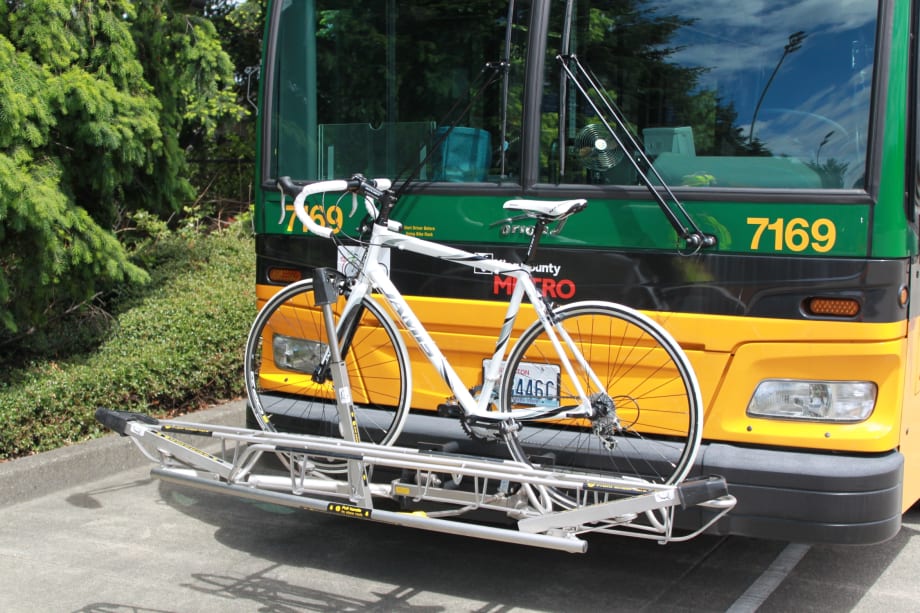
Sportworks’ Apex 3 rack is a three-position rack that is compact enough to use on a full-sized, cutaway or paratransit bus.
Sportworks’ Apex 3 rack is a three-position rack that is compact enough to use on a full-sized, cutaway or paratransit bus.
As city population and congestion levels rise from workers moving in search of careers, more people are beginning to leave their car keys at home and instead making their commute with a bike.
Through 2006 to 2013, the amount of automobile commutes in urban areas dropped by 4% for workers aged 25 to 29. During that same time frame, the amount of workers 25 to 29 using public transportation rose from 5.5% to 7.1%, according to the U.S. Census Department.
But biking saw the biggest jump.
The U.S. Census Department released a study that analyzed the bike growth from 2008 all the way to 2012. It found that biking as the main method of transportation to work had risen 60% from 2000 to 2012.
In 2000, there were no cities that had 3% of its population biking. The recent study from the U.S. Census shows that there are now seven cities that have over 3% of their populations biking to work — with cities like Portland, Ore. and Minneapolis leading the way.
It’s a big jump. But to put things into perspective, after the 60% rise in biking, .6% of the total U.S. population was biking to work in 2012, according to the U.S. Census report. It’s a long way from catching up to the 78% of urban workers that drive to work, but its substantial growth, along with census data, and the amount of cities changing their infrastructure to better accommodate bicyclists shows that it’s a trend that will continue to grow.
While bicycles allow people to travel much faster and farther than they would if they were walking, there is still a limit to what people consider a feasible distance to bike to work every day. A work-around for this is supplementing a bike commute with public transportation. However, bikes might not always fit inside those modes of transportation.
Fortunately, cities have been keen to the growth in bike use, are adapting their infrastructure and finding ways to remedy these issues.
One of the simplest ways for a city to encourage or accommodate bicyclists who want to use public transportation to supplement their commute is by adding a bike rack to the front of its city buses.
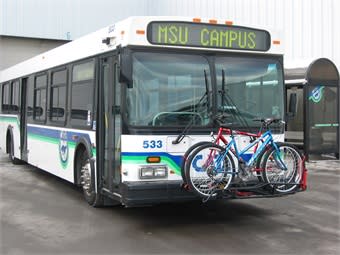
With bike usage growing, Byk-Rak officials say their most popular item right now is their three-position bike rack.
Bike Racks
There are two main suppliers in the market for bike racks: Byk-Rak and Sportworks.
Byk-Rak is a Mich.-based supplier of bike racks. They offer one-position, two-position and three-position bike racks. VP of Byk-Rak Ron Coon says that their most popular item right now, indicative of biking’s popularity is his company’s three-position bike rack.
The three-position, as the name implies, allows for three bikes to be loaded on it. A feature of this bike rack that Coon is proud of is the modular design it, and all of the companies offerings, is engineered with.
Whether it’s a one-, two- or three-position bike rack, it’s going to use the same rail system. It’s a rail system that unlike more traditional manufacturing is bolted on instead of welded on. This comes with multiple advantages.
First, if the bike rack is damaged, but the rail system sustained the brunt of the damage, it can be unbolted, swapped with a new system and have it work without needing to replace the entire bike rack, Coon said.
It also means that a transit agency can upgrade an existing model they might have to a higher-capacity model with less cost. If a transit agency wanted to switch from a one-position rack to a two-position rack, it just needs to order an additional rail system and a new two-bike frame and attach their existing rail system to have a working two position bike rack, Coon said.
Ethan Petro from Washington-based bike rack supplier, Sportworks says that his company is seeing a lot of cities transition from two-capacity bike racks to three-capacity versions due to an influx in commuters using bikes.
“King County Metro here [in Seattle] is replacing all their old three-position racks, an older design, with a new Apex design, which is what we consider to be the pinnacle of bike racks design for a three-bike rack,” Petro says.
The company’s Apex 3 rack is a three-position rack that is compact enough to use on a full-sized, cutaway or paratransit bus.
However, some cities have so many bike commuters that even a three-position rack isn’t enough. For these situations, both companies offer inside bike racks as well. They generally take the space of one or two seats, but allows for more than three bicyclists on one bus.
For the first time ever, New York is experimenting with bike racks on its buses. The narrow streets and constant automobile and foot traffic are sure to cause difficulties for the drivers who will be testing the units, but the fact that the city is even experimenting given the circumstances shows how much demand from bicyclists there really is.
However, not all bicyclists want to take their bikes with them. Some simply want to bike to a transportation center, leave their bike there and hop on a bus or train to work. For this, transportation centers need reliable bicycle furniture where bicyclists can lock their bikes with and feel secure that their bike will still be there when they come back.

After clients asked Duo-Gard if they could convert one of their bus shelters into a bike shelter, they began expanding their offerings to provide this product option as well.
Bike Furniture
Dero is a Minneapolis-based company that provides bike racks, shelters and lockers. They provide customizable designs that are functional for bicyclists so that they can accommodate the U-Lock, which is the most common and secure lock at the moment, says Bri Whitcraft, director of marketing at Dero.
Security is a big concern for bicyclists. They want to feel secure that their bicycle is going to be OK while they’re away. Because of this, Dero is seeing an increase in interest for their bike lockers, Whitcraft said.
Dero’s bike lockers are completely enclosed steel boxes that allow people to put their entire bike inside, close the locker’s door, and then lock the entire structure.
Duo-Gard is a Mich.-based company that started as a bus shelter building company. After certain clients asked if they could convert one of their bus shelters into a bike shelter, they began expanding their offerings to provide bike shelters as well.
Now the company has around 13 or 14 standard designs for their shelters that both address aesthetic and specific site condition demands, explains Mike Arvidson, executive VP of Duo-Gard.
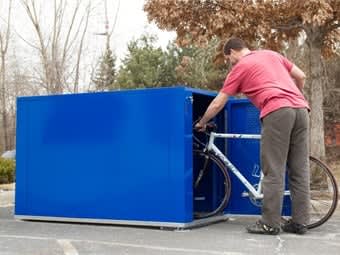
Dero’s bike lockers are completely enclosed steel boxes that allow people to put their entire bike inside, close the locker’s door, and then lock the entire structure.
The company has seen an annual growth of 10% to 15% in the last three years and credits the first-mile/last-mile aspect of bicycle commuting for part of their growth. Bike shelters allow multiple people to park and secure their bikes while protecting them from outside conditions, Arvidson says.
Arvidson is optimistic for the future of biking in the U.S. His company’s growth, as well as the demand from other bike furniture companies, is a good indication of where biking is going. He says that , when compared to Europe where biking has progressed much further, the U.S. as a society still has a long way to go, but momentum is steering us in the right direction.
More New Mobility

ENC Unveils ZAVIR Medium-Duty Electric Shuttle at APTA EXPO
The new ZAVIR brand targets shuttle and paratransit operations with battery-electric and range-extended electric vehicle options.
Read More →
Public Transit Conference Returning to GFX in 2027, Call for Papers Now Open
The Call for Papers is now open, allowing transit agency professionals and industry experts to help shape the PTC educational program by submitting session ideas for consideration.
Read More →
Everett Transit, Community Transit Outline Consolidation Agreement
The proposed agreement calls for a 50% increase in bus service in Everett, a new microtransit zone, continued paratransit service, and the transfer of Everett Transit operations to Community Transit.
Read More →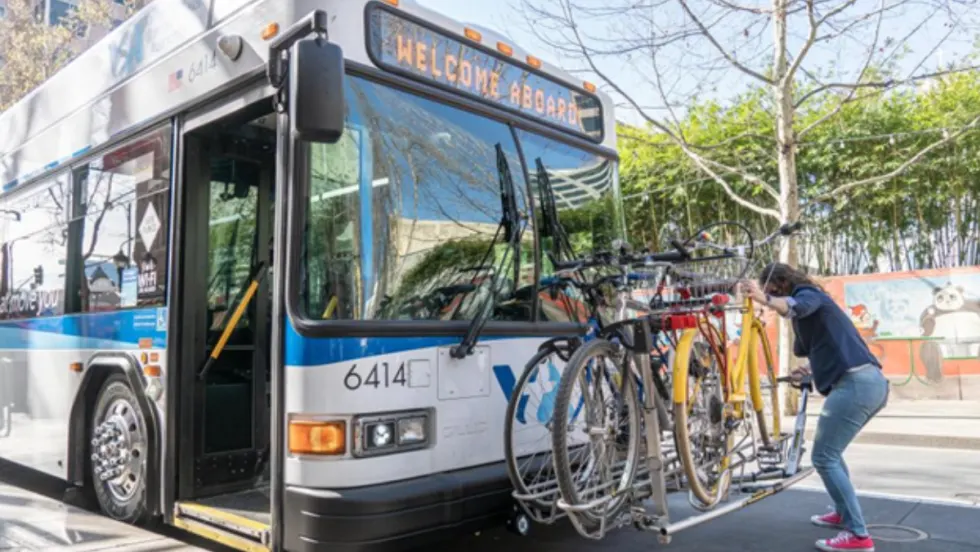
What Multimodal Data Can Tell Transit Agencies About Rider Demand
See how bike-on-bus data is giving transit agencies new insight into rider demand, capacity constraints, and gaps in first- and last-mile connections.
Read More →
From Hardware to Digital Partner: Luminator Charts Its Next Chapter
CEO Magnus Friberg discusses Luminator’s shift toward becoming a digital partner, the growing importance of software and interoperability, and how AI can help agencies improve operations and passenger experience.
Read More →
Biz Briefs: Alstom Lands Canadian Contract, LYT to Supply California TSP, and More
In METRO's latest installment, we take a look at recent news from Complete Coach Works, Beep, FlixBus, and more partnerships making headlines across the transportation sector.
Read More →
CharterUP’s Armir Harris on Technology, AI, and the Future of Group Mobility
In a recent episode of METROspectives, CharterUP Founder/CEO Armir Harris discussed the company’s evolution from an online charter bus marketplace into a technology platform supporting public- and private-sector mobility and much more.
Read More →
Jacksonville’s NAVI Project Charts a New Course for Autonomous Public Transportation
Through its NAVI program, JTA is showing how autonomous vehicles, intelligent infrastructure, and coordinated operations can work together to deliver everyday public transportation.
Read More →
Biz Briefs: Luminator Marks Milestone and More
From manufacturers and suppliers to transit agencies and motorcoach operators, these updates offer a snapshot of the projects, partnerships and business moves driving the industry forward.
Read More →
New Tricks for Old Bureaucracies: Joshua Schank on Making Transit Innovation Stick
Former LA Metro Chief Innovation Officer Joshua Schank discusses why good ideas aren't enough, how transit agencies can overcome resistance to change, and why today's challenges demand more innovation.
Read More →