



2016 Women in Transportation: Victoria Learn
Learn's main focus is ensuring that all buses are kept up to FTA standards, as well as employee and public safety, which she considers to be her biggest responsibility.
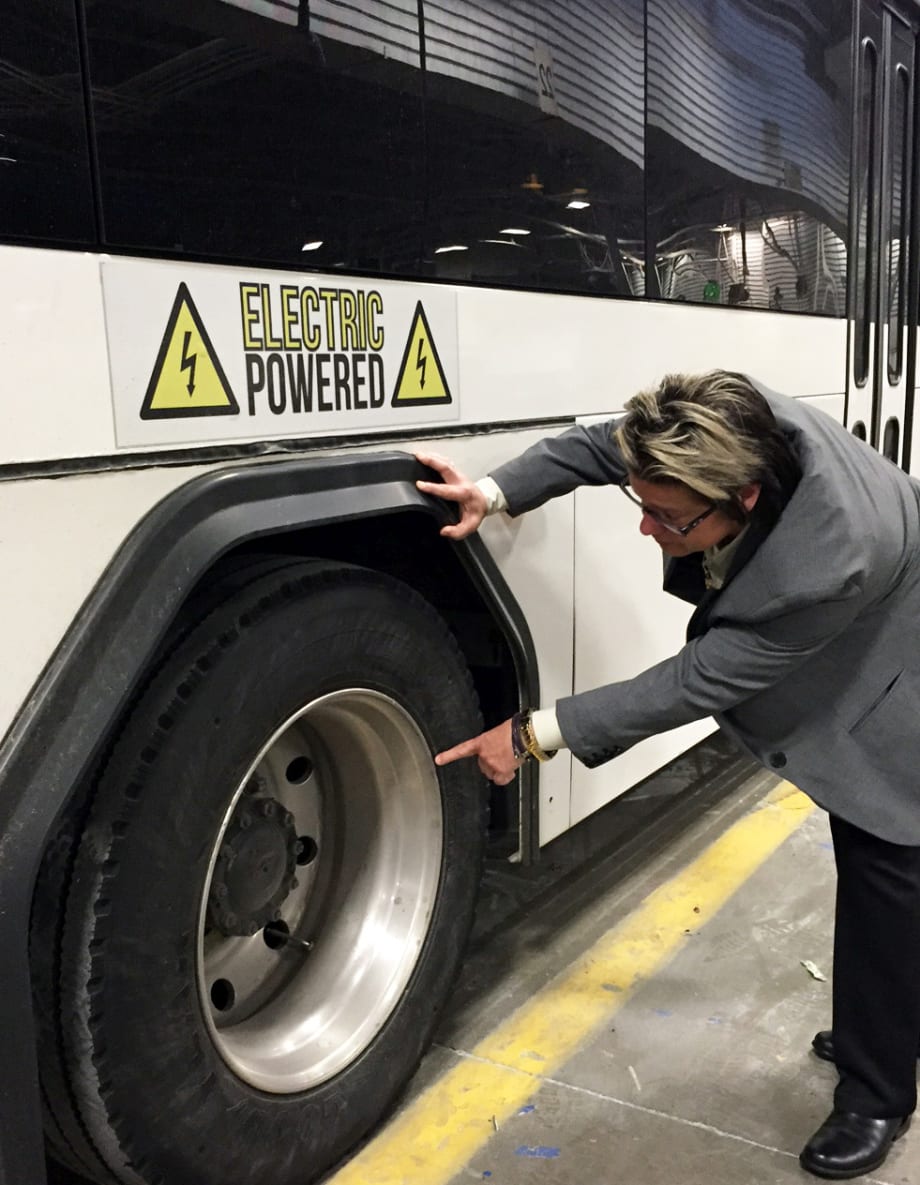
At IndyGo, Learn’s main focus is ensuring employee and public safety and that all buses are kept up to FTA standards.
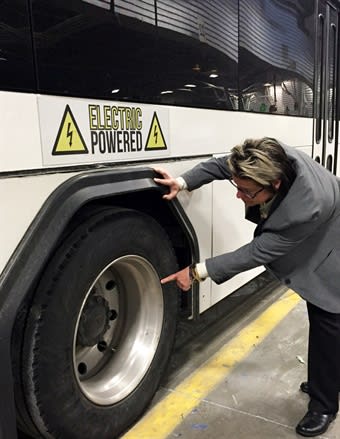
Victoria “Vicki” Learn, director, maintenance, for IndyGo in Indianapolis thought she was going to work with animals when she originally laid out her career trajectory. That was until a friend offered her a position running parts for Wayne’s Frame and Body in Gary, Ind. It was here she realized she could create an opportunity for herself.
Victoria “Vicki” Learn, director, maintenance, for IndyGo in Indianapolis thought she was going to work with animals when she originally laid out her career trajectory. That was until a friend offered her a position running parts for Wayne’s Frame and Body in Gary, Ind. It was here she realized she could create an opportunity for herself.
“As a parts driver, I was making about 40-50 cents more an hour than I was as a veterinary’s assistant. Seemed like a lot back in the eighties,” she explains.
Learn then spent five years learning the trade and purchasing parts for the company, until she was recruited by Phelps Holdings, owner of American Truck Parts. She eventually became the purchasing manager at their headquarters in Portage, Ind. In 2010, Learn moved into the director, maintenance, position with IndyGo, giving her about 30 years in the aftermarket sector.
Her main focus is ensuring that all buses are kept up to FTA standards, as well as employee and public safety, which she considers to be her biggest responsibility. She also writes all maintenance and bus-related RFP’s. With around 100 employees she manages, she also runs a parts warehouse with approximately $3.5 million in inventory.
To date, Learn has accomplished many feats for IndyGo, including writing the RFP for remanufactured, fully-electric Complete Coach Works buses, with the help of a $10 million TIGER grant the organization received in 2013. Because the technology for electric buses was relatively untested in 2013, Learn championed that launch, and the buses were officially put into service last year. It was a risky move, Learn explains, and IndyGo is one of the biggest organizations to implement this type of technology, but other agencies are catching up. “It was definitely being on the bleeding edge rather than the cutting edge,” she says.
Learn is also currently part of the APTA Zero Emission Bus (ZEB) Group, helping to create the standards for zero emission buses and taking this new technology she advocated for forward.
Learn has expressed that living up to the public’s expectations is difficult, especially with 22 service hours a day and a 20% spare ratio, but the people she serves makes her job worth it.
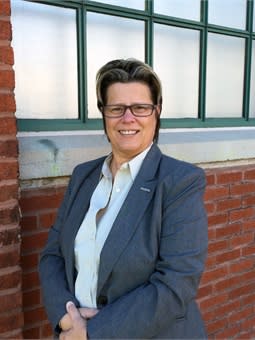
“Transit is a great equalizer. On any bus at any given time you might find an executive and a warehouse clerk, both commuting. Some have a choice while others don’t. But both people are equally as important to their families who rely on their support. Transit provides equal dignity to both,” she says.
As a person who prides herself on both her attention to detail, and the compassion she brings to her staff, she feels this balance is what has helped her get to where she is.
“Compassion is a tricky thing as some feel you might be playing favorites, but hopefully, the other person never has to go through the same thing, whatever the issue is at that time,” Learn says.
Currently, Learn is writing a new RFP for the new all-electric BRT buses that will be launching in early 2018. The Red Line will be IndyGo’s first BRT line and it is a very exciting time for transit and IndyGo. The 60-foot buses are being designed from the ground up, including all the amenities anyone could want while traveling to work, such as Wi-Fi and USB charging ports for electronic devices, along with a new thought process for the interior design of the bus.
When she’s not working, Learn is playing with her rescue cats and dog and attending WNBA games. She supports the Indianapolis Fever because they work so hard and still only earn about 1/16th of what male athletes earn, she explains. She also helps with the Catch The Stars Foundation, a literacy, mentoring and fitness organization for children, run by four-time Olympic athlete and WNBA Champion, Indiana Fever’s Tamika Catchings.
More Management

METRO Opens Submissions for 2026 Motorcoach Awards
Nominations are now being accepted for METRO Magazine’s Operator of the Year and Innovative Operator of the Year awards.
Read More →
New York MTA Advances Final Contract for Second Avenue Subway Expansion
Contract Four is the largest in the Second Avenue Subway Phase 2 project and includes construction of station infrastructure, tracks, and signals for the subway expansion, MTA officials said. Work on Contract Four will begin in 2027.
Read More →
Transit Agencies Highlight Safety Gains at National Summit
Leaders from 15 major transit systems shared crime-reduction results and safety initiatives while discussing the role of continued federal support.
Read More →

NITA Names New Leadership, Expands Reduced-Fare Program at First Board Meeting
The new regional transit authority appointed its first board chair and interim executive director while extending reduced fares across CTA, Metra, and Pace for eligible riders.
Read More →
Beyond the Checklist: A Structured Approach to Transit Maintenance
Reliability-Centered Maintenance helps transit agencies move beyond routine checklists to focus limited resources on the assets and failures that have the greatest impact on safety, reliability, and service.
Read More →
APTA 2026 Nominating Committee Selects Leadership Slate, Names Chair and Vice Chair Nominees
Leadership changes will help shape the association’s priorities and its representation of the transportation industry during the 2026–2027 term.
Read More →
DART Launches Major Security, Fare Enforcement Initiative
The 90-day demonstration will deploy coordinated security teams at five light rail stations while testing controlled access and gathering data to guide future investments.
Read More →
Advancing Fare Collection Through Technology and Innovation
Learn about delivering 1300 gates at 91 stations while managing fare evasion. Explore the large scale deployment, solution customization and real-world results that affect the region. Prepare for deployment in your region now.
Read More →
Game Day in Motion: Moving Millions During the 2026 World Cup
Between packed transit stations and team motorcoaches, see how agencies and operators across North America tackled the transportation demands of the 2026 FIFA World Cup.
Read More →
Surface Transportation Extension Averts Shutdown, Leaves Transit Funding Gap
The stopgap keeps federal transportation programs moving, but missing advance funding could complicate the transit and rail projects agencies are planning next.
Read More →