



N.Y.'s CDTA launches responsive website
The redesigned site provides the most relevant data with the fewest number of clicks as most site visits are to find out scheduling information. The new homepage offers an intuitive search bar that includes stops, routes and regional landmarks along with service advisories whenever used.

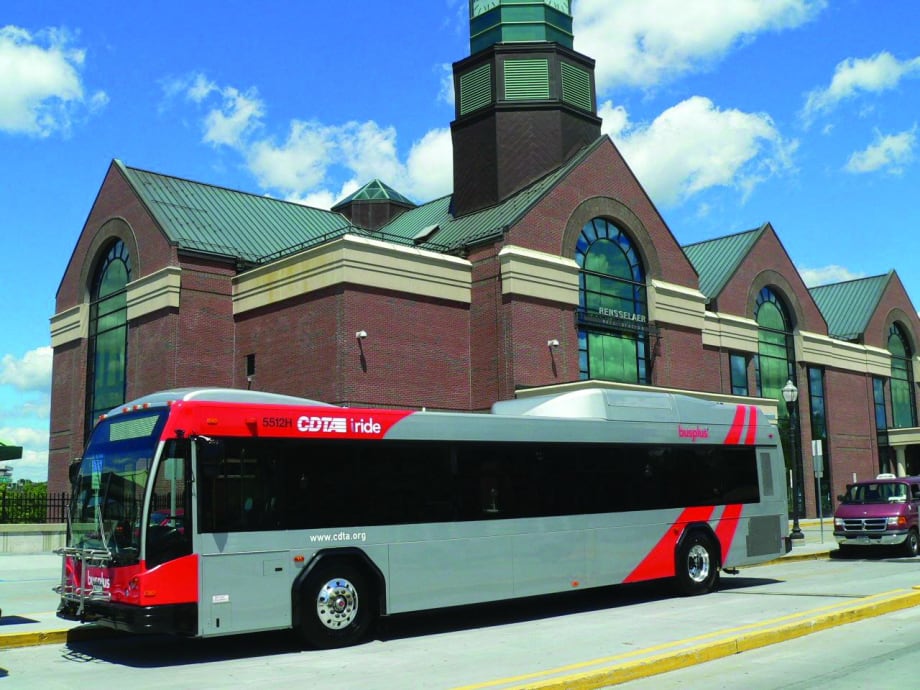
Albany, N.Y.’s Capital District Transportation Authority (CDTA) unveiled its redesigned website featuring a modern, responsive redesign to engage the entire CDTA community including a rapidly growing number of users on mobile devices.
The redesigned site provides the most relevant data with the fewest number of clicks as most site visits are to find out scheduling information. The new homepage offers an intuitive search bar that includes stops, routes and regional landmarks along with service advisories whenever used.
The site showcases the highest priority features and elements front and center on all devices. The site also features call-outs throughout the site giving customers the choice to more quickly access what matters to them. The mobile first orientation directs users to the most accessed information like schedules, service advisories and fare products. Trip planning, tech tools like app downloads and access to real time information are more prevalent in the new format.
“Just five years ago mobile usage was at just 6% and by the end of 2014, mobile users jumped to nearly 80% of our visits,” said CDTA Chairman David M. Stackrow. “Clearly, the marketplace is changing and we wanted to be responsive to our customers’ needs.”
The desktop version will better assist first-time riders, seasoned riders looking for quick information and Capital Region visitors. The site also offers support to residents, community leaders and vendors interested in business opportunities.
CDTA set a record with nearly two million website hits in 2014, with more than 1.5 million coming from mobile users. More than 70% of the visits were to the schedule pages and led to more than five million pages views last year. The rollout of real-time information in October has driven the website’s numbers to record heights with nearly 17,000 sessions a day for more than one million sessions all told.
More Management

METRO Opens Submissions for 2026 Motorcoach Awards
Nominations are now being accepted for METRO Magazine’s Operator of the Year and Innovative Operator of the Year awards.
Read More →
New York MTA Advances Final Contract for Second Avenue Subway Expansion
Contract Four is the largest in the Second Avenue Subway Phase 2 project and includes construction of station infrastructure, tracks, and signals for the subway expansion, MTA officials said. Work on Contract Four will begin in 2027.
Read More →
Transit Agencies Highlight Safety Gains at National Summit
Leaders from 15 major transit systems shared crime-reduction results and safety initiatives while discussing the role of continued federal support.
Read More →

NITA Names New Leadership, Expands Reduced-Fare Program at First Board Meeting
The new regional transit authority appointed its first board chair and interim executive director while extending reduced fares across CTA, Metra, and Pace for eligible riders.
Read More →
Beyond the Checklist: A Structured Approach to Transit Maintenance
Reliability-Centered Maintenance helps transit agencies move beyond routine checklists to focus limited resources on the assets and failures that have the greatest impact on safety, reliability, and service.
Read More →
APTA 2026 Nominating Committee Selects Leadership Slate, Names Chair and Vice Chair Nominees
Leadership changes will help shape the association’s priorities and its representation of the transportation industry during the 2026–2027 term.
Read More →
DART Launches Major Security, Fare Enforcement Initiative
The 90-day demonstration will deploy coordinated security teams at five light rail stations while testing controlled access and gathering data to guide future investments.
Read More →
Advancing Fare Collection Through Technology and Innovation
Learn about delivering 1300 gates at 91 stations while managing fare evasion. Explore the large scale deployment, solution customization and real-world results that affect the region. Prepare for deployment in your region now.
Read More →
Game Day in Motion: Moving Millions During the 2026 World Cup
Between packed transit stations and team motorcoaches, see how agencies and operators across North America tackled the transportation demands of the 2026 FIFA World Cup.
Read More →
Surface Transportation Extension Averts Shutdown, Leaves Transit Funding Gap
The stopgap keeps federal transportation programs moving, but missing advance funding could complicate the transit and rail projects agencies are planning next.
Read More →