



Jacksonville Transit route optimization a success
In March alone, ridership was up 10.1% in 2015 compared to March of 2014. Average weekday ridership was up 7% and even greater increases were seen on weekends. The average ridership on Saturdays increased by 10% and on Sundays by 15%.

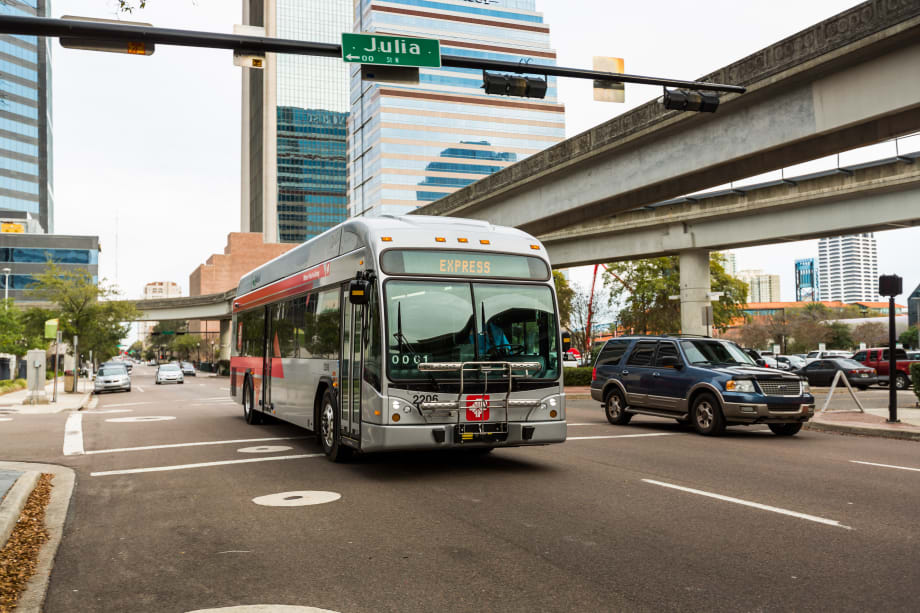
VisitJacksonville
VisitJacksonville
The Jacksonville Transportation Authority (JTA) published March 2015 ridership figures that indicate four straight months of ridership growth after implementing the Route Optimization Initiative (ROI).
Without additional annual operating costs, JTA completely reconfigured its routes to make routes more direct, improve service frequency, provide more service in the evenings and weekends, and better coordinate schedules. JTA also implemented real-time passenger information with the launch of ROI on Dec. 1, 2014.
In March alone, ridership was up 10.1% in 2015 compared to March of 2014. Average weekday ridership was up 7% and even greater increases were seen on weekends. The average ridership on Saturdays increased by 10% and on Sundays by 15%. The Ridership average over the first four months since implementation is up 6% with more than 200,000 trips over the same period last year.
When JTA launched ROI, its goal was to maintain stable ridership initially and attain long-term ridership growth. Generally, major bus service changes result in initial ridership decline. Since ROI was a complete overhaul of the bus routes, the potential for initial ridership loss was very high.
“The numbers are great in that they give us an indication of how ROI is working,” said Nathaniel Ford, Sr., JTA’s CEO. “The true gratification is behind the numbers. These are people who are using our system to get to jobs, visit friends and families, go shopping, or see the doctor. This shows that if we put a better service out there, people will use it. It will make people’s lives better and strengthen our community. It’s much more than numbers to us.”
On March 2, JTA implemented minor route modifications to address initial feedback and additional changes will be made in July. These will largely refine the service and schedules to improve on time performance. In December 2015, JTA will launch the North Corridor First Coast Flyer (FCF) bus rapid transit.
FCF will be a premium service with 10-minute peak hour frequency, new branded compressed natural gas (CNG) buses, superstops with real-time passenger information and ticket vending machines at hubs and transit signal priority to allow buses to move quickly through the FCF corridor. This service launch will coincide with grand opening of a new CNG fueling facility that will not only fuel JTA buses, but allow other fleets to access a public station at JTA’s Myrtle Avenue campus.
More Management

METRO Opens Submissions for 2026 Motorcoach Awards
Nominations are now being accepted for METRO Magazine’s Operator of the Year and Innovative Operator of the Year awards.
Read More →
New York MTA Advances Final Contract for Second Avenue Subway Expansion
Contract Four is the largest in the Second Avenue Subway Phase 2 project and includes construction of station infrastructure, tracks, and signals for the subway expansion, MTA officials said. Work on Contract Four will begin in 2027.
Read More →
Transit Agencies Highlight Safety Gains at National Summit
Leaders from 15 major transit systems shared crime-reduction results and safety initiatives while discussing the role of continued federal support.
Read More →

NITA Names New Leadership, Expands Reduced-Fare Program at First Board Meeting
The new regional transit authority appointed its first board chair and interim executive director while extending reduced fares across CTA, Metra, and Pace for eligible riders.
Read More →
Beyond the Checklist: A Structured Approach to Transit Maintenance
Reliability-Centered Maintenance helps transit agencies move beyond routine checklists to focus limited resources on the assets and failures that have the greatest impact on safety, reliability, and service.
Read More →
APTA 2026 Nominating Committee Selects Leadership Slate, Names Chair and Vice Chair Nominees
Leadership changes will help shape the association’s priorities and its representation of the transportation industry during the 2026–2027 term.
Read More →
DART Launches Major Security, Fare Enforcement Initiative
The 90-day demonstration will deploy coordinated security teams at five light rail stations while testing controlled access and gathering data to guide future investments.
Read More →
Advancing Fare Collection Through Technology and Innovation
Learn about delivering 1300 gates at 91 stations while managing fare evasion. Explore the large scale deployment, solution customization and real-world results that affect the region. Prepare for deployment in your region now.
Read More →
Game Day in Motion: Moving Millions During the 2026 World Cup
Between packed transit stations and team motorcoaches, see how agencies and operators across North America tackled the transportation demands of the 2026 FIFA World Cup.
Read More →
Surface Transportation Extension Averts Shutdown, Leaves Transit Funding Gap
The stopgap keeps federal transportation programs moving, but missing advance funding could complicate the transit and rail projects agencies are planning next.
Read More →