



MARTA's Parker named '2015 Outstanding Public Transportation Manager'
Parker is credited with launching a top-to-bottom transformation of MARTA at a time when it was still reeling from staggering budget deficits, declining ridership and a poor public image.


MARTA GM/CEO Keith Parker

MARTA GM/CEO Keith Parker
The American Public Transportation Association (APTA) has selected MARTA’s GM/CEO Keith T. Parker, AICP, as the 2015 Outstanding Public Transportation Manager. This highly prestigious award is in recognition of Parker’s major accomplishments at MARTA and his contributions to the public transportation industry during his two decade career.
“I’m deeply humbled to be recognized by APTA’s selection committee for this honor,” Parker said. “This is a high point in my career and I’m grateful for the opportunities to serve that the public transportation industry has provided me. I want to thank the MARTA Board of Directors, our staff and our customers for their wonderful support and guidance.”
Michael Melaniphy, APTA President/CEO, extended kudos to Parker for the award.
“This is a very significant award that is given only to those individuals who have excelled in leading public transportation systems,” Melaniphy said. “I offer my congratulations to Keith. His record in managing four public transit systems has demonstrated his innovative leadership that has positively transformed each of these agencies. He is truly worthy of national recognition.”
“Hiring Keith Parker is one of the best decisions MARTA’s ever made,” said Robert L. Ashe III, chairman of the MARTA board of directors. “His optimistic leadership, fiscal discipline, and relentless pursuit of excellence in matters both big and small have helped MARTA re-emerge as a transit system to be reckoned with. On behalf of my colleagues on the MARTA Board, congratulations Mr. Parker. Keep up the great work.”

MARTA GM/CEO Parker is joined by local dignitaries to celebrate the agency's 35th anniversary in June 2014.
Parker is credited with launching a top-to-bottom transformation of MARTA, the nation’s ninth largest transit agency, at a time when it was still reeling from staggering budget deficits, declining ridership and a poor public image.
Since Parker’s arrival in December 2012, MARTA has stabilized its finances, increased financial reserves and improved its credit rating. Ridership is on the rise and the agency’s relationship with the business community, state and local elected officials and, most of all, its customers, continues to grow stronger.
Under Parker’s leadership, MARTA experienced a signature achievement when Clayton County joined the transit system which represents the first jurisdictional expansion since its inception more than four decades ago. MARTA bus service began in Clayton County in March 2015.
In the coming months, MARTA plans to introduce a host of customer-focused benefits including video surveillance cameras on all of its railcars and Wi-Fi availability on its buses and trains. MARTA’s Transit-Oriented Development (TOD) program is poised to create a new round of vibrant, live-work-play communities at rail stations that will help boost ridership, provide long-term revenue and benefit surrounding neighborhoods.
The 2015 awards ceremony is Oct. 6, 2015, in San Francisco at APTA’s Annual Conference.
More Management

New York MTA Launches Historic $1.9B Signal, Track Modernization Project
Funded in part by congestion pricing revenue, the project will replace nearly century-old signals along the A and C lines in Brooklyn and Queens.
Read More →
Brian Dickson on Building Stronger, More Resilient Transportation Organizations
Bus Business Consultants Founder Brian Dickson discusses the leadership principles, operational discipline, and strategic planning that separate transportation companies positioned for long-term success from those stuck in survival mode.
Read More →
LA Metro Breaks Ground on Vermont BRT Project
The 12.4-mile corridor is projected to serve 66,200 daily riders, reduce travel times by up to 24%, and create the nation's busiest bus rapid transit corridor.
Read More →
Building Stronger Leaders, More Resilient Transit Teams
Dr. Carol Parker Walsh discusses leadership development, employee retention, workplace culture, and preparing transit’s workforce for AI and automation.
Read More →
Roman Cornell on ABC Companies’ Evolution and the Future of Passenger Transportation
The company’s CEO discusses carrying forward a third-generation family legacy, ABC’s continued evolution in passenger transportation, support for increasingly complex fleets, and how technology and continued investment could help operators improve uptime.
Read More →
CATS Launches West Charlotte Microtransit Zone, Expands Transit Services
The new microtransit zone connects residents to key destinations as Charlotte Area Transit System rolls out the first phase of its 2055 Transit System Plan.
Read More →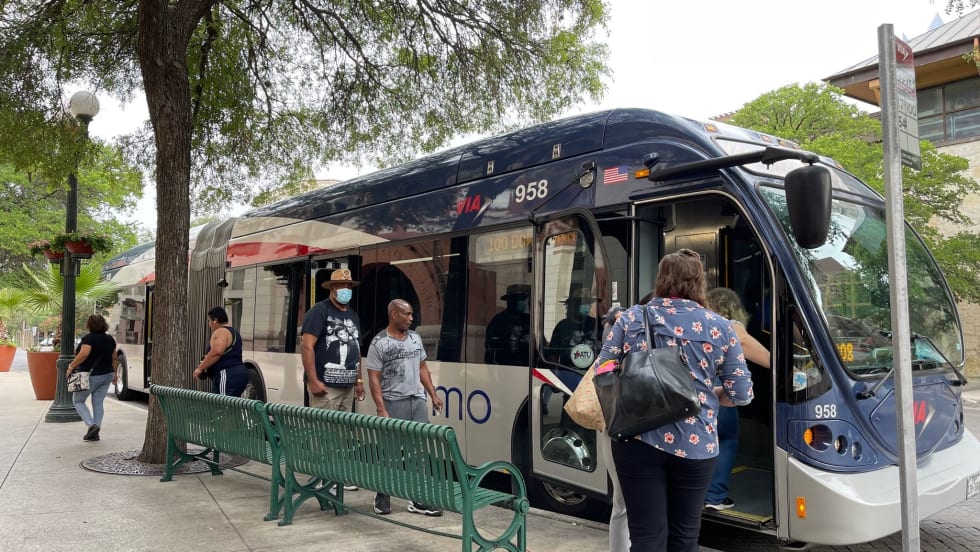
VIA Bus Ridership Grows 10.1% Through August 2026
San Antonio's VIA Metropolitan Transit reported the highest bus ridership growth among major Texas transit systems. Federal Transit Administration data ranked it second among the nation's 50 largest transit systems.
Read More →
CSA Group Releases Climate Resilience Standard for Transit, Passenger Rail
Developed with support from the Standards Council of Canada, CSA D700 guides assessing climate-related risks and planning adaptation measures for transit and passenger rail systems.
Read More →
ETA CEO John Maglio on Transit Technology, Innovation, and Building Agency Trust
ETA founder and CEO John Maglio explores the evolution of transit technology, the importance of reliable systems, and how stronger partnerships can help agencies improve operations and the passenger experience.
Read More →
COTA Launches First Customer Experience Action Plan to Improve Transit Service
The new plan outlines improvements to service reliability, accessibility, communication, and the overall rider experience across Central Ohio's transit system.
Read More →