



TransLoc, Uber partner to pioneer new standard in public transit
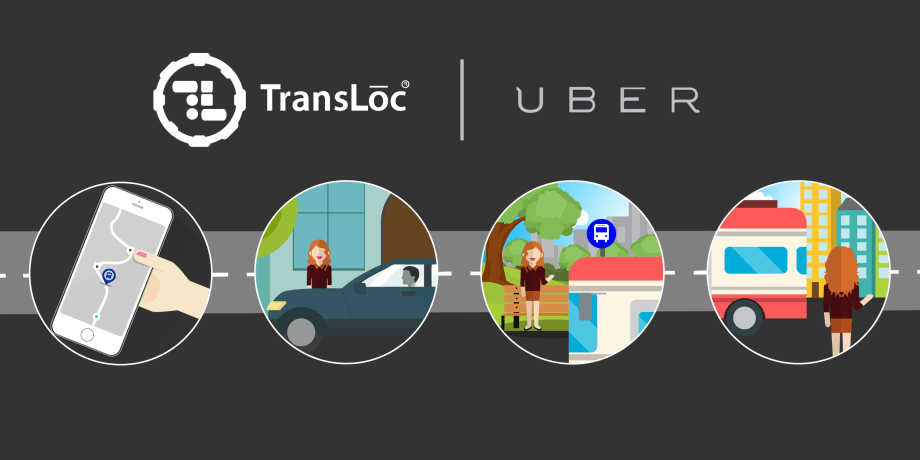
By integrating the Uber API into the TransLoc Rider app, riders can incorporate multiple modes of transportation, including public transit, into commutes.

TransLoc

TransLoc
TransLoc®, a leading provider of transportation technology, is partnering with Uber to create a new standard in public transit and private technology collaboration. This milestone seeks to combine the best of private transportation and public transit for truly integrated mobility. By integrating the Uber API into the TransLoc Rider app, riders can incorporate multiple modes of transportation, including public transit, into commutes.
The first-mile/last-mile challenge is a persistent and ongoing problem facing transit agencies as they try to increase ridership. Many potential transit riders say they would be willing to take public transit, but do not because they lack options to get them to or from their final destination after getting off the bus or train. Instead, they drive the entire trip.
Together, TransLoc and Uber hope to bridge the gap by delivering the certainty and reliability that riders need to complete their entire trip in a way that has never been done before. Building on Uber’s first-of-its-kind partnerships between Transportation Network Companies (TNCs) and transit agencies, this approach is distinct—it creates a seamless connection between Uber and public transit so that more people can easily access it. Users simply input their destination in the Rider app to receive a personalized journey that incorporates the optimal combination of walking, transit and Uber. The app instantly plans a route that will get them where they want to go cost-effectively, quickly and easily.
“It is exciting to see technology companies and public transit agencies work together to test new ways for making trip options convenient and complete,” said Michael Melaniphy, American Public Transportation Association President/CEO. “As private sector innovation accelerates, such partnerships will enhance the attractiveness of public transportation, with the traveling public being the prime beneficiary.”

TransLoc
This new solution marries the strengths of public transit—the transportation backbone of our cities—with the convenience and reliability of Uber, getting riders to and from transit stops to reach their ultimate destination. Both of these key alternative modes of transportation are further enhanced by TransLoc’s technology, which provides real-time tracking. Having accurate arrival predictions makes multi-modal transportation a viable and enjoyable alternative.
“Our mission is to take mass transit from last resort for some, to first choice for all. The partnership with Uber will help advance us toward this goal,” said Doug Kaufman, CEO of TransLoc, “and make public transit a viable option for everyone, not just people who live within a ¼ of a mile of a stop.”
TransLoc Rider with Uber integration will debut in mid-February in Memphis, Tennessee and Raleigh/Durham, N.C. with agency partners Memphis Area Transit Authority and GoTriangle.
More New Mobility

From Hardware to Digital Partner: Luminator Charts Its Next Chapter
CEO Magnus Friberg discusses Luminator’s shift toward becoming a digital partner, the growing importance of software and interoperability, and how AI can help agencies improve operations and passenger experience.
Read More →
Biz Briefs: Alstom Lands Canadian Contract, LYT to Supply California TSP, and More
In METRO's latest installment, we take a look at recent news from Complete Coach Works, Beep, FlixBus, and more partnerships making headlines across the transportation sector.
Read More →
CharterUP’s Armir Harris on Technology, AI, and the Future of Group Mobility
In a recent episode of METROspectives, CharterUP Founder/CEO Armir Harris discussed the company’s evolution from an online charter bus marketplace into a technology platform supporting public- and private-sector mobility and much more.
Read More →
Jacksonville’s NAVI Project Charts a New Course for Autonomous Public Transportation
Through its NAVI program, JTA is showing how autonomous vehicles, intelligent infrastructure, and coordinated operations can work together to deliver everyday public transportation.
Read More →
Biz Briefs: Luminator Marks Milestone and More
From manufacturers and suppliers to transit agencies and motorcoach operators, these updates offer a snapshot of the projects, partnerships and business moves driving the industry forward.
Read More →
New Tricks for Old Bureaucracies: Joshua Schank on Making Transit Innovation Stick
Former LA Metro Chief Innovation Officer Joshua Schank discusses why good ideas aren't enough, how transit agencies can overcome resistance to change, and why today's challenges demand more innovation.
Read More →
How DART's GoPass Is Redefining Regional Mobility
Serving 14 transit agencies, GoPass simplifies multimodal travel by allowing riders to plan, pay for, and manage an entire trip through one app.
Read More →
Biz Briefs: OCTA Taps Clean Energy for Hydrogen Station, Stadler to Supply Via Rail Vehicles, and More
From manufacturers and suppliers to transit agencies and motorcoach operators, these updates offer a snapshot of the projects, partnerships and business moves driving the industry forward.
Read More →CharterUP Expands Into New Mobility and Autonomous Transportation
Vice President of New Mobility Stephen Joos discusses how CharterUP is leveraging its nationwide transportation network, technology platform, and autonomous vehicle partnerships to expand into workforce mobility, campus shuttles, and transit solutions.
Read More →
METRO Magazine Announces 2026 Innovative Solutions Awards Winners
Projects Recognized for Advancing Mobility Through Technology, Accessibility, Workforce Innovation, and Operational Excellence
Read More →