



$27 Billion, 5-Year New York MTA capital program gets final approval
The passage marks the largest investment in MTA infrastructure in state history and outlines five years’ worth of vital investments to renew, enhance and expand the MTA network.

Tim Adams
Gov. Andrew M. Cuomo announced that the $27 billion 2015-19 MTA Capital Program has received final approval from the Capital Plan Review Board. The passage of this Capital Program marks the largest investment in MTA infrastructure in state history and outlines five years’ worth of vital investments to renew, enhance and expand the MTA network.
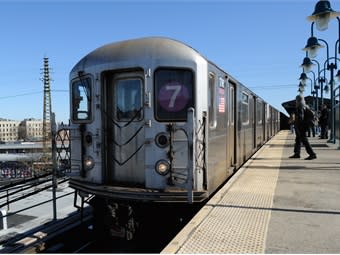
This year, the state committed to $8.3 billion in funding to the MTA’s $27 billion Capital Plan. This investment, when combined with existing efforts, will purchase more than 2,340 buses and 1,450 subway cars to the system; advance an initiative to build four new Metro-North stations in underserved areas of the Bronx and bring Metro-North service to Penn Station; begin the extension of the Second Avenue Subway to East Harlem; continue the project to enhance LIRR performance by adding a second track along 18 miles between Farmingdale and Ronkonkoma; renovate and revitalize stations; an accelerated plan to create a new fare payment system to replace the MetroCard; and continue building the East Side Access project so that LIRR riders will be able to travel into Grand Central Terminal.
In addition to the $27 billion the CPRB approved, the MTA’s Capital Program includes nearly $3 billion in self-funded bridge and tunnel improvement and repair projects financed by MTA Bridges and Tunnels.
Station Renovations
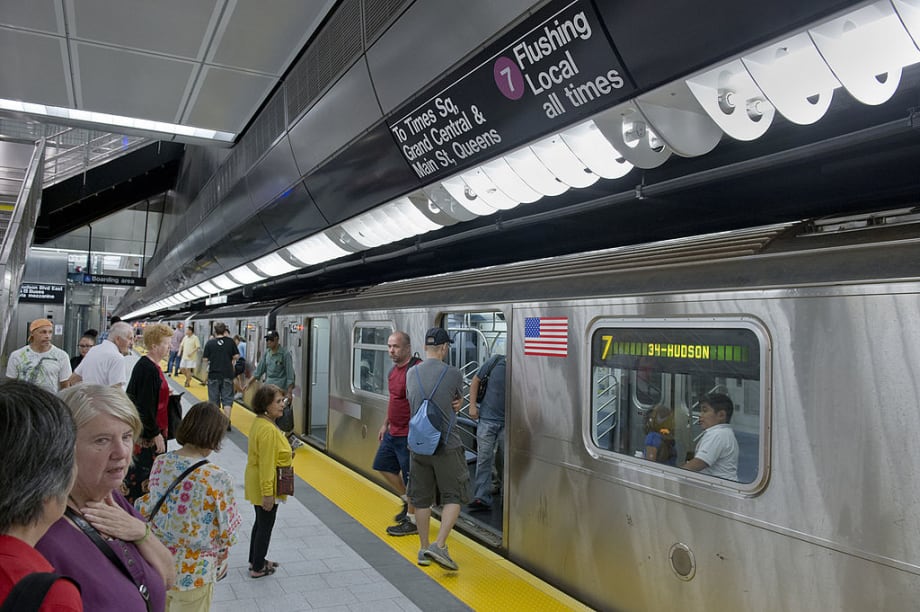
Gov. Cuomo also announced that the MTA is moving forward with a plan to renovate 31 subway stations throughout the New York metropolitan area – a key aspect of his plan to reimagine the MTA for the 21st century. This week, the MTA Board is expected to approve a Request for Statement of Qualifications to begin identifying design-build teams to undertake the massive renovation program.
The station renovation initiative will include a wide range of innovative designs to enhance the customer experience, including dramatically improved lighting and more intuitive signs to make it easier for customers to navigate stations. The renovated stations will also offer amenities such as cellular connectivity, Wi-Fi and new art.
The RSQ is the first step in a two-step process in which the most qualified teams are identified and short listed. After a group of pre-qualified design-build teams have been identified by early summer, teams on the shortlist will be invited to submit proposals on all subsequent station renovation packages beginning in July.
The first contract is expected to be awarded in the fall. Makeover work at the selected stations is expected to be completed in six to 12 months, and the work at most of the 31 stations will be completed by December 2018. The 31 stations included in the Station Renovation Program build upon a larger campaign designed to improve the customer experience that will include component and renewal work at more than 170 other stations.
Double Track
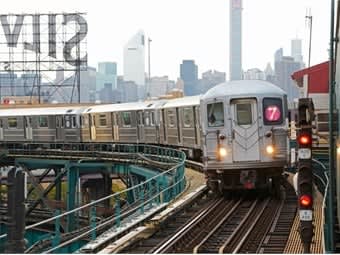
The MTA also announced the advancement of key contracts for the design and construction of the final phase of the Long Island Rail Road's Double Track project, which will dramatically increase capacity of the Ronkonkoma Branch along 18 miles between Farmingdale and Ronkonkoma by adding a second track. The addition will allow the LIRR to provide more frequent off-peak service to the Ronkonkoma Branch in both directions and improve reliability and on-time performance, increasing flexibility and reducing delays associated with service disruptions.
A design-build contract valued at up to $59.7 million will be awarded to Skanska-Posillico II (JV) to design and construct 7.4 miles of track between Farmingdale and Central Islip. A related $44.8 million design-build contract will be awarded to Ansaldo STS USA Inc. to build a new design and signaling system that will use computer-based train control software to better coordinate train movement when the second track is activated. Both contracts are expected to be approved by the MTA Board on Wednesday. Completion of the project is targeted for the end of 2018.
At the direction of the Governor, the LIRR is using design-build contracts – in which a single team of contractors is responsible for both designing and building an entire project – to ensure that coordination is seamless, and that work is completed in the shortest possible timeframe.
Construction work is already in progress. By the time the entire project is completed, the LIRR estimates Double Track will have injected close to $100 million into the Long Island economy.
More Management

METRO Opens Submissions for 2026 Motorcoach Awards
Nominations are now being accepted for METRO Magazine’s Operator of the Year and Innovative Operator of the Year awards.
Read More →
New York MTA Advances Final Contract for Second Avenue Subway Expansion
Contract Four is the largest in the Second Avenue Subway Phase 2 project and includes construction of station infrastructure, tracks, and signals for the subway expansion, MTA officials said. Work on Contract Four will begin in 2027.
Read More →
Transit Agencies Highlight Safety Gains at National Summit
Leaders from 15 major transit systems shared crime-reduction results and safety initiatives while discussing the role of continued federal support.
Read More →

NITA Names New Leadership, Expands Reduced-Fare Program at First Board Meeting
The new regional transit authority appointed its first board chair and interim executive director while extending reduced fares across CTA, Metra, and Pace for eligible riders.
Read More →
Beyond the Checklist: A Structured Approach to Transit Maintenance
Reliability-Centered Maintenance helps transit agencies move beyond routine checklists to focus limited resources on the assets and failures that have the greatest impact on safety, reliability, and service.
Read More →
APTA 2026 Nominating Committee Selects Leadership Slate, Names Chair and Vice Chair Nominees
Leadership changes will help shape the association’s priorities and its representation of the transportation industry during the 2026–2027 term.
Read More →
DART Launches Major Security, Fare Enforcement Initiative
The 90-day demonstration will deploy coordinated security teams at five light rail stations while testing controlled access and gathering data to guide future investments.
Read More →
Advancing Fare Collection Through Technology and Innovation
Learn about delivering 1300 gates at 91 stations while managing fare evasion. Explore the large scale deployment, solution customization and real-world results that affect the region. Prepare for deployment in your region now.
Read More →
Game Day in Motion: Moving Millions During the 2026 World Cup
Between packed transit stations and team motorcoaches, see how agencies and operators across North America tackled the transportation demands of the 2026 FIFA World Cup.
Read More →
Surface Transportation Extension Averts Shutdown, Leaves Transit Funding Gap
The stopgap keeps federal transportation programs moving, but missing advance funding could complicate the transit and rail projects agencies are planning next.
Read More →