




RELATED: Study focues on economics of transportation needs for rural elderly
APTA study finds rural, small town public transit ridership up 8% since 2007
Authors of “Public Transit's Impact on Rural and Small Towns” show that public transit's affordability and the demographic makeup of these areas combine to make public transit desirable for rural and small town populations.
October 6, 2017

Public transit can help this population access needed services, particularly wounded veterans with limited mobility, according to the report.
Greensboro Transit Authority
3 min to read
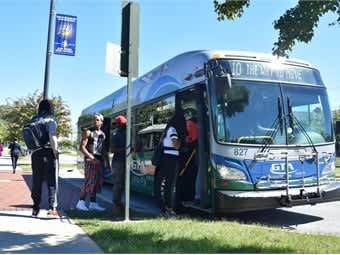
Public transit can help this population access needed services, particularly wounded veterans with limited mobility, according to the report.
Greensboro Transit Authority
While America's rural population declined by more than half a million people, small town and rural public transit ridership increased 7.8% from 2007 to 2015, according to a new study by the American Public Transportation Association (APTA).
The study authors of “Public Transit's Impact on Rural and Small Towns” show that public transit's affordability and the demographic makeup of these areas combine to make public transit desirable for rural and small town populations. Seniors, veterans, and people with disabilities have the highest public transit use in these areas.
"We know the impact of public transportation in urban areas, however, people may not realize it is a lifeline service for many in rural and small communities," said APTA Acting President/CEO Richard A. White. "As the Administration and Congress begin to discuss the prospects for creating a new infrastructure initiative, it is crucial to include investments in public transportation because of its importance among seniors, veterans, and those with disabilities in these communities. In addition, a commitment from Congress to fully fund public transportation through the FAST ACT will also be essential in serving their needs."
Authors of the report note that rural and small town residents with disabilities, particularly, rely upon public transportation. These residents take nearly 50% more public transit trips than unimpaired people. There are 2.9 million veterans residing in rural and small towns, which make up 33% of the veteran population enrolled in the VA health care system. Public transit can help this population access needed services, particularly wounded veterans with limited mobility, according to the report.
"Public transit is an important factor supporting these rural and small town economies by connecting people with local businesses, healthcare and job opportunities," said Scott Bogren, executive director, Community Transportation Association of America. "Because of the consistent resiliency of ridership in these areas, increased funding will be crucial to address growing demand and capital needs."
The authors of the report noted that seniors make up a larger portion of rural and small town populations (17%) compared to urban populations (13%). This is because most seniors want to age in place while many younger adults head for higher employment urban areas after they finish school.
Taking public transit can help reduce vehicle expenditures related to fuel and maintenance. In fact, rural and small town households spend nearly 7% more of their budgets on transportation than those in urban households. Overall, costs of operating even an older car can cost $3,000 annually or $20 per trip. A five-mile rural public transit trip costs nearly $7 compared to a $10-15 cab fare.
"Expanding public transit in rural and small towns provides a safe alternative that helps reduce the risk of road accidents for vulnerable populations; while at the same time, its use promotes active lifestyles," said White. "Growing investments in rural public transit can have a big impact and increased federal investment can help address this."
More Management

METRO Opens Submissions for 2026 Motorcoach Awards
Nominations are now being accepted for METRO Magazine’s Operator of the Year and Innovative Operator of the Year awards.
Read More →
New York MTA Advances Final Contract for Second Avenue Subway Expansion
Contract Four is the largest in the Second Avenue Subway Phase 2 project and includes construction of station infrastructure, tracks, and signals for the subway expansion, MTA officials said. Work on Contract Four will begin in 2027.
Read More →
Transit Agencies Highlight Safety Gains at National Summit
Leaders from 15 major transit systems shared crime-reduction results and safety initiatives while discussing the role of continued federal support.
Read More →

NITA Names New Leadership, Expands Reduced-Fare Program at First Board Meeting
The new regional transit authority appointed its first board chair and interim executive director while extending reduced fares across CTA, Metra, and Pace for eligible riders.
Read More →
Beyond the Checklist: A Structured Approach to Transit Maintenance
Reliability-Centered Maintenance helps transit agencies move beyond routine checklists to focus limited resources on the assets and failures that have the greatest impact on safety, reliability, and service.
Read More →
APTA 2026 Nominating Committee Selects Leadership Slate, Names Chair and Vice Chair Nominees
Leadership changes will help shape the association’s priorities and its representation of the transportation industry during the 2026–2027 term.
Read More →
DART Launches Major Security, Fare Enforcement Initiative
The 90-day demonstration will deploy coordinated security teams at five light rail stations while testing controlled access and gathering data to guide future investments.
Read More →
Sponsored•September 9, 2026
Advancing Fare Collection Through Technology and Innovation
Learn about delivering 1300 gates at 91 stations while managing fare evasion. Explore the large scale deployment, solution customization and real-world results that affect the region. Prepare for deployment in your region now.
Read More →
Game Day in Motion: Moving Millions During the 2026 World Cup
Between packed transit stations and team motorcoaches, see how agencies and operators across North America tackled the transportation demands of the 2026 FIFA World Cup.
Read More →
Surface Transportation Extension Averts Shutdown, Leaves Transit Funding Gap
The stopgap keeps federal transportation programs moving, but missing advance funding could complicate the transit and rail projects agencies are planning next.
Read More →