



N.Y.'s RTS deploys Conduent Transportation's fleet management tech.
Enhancements will include a new driver-assist system to help keep buses on schedule, ultimately providing better service.

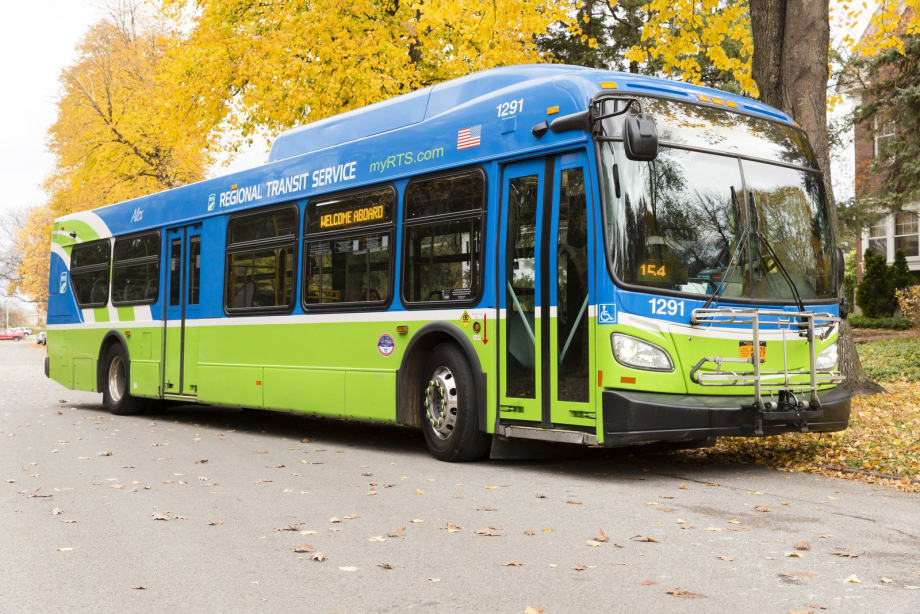
Rochester, N.Y.’s Regional Transit Service will upgrade its fleet’s onboard hardware and software with technology from Conduent Transportation. Photo: Conduent Transportation
Rochester, N.Y.’s Regional Transit Service will upgrade its fleet’s onboard hardware and software with technology from Conduent Transportation. Photo: Conduent Transportation
In an ongoing effort to make public transportation more efficient and attractive to riders, Regional Transit Service (RTS) in Rochester, N.Y. is upgrading its fleet's onboard hardware and software with technology from Conduent Transportation. The enhancements will include a new driver-assist system to help keep buses on schedule, ultimately providing better service to passengers.
Conduent Transportation installed the original computer-aided dispatch/automatic vehicle location (CAD/AVL) system in 2001. The system connects vehicles to back-office scheduling and dispatching software, allowing transit operations to run smoothly.
As the current system reached the end of its useful life, the company proposed an upgrade to the existing CAD/AVL system, including replacing aging hardware and updating software. Following a successful pilot, RTS and Conduent reached an agreement to proceed with the full fleet implementation, which will extend the system's lifespan and save RTS approximately $8.5 million.
The upgrade includes the Conduent Fleet Management System and Service, which consolidates and simplifies vehicle operations, allowing more integration, expandability and connectivity with communications on the bus and across the entire system.
The integrated onboard vehicle processor is a durable open platform designed for the public transit industry. It provides the computing power needed to receive various data streams on vehicle performance and deliver them to a dashboard monitored in real-time by dispatchers, drivers, mechanics and supervisors.
For example, RTS supervisors will have immediate access to data for buses on the road. This way, if there is an incident with a bus, like an accident or breakdown, supervisors can respond quicker, helping ensure overall on-time performance.
"Upgrading RTS' transportation system will also give customers more options when planning routes via a highly accurate GPS system they can access through the RTS "Where's My Bus?" app and website," said Don Hubicki, GM, Conduent, Transportation. "By knowing in advance about roadway restrictions or delays, riders can make instant travel decisions to ensure they get where they need to be on time."
A total of 214 buses will be upgraded with these and other new features throughout spring and summer 2018. Other key system upgrades include:
Conduent's enhanced vehicle inspection tool, which allows RTS operators to easily and efficiently record bus inspection results at the start and end of their shifts to enhance safety and optimize maintenance activities.
Improved mapping features to give dispatchers greater visibility and control of operations.
Enhanced detour management features, enabling RTS to quickly and efficiently notify drivers and passengers of route changes.
More Management

METRO Opens Submissions for 2026 Motorcoach Awards
Nominations are now being accepted for METRO Magazine’s Operator of the Year and Innovative Operator of the Year awards.
Read More →
New York MTA Advances Final Contract for Second Avenue Subway Expansion
Contract Four is the largest in the Second Avenue Subway Phase 2 project and includes construction of station infrastructure, tracks, and signals for the subway expansion, MTA officials said. Work on Contract Four will begin in 2027.
Read More →
Transit Agencies Highlight Safety Gains at National Summit
Leaders from 15 major transit systems shared crime-reduction results and safety initiatives while discussing the role of continued federal support.
Read More →

NITA Names New Leadership, Expands Reduced-Fare Program at First Board Meeting
The new regional transit authority appointed its first board chair and interim executive director while extending reduced fares across CTA, Metra, and Pace for eligible riders.
Read More →
Beyond the Checklist: A Structured Approach to Transit Maintenance
Reliability-Centered Maintenance helps transit agencies move beyond routine checklists to focus limited resources on the assets and failures that have the greatest impact on safety, reliability, and service.
Read More →
APTA 2026 Nominating Committee Selects Leadership Slate, Names Chair and Vice Chair Nominees
Leadership changes will help shape the association’s priorities and its representation of the transportation industry during the 2026–2027 term.
Read More →
DART Launches Major Security, Fare Enforcement Initiative
The 90-day demonstration will deploy coordinated security teams at five light rail stations while testing controlled access and gathering data to guide future investments.
Read More →
Advancing Fare Collection Through Technology and Innovation
Learn about delivering 1300 gates at 91 stations while managing fare evasion. Explore the large scale deployment, solution customization and real-world results that affect the region. Prepare for deployment in your region now.
Read More →
Game Day in Motion: Moving Millions During the 2026 World Cup
Between packed transit stations and team motorcoaches, see how agencies and operators across North America tackled the transportation demands of the 2026 FIFA World Cup.
Read More →
Surface Transportation Extension Averts Shutdown, Leaves Transit Funding Gap
The stopgap keeps federal transportation programs moving, but missing advance funding could complicate the transit and rail projects agencies are planning next.
Read More →