



S.F.'s new Salesforce Transit Center open for business
In the future, the Transit Center will link to eleven transit systems, and high-speed rail.

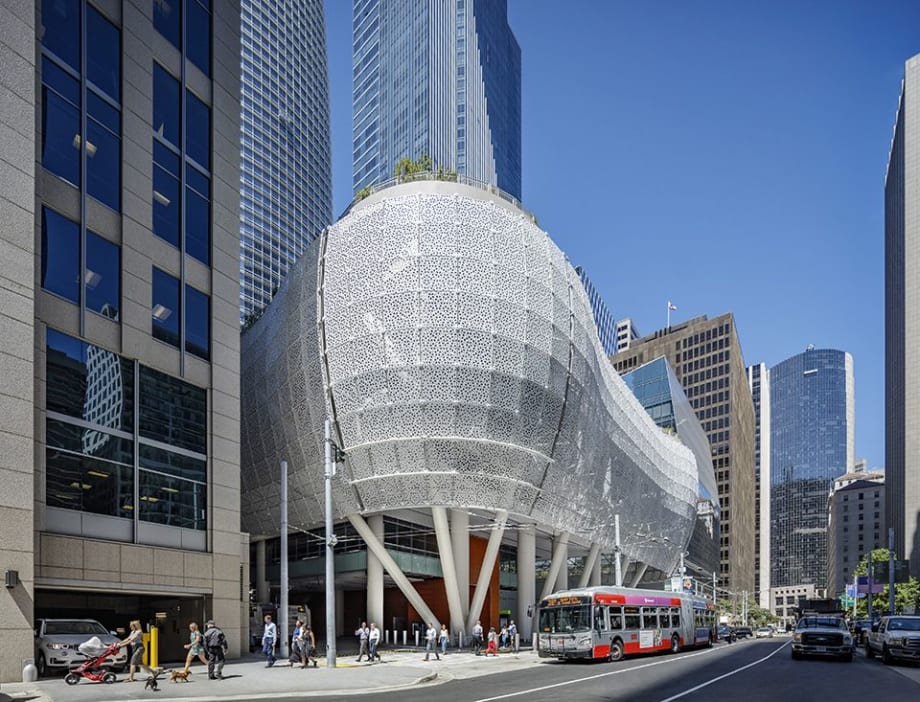
The Transbay Joint Powers Authority (TJPA) officially opened its new Salesforce Transit Center with inaugural Transbay bus service by AC Transit and others on August 12, 2018. Photo: © Tim Griffith
The Transbay Joint Powers Authority (TJPA) officially opened its new Salesforce Transit Center with inaugural Transbay bus service by AC Transit and others on August 12, 2018. Photo: © Tim Griffith
The Transbay Joint Powers Authority (TJPA) officially opened its new Salesforce Transit Center with inaugural Transbay bus service by AC Transit and others. In the future, the Transit Center will link to eleven transit systems, and high-speed rail.
The transit center replaces the seismically deficient Transbay Terminal with a modern regional transportation hub connecting transit systems throughout the Bay Area. It includes a 5.4-acre rooftop public park programmed with year-round free activities, a public art program, and 100,000 square feet of shopping and dining.
At one million square feet, the center stretches four blocks with four stories above ground and two stories below. The transit center will help ease traffic congestion, reduce pollution, and make transit easier and more efficient.
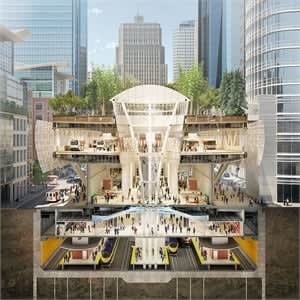
At one million square feet, the new Salesforce Transit Center stretches four blocks with four stories above ground and two stories below. Rendering: © Steelblue
Planning and design is underway for Phase 2; a 1.3-mile Downtown Rail Extension that will bring Caltrain from its current terminus at Fourth and King to the transit center. The center will also be the northern terminus for California’s high-speed rail system.
With more than 600 trees and 16,000 plants incorporated into its rooftop park, the Transit Center's ecosystem will capture 12 tons of carbon annually.
The Transit Center will also reduce greenhouse gas emissions significantly. The annual energy consumption is projected to be 50% lower than the 2008 Title 24 Energy Efficiency Standards. Its associated carbon emissions will be reduced by approximately 40%.
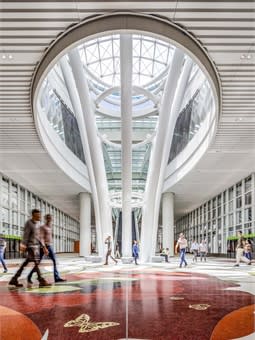
The transit center’s name is the result of a naming rights agreement with San Francisco-based cloud computing company, Salesforce. Photo: © Tim Griffith
Additionally, the Transit Center’s roof, by virtue of having the park, retains and reuses storm water that would otherwise flow into sewers. The building’s water reuse system is among the first of its kind in San Francisco. It is also the first project in San Francisco with a rooftop wetland filtration system. This will save 13.9 million gallons of water and 17,000 tons of carbon dioxide each year due to water conservation and reuse.
The project is on track to receive a Gold certification under the LEED 2009 rating system.
The center is owned and operated by the TJPA, managed by Lincoln Property Co.,
and designed by award-winning Pelli Clarke Pelli Architects. It was built by Webcor-Obayashi Joint Venture.
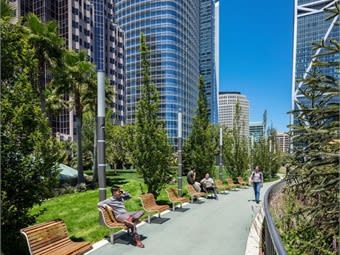
With more than 600 trees and 16,000 plants incorporated into its rooftop park, the Transit Center's ecosystem will capture 12 tons of carbon annually. Photo: © Tim Griffith
The transit center’s name is the result of a naming rights agreement with San Francisco-based cloud computing company, Salesforce.
More Management

LIT Marks 10-Year Milestone at Annual Summit
Hosted by the COTA from September 10 to 13, the Summit carried the theme “Celebrating 10 Years of Excellence, Leadership, and Impact,” with every part of the program honoring the people, agencies, and partners who built LIT over its first decade.
Read More →
People Movement: Dan Dipert Coaches Adds Third-Generation Leader, Keolis Names New Valley Metro VP/GM, and More
In this edition, we also cover recent appointments and announcements at the Wabtec, SilverRide, HNTB, and more, showcasing the individuals helping to shape the future of transportation.
Read More →
METRO Opens Submissions for 2026 Motorcoach Awards
Nominations are now being accepted for METRO Magazine’s Operator of the Year and Innovative Operator of the Year awards.
Read More →

New York MTA Advances Final Contract for Second Avenue Subway Expansion
Contract Four is the largest in the Second Avenue Subway Phase 2 project and includes construction of station infrastructure, tracks, and signals for the subway expansion, MTA officials said. Work on Contract Four will begin in 2027.
Read More →
Transit Agencies Highlight Safety Gains at National Summit
Leaders from 15 major transit systems shared crime-reduction results and safety initiatives while discussing the role of continued federal support.
Read More →
NITA Names New Leadership, Expands Reduced-Fare Program at First Board Meeting
The new regional transit authority appointed its first board chair and interim executive director while extending reduced fares across CTA, Metra, and Pace for eligible riders.
Read More →
Beyond the Checklist: A Structured Approach to Transit Maintenance
Reliability-Centered Maintenance helps transit agencies move beyond routine checklists to focus limited resources on the assets and failures that have the greatest impact on safety, reliability, and service.
Read More →
APTA 2026 Nominating Committee Selects Leadership Slate, Names Chair and Vice Chair Nominees
Leadership changes will help shape the association’s priorities and its representation of the transportation industry during the 2026–2027 term.
Read More →
DART Launches Major Security, Fare Enforcement Initiative
The 90-day demonstration will deploy coordinated security teams at five light rail stations while testing controlled access and gathering data to guide future investments.
Read More →
Advancing Fare Collection Through Technology and Innovation
Learn about delivering 1300 gates at 91 stations while managing fare evasion. Explore the large scale deployment, solution customization and real-world results that affect the region. Prepare for deployment in your region now.
Read More →