



BYD invests $5M into new warehouse facility
This is the firm’s fourth expansion of its current manufacturing campus in Los Angeles County, bringing its total investment in Lancaster facilities to more than $53 million.

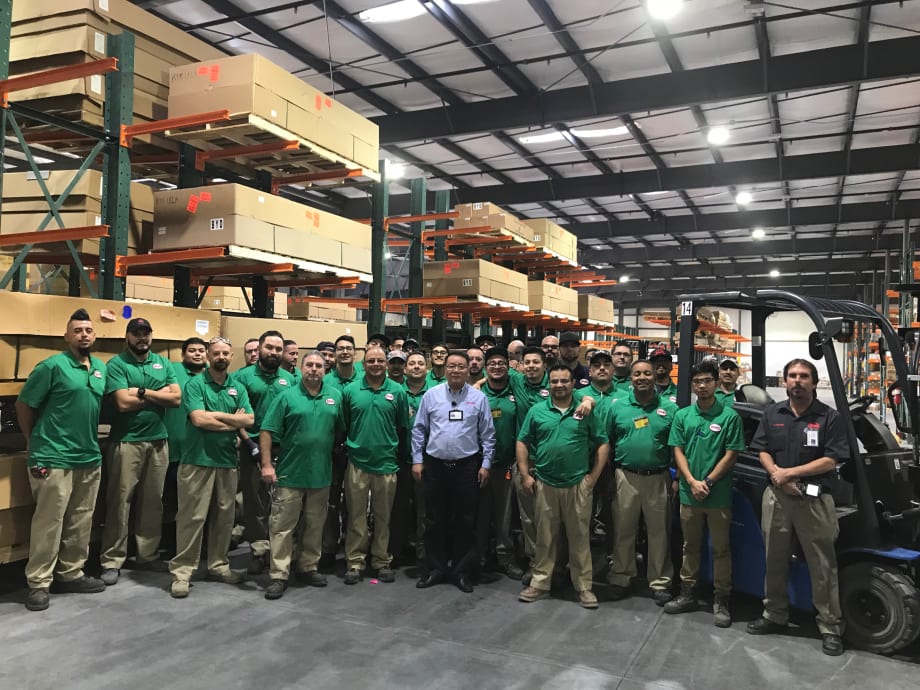
The new warehouse provides additional space and ability to further streamline the handling of materials and supplies.
BYD
The new warehouse provides additional space and ability to further streamline the handling of materials and supplies.
BYD
BYD announced the completion of its latest U.S. investment, a new $5 million, 100,000-square-foot warehouse for its Lancaster, Calif., manufacturing plant. This is the firm’s fourth expansion of its current manufacturing campus in Los Angeles County, bringing its total investment in Lancaster facilities to more than $53 million.
“BYD’s latest investment to boost efficiency and production, in order to meet increasingly high demand for its vehicles, is just one example of what the company has done and continues to do for our local, regional and national economies,” said City of Lancaster Mayor R. Rex Parris. “BYD’s strong sense of corporate citizenship and continued investment has resulted in a better quality of life for those living in Lancaster as well as the surrounding areas.”
The new warehouse provides additional space and ability to further streamline the handling of materials and supplies. It also frees up space on BYD’s adjacent massive 450,000-square-foot manufacturing plant floor, allowing for greater production and operational efficiencies.
“We have the capacity to produce up to 1,500 battery-electric buses a year, which will go a long way toward creating a cleaner climate and a quieter, more efficient way to travel,” said Bobby Hill, VP of BYD North America, Coach and Bus. BYD has delivered more than 270 buses in North America, with an additional 80-plus buses in current production and 300 bus orders with options that could double that number.
Since it first opened in 2013, the Lancaster manufacturing plant has grown from 106,000-square-feet and a workforce of a few dozen to a facility that now covers more than a half million square feet and employs more than 820 workers. The firm is the only electric vehicle manufacturer in the U.S. to have an all-union workforce, and an exceptionally diverse team of employees.
The warehouse may be the latest expansion but BYD North America has much more in the works. The company has invested in the purchase of an additional 150 acres of land near its Lancaster manufacturing plant and is planning service/maintenance centers across the U.S.
BYD has invested more than $250 million in the region to date, including some $53 million in the Lancaster facilities to date. The firm’s battery-electric, zero-emission buses not only meet but also exceed all current and future stated FTA “Buy America” requirements, incorporating 70%-plus U.S. content. BYD is projected to spend over $50 million this year with U.S. vendors
BYD is committed to hiring locally and from communities that are typically underrepresented in manufacturing including second chance employees, veterans, women, and people of color. BYD’s diverse workforce is currently comprised of 85% minority employees.
“Helping to bring back manufacturing to the U.S., we are proud of our BYD North America team, working every day to produce quality electric transportation that will provide a cleaner environment around the nation,” said Stella Li, president of BYD. “Our model proves that going green can be good for the economy, good for workers and good for America.”
More Management

LIT Marks 10-Year Milestone at Annual Summit
Hosted by the COTA from September 10 to 13, the Summit carried the theme “Celebrating 10 Years of Excellence, Leadership, and Impact,” with every part of the program honoring the people, agencies, and partners who built LIT over its first decade.
Read More →
People Movement: Dan Dipert Coaches Adds Third-Generation Leader, Keolis Names New Valley Metro VP/GM, and More
In this edition, we also cover recent appointments and announcements at the Wabtec, SilverRide, HNTB, and more, showcasing the individuals helping to shape the future of transportation.
Read More →
METRO Opens Submissions for 2026 Motorcoach Awards
Nominations are now being accepted for METRO Magazine’s Operator of the Year and Innovative Operator of the Year awards.
Read More →

New York MTA Advances Final Contract for Second Avenue Subway Expansion
Contract Four is the largest in the Second Avenue Subway Phase 2 project and includes construction of station infrastructure, tracks, and signals for the subway expansion, MTA officials said. Work on Contract Four will begin in 2027.
Read More →
Transit Agencies Highlight Safety Gains at National Summit
Leaders from 15 major transit systems shared crime-reduction results and safety initiatives while discussing the role of continued federal support.
Read More →
NITA Names New Leadership, Expands Reduced-Fare Program at First Board Meeting
The new regional transit authority appointed its first board chair and interim executive director while extending reduced fares across CTA, Metra, and Pace for eligible riders.
Read More →
Beyond the Checklist: A Structured Approach to Transit Maintenance
Reliability-Centered Maintenance helps transit agencies move beyond routine checklists to focus limited resources on the assets and failures that have the greatest impact on safety, reliability, and service.
Read More →
APTA 2026 Nominating Committee Selects Leadership Slate, Names Chair and Vice Chair Nominees
Leadership changes will help shape the association’s priorities and its representation of the transportation industry during the 2026–2027 term.
Read More →
DART Launches Major Security, Fare Enforcement Initiative
The 90-day demonstration will deploy coordinated security teams at five light rail stations while testing controlled access and gathering data to guide future investments.
Read More →
Advancing Fare Collection Through Technology and Innovation
Learn about delivering 1300 gates at 91 stations while managing fare evasion. Explore the large scale deployment, solution customization and real-world results that affect the region. Prepare for deployment in your region now.
Read More →