



NJ TRANSIT launches customer-focused communications initiative
The effort focuses on addressing customer needs, providing more timely information, and improving all customer touchpoints.

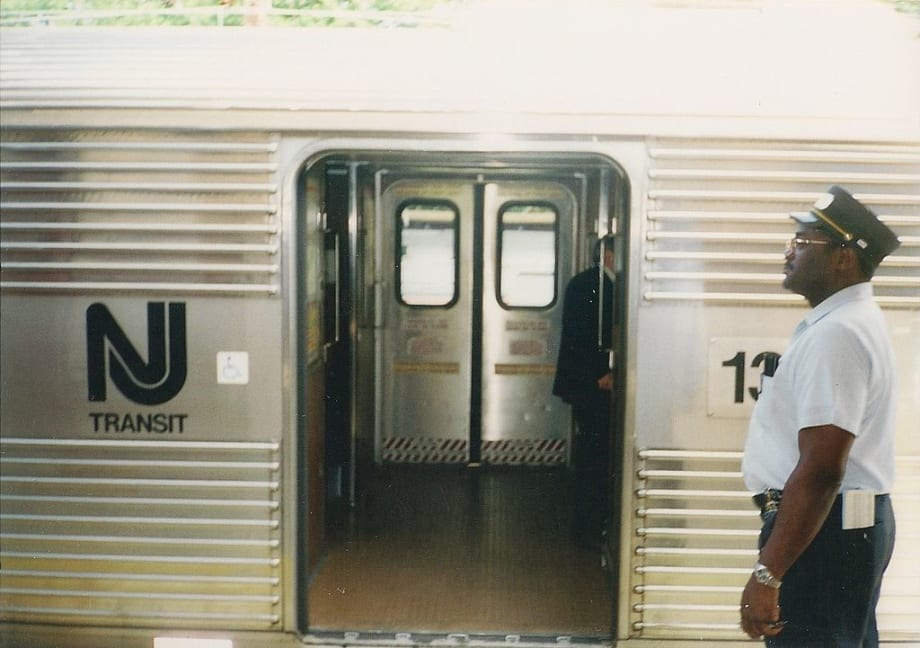
NJ TRANSIT has actively and aggressively been taking action to improve service and communications since Gov. Murphy signed an executive order examining NJ TRANSIT operations in January.
Michael Barrera
NJ TRANSIT has actively and aggressively been taking action to improve service and communications since Gov. Murphy signed an executive order examining NJ TRANSIT operations in January.
Michael Barrera
NJ TRANSIT launched a new comprehensive communications initiative aimed at improving the customer experience. The effort, entitled "Engage. Inform. Improve." focuses on addressing customer needs, providing more timely information, and improving all customer touchpoints, including announcements, station and facility conditions, and the onboard experience.
"These three ideals of Engage. Inform. Improve. will be the foundation upon which we continue to transform and improve NJ TRANSIT," said NJ TRANSIT Executive Director Kevin Corbett. "These will be the guiding principles to ensure that everything we do moving forward supports the customer at the forefront."
The initiative will roll out in three phases:
Engage: NJ TRANSIT will actively engage customers for their input and listen to customer needs to identify areas in need of improvement. This includes proactive survey engagement and greater social media engagement.
Inform: Customers will receive more proactive and effective communications from NJ TRANSIT in real time during service disruptions, will provide easier access to critical information, and inform customers of efforts to improve operations.
Improve: NJ TRANSIT will continue to implement new ideas to improve the customer experience as part of a continuous feedback loop and develop and deploy new technology to strengthen operations and improve service.
NJ TRANSIT has actively and aggressively been taking action to improve service and communications since Gov. Murphy signed an executive order examining NJ TRANSIT operations in January. These efforts include:
A procurement is currently underway for the purchase of 113 new multi-level railcars.
182 new 45-foot cruiser buses continue to arrive this year as part of a five-year delivery contract.
An upgraded mobile app, which features customized transit alerts sent to customers via push notifications. Additionally, customers can access Apple Pay and Google Pay to make purchases through the app.
The upcoming creation of a Customer Experience unit, which will be responsible for monitoring and assessing all facets of the customer experience from the time a customer enters a station until they leave their destination point, including PA announcements, conditions onboard, and at facilities.
The installation of new touch-screen interactive information kiosks at Newark Penn Station, Hoboken Terminal, and at Harborside and Pavonia stations along the HBLR as part of a pilot program.
Successful recruiting efforts to attract additional bus operators and locomotive engineers. Since Jan. 1, more than 300 new bus operators have been hired and more than 5,000 applications for locomotive engineers have been received.
Four new locomotive engineer training classes are underway with 13 engineers anticipated to graduate in May 2019, and three additional classes graduating before the end of 2019.
The average cycle time on procurements has been reduced by 30%, compared to 2017 and by 40% when compared to 2016.
In the process of upgrading smartphone devices for train crews, which will provide real-time service information to share onboard with customers.
More Management

METRO Opens Submissions for 2026 Motorcoach Awards
Nominations are now being accepted for METRO Magazine’s Operator of the Year and Innovative Operator of the Year awards.
Read More →
New York MTA Advances Final Contract for Second Avenue Subway Expansion
Contract Four is the largest in the Second Avenue Subway Phase 2 project and includes construction of station infrastructure, tracks, and signals for the subway expansion, MTA officials said. Work on Contract Four will begin in 2027.
Read More →
Transit Agencies Highlight Safety Gains at National Summit
Leaders from 15 major transit systems shared crime-reduction results and safety initiatives while discussing the role of continued federal support.
Read More →

NITA Names New Leadership, Expands Reduced-Fare Program at First Board Meeting
The new regional transit authority appointed its first board chair and interim executive director while extending reduced fares across CTA, Metra, and Pace for eligible riders.
Read More →
Beyond the Checklist: A Structured Approach to Transit Maintenance
Reliability-Centered Maintenance helps transit agencies move beyond routine checklists to focus limited resources on the assets and failures that have the greatest impact on safety, reliability, and service.
Read More →
APTA 2026 Nominating Committee Selects Leadership Slate, Names Chair and Vice Chair Nominees
Leadership changes will help shape the association’s priorities and its representation of the transportation industry during the 2026–2027 term.
Read More →
DART Launches Major Security, Fare Enforcement Initiative
The 90-day demonstration will deploy coordinated security teams at five light rail stations while testing controlled access and gathering data to guide future investments.
Read More →
Advancing Fare Collection Through Technology and Innovation
Learn about delivering 1300 gates at 91 stations while managing fare evasion. Explore the large scale deployment, solution customization and real-world results that affect the region. Prepare for deployment in your region now.
Read More →
Game Day in Motion: Moving Millions During the 2026 World Cup
Between packed transit stations and team motorcoaches, see how agencies and operators across North America tackled the transportation demands of the 2026 FIFA World Cup.
Read More →
Surface Transportation Extension Averts Shutdown, Leaves Transit Funding Gap
The stopgap keeps federal transportation programs moving, but missing advance funding could complicate the transit and rail projects agencies are planning next.
Read More →