



Crisis Communications and Reputation Management for Motorcoach Operators
Just an hour ago you were a safe, respected motorcoach operator taking a group of middle school students on a field trip to a well-known museum or operating a scheduled service run between two big cities. Now, you’re in the eye of a hurricane. So, what are you going to do?
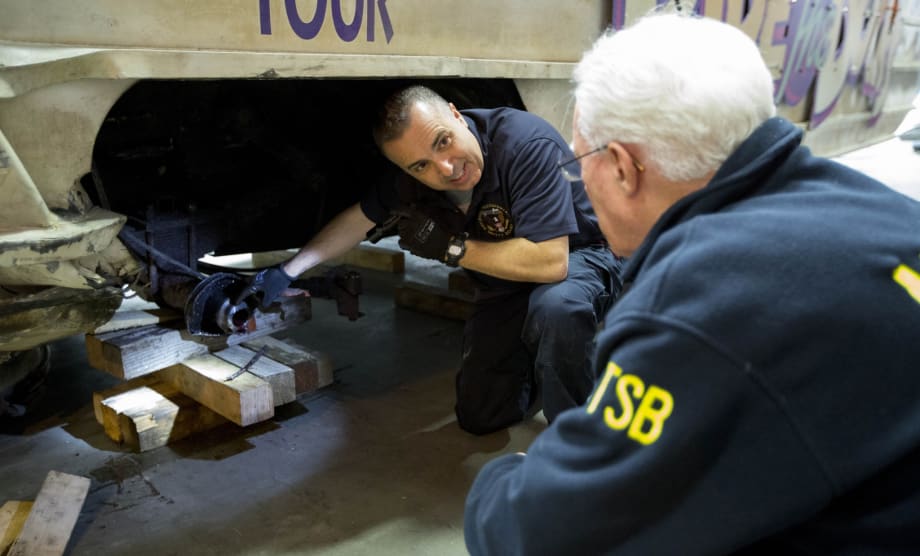
All photos courtesy NTSB
All photos courtesy NTSB
A call from one of your motorcoach drivers or a law enforcement official informing you that one of your vehicles has just been in an accident is one of the worst experiences your company, and you, will go through.
In a matter of seconds, instead of working on the routine but important issues relating to your business and its operation, you’ll be receiving a flood of calls, emails, and other inquiries about what just happened and what your company will be doing to fix the situation. Your phone system, designed to process business calls, may be overwhelmed.
You and your staff will have dozens of decisions to make over the next several hours and days. Your stress level will significantly increase. And, if you make the wrong decision, especially concerning your company’s long-term reputation, its very future may be in jeopardy. All the years of hard work, determination and careful planning could be lost.
We now live in a 24/7 world of instant wireless communication where, within minutes of the accident, photos, videos and other information will be posted on Facebook, Twitter, Instagram and other social media platforms. We must assume that every passenger on a motorcoach has a smartphone, and if they’re not injured, one of the first things they’ll do is record video and start taking pictures. How many times have we seen on local and national newscasts, or websites, a video that a person recorded on a smartphone or from some camera that was being used by law enforcement, such as a body or security camera? Many motorcoach companies have installed cameras on coaches and that video may also go public. In all of these cases, that video is a critical part of the story.
Local TV, newspapers and radio newsrooms all carefully monitor social media, as well as police scanners. Once they find out there’s a story, they’ll have reporters headed to the accident scene and to your offices within minutes.
What’s the solution?
Now that we’ve framed the problem and some of the challenges, let’s look at solutions.
First, the National Transportation Safety Board (NTSB) has recognized the motorcoach industry is the safest form of surface transportation, and thankfully, accidents are rare.
My former journalism colleagues are all good at covering spot news; they get to the scene and shoot video, search social media for pictures and video on smartphones, interview the passengers who were not hurt, and question law enforcement and officials at the hospital about those that may need medical treatment. Next, even though the accident may have just occurred, they’ll try to find a reason the crash occurred. If they can’t do that, the next best thing is to interview a so-called “expert” and get them to speculate on what took place.
If the story is significant, with a large number of injured or deceased, or if it happened in a large media market such as New York, Los Angeles, Chicago, Washington D.C., or Dallas/Fort Worth, it will receive national media coverage. The story will also be picked up by the major news organizations and put on their websites, and possibly, the network newscasts.
A nightmare scenario
Think about this. Just an hour ago you were a safe, respected motorcoach operator taking a group of middle-school students on a field trip to a well-known museum or operating a scheduled service run between two big cities. Now, you’re in the eye of a hurricane. So, what are you going to do?
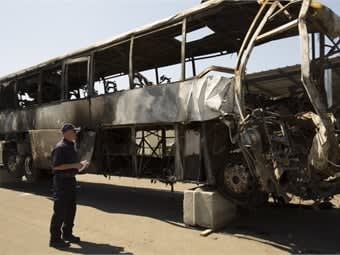
Although the NTSB recognizes the motorcoach as the safest form of surface transportation, it is imperative that an operation is prepared for a crisis.
If you hadn’t given any thought to this scenario before reading this article, and you haven’t had an accident, you’re lucky. Even if you’re a great operator, and that’s a top priority, remember this: accidents don’t work on a schedule. They’re called accidents for a reason. No one starts the day planning to have one. Most of the time, it’s the unhappy meeting of bad timing and even worse luck. It’s often said among professional investigators that an accident is a chain of unrelated events, some known and some unknown, that come together at precisely the wrong time and causes an accident. As hard as everyone tries to create an entirely accident-free environment on your motorcoaches and in the workplace, accidents happen. But if you’re not prepared, and you don’t have a detailed plan in place, you need to begin the process now. Tomorrow may be too late.
Here are some of the things I suggest you say to reporters, either in a written statement or during an interview:
• “The company is cooperating with law enforcement, and it is focused on helping the passengers involved in the accident and their families.”
• “We are working with the authorities and first responders to collect and secure the luggage and other personal items returned to the passengers.”
• “The company has set up a phone number for families of passengers to call.”
• “The cause of the accident is unknown, and what happened may not be evident for some time. The company’s highest priority is always safety, and we are fully cooperating with all of the interested parties in the investigation of this accident. Once it’s determined what caused the crash, we will be transparent and review its findings closely so we can improve our culture of safety.”
What do you say?
There are several key points every company should know in these critical hours. First, the driver should never speak to the media. It’s not their job. They’ve just been involved in an accident, and if they’re not injured, the driver’s priorities are helping the passengers, securing the vehicle, and serving as your company’s eyes and ears until a manager arrives.
Many companies now give drivers what look like business cards with the name, phone number and email contact of the person who is talking to the media. Tell your drivers to stay away from the cameras and microphones. Remember that cameras are no longer bulky, and a reporter on the scene may be recording your comments and actions on a smartphone or a tablet, and you may not be aware of what’s taking place.
In recent years, there’s been another significant positive change in the way companies interact with the media and it concerns the words “No comment.” The NTSB, the academic community and public relations professionals realize “No comment” is precisely the wrong thing to say. It looks like your company is hiding something.
However showing concern for your passengers and empathy is not an admission of guilt. What it means is that your business is a good corporate citizen and wants to do the right thing. Research has shown that companies that are honest, responsive and as transparent as possible after an accident pay less money when it comes to insurance claims. Saying “No Comment” and not responding to a reporter or not answering your phone calls and emails is the wrong way to go.
You are not alone
You run a superb motorcoach operation, and you care about your reputation and treating your passengers right. It’s possible your company may never have an accident that causes injuries or deaths, and you may never get that awful phone call. We all hope that’s the case, but are you willing to take that risk and not be prepared?
Dan Ronan (dlronan23@gmail.com) is a nationally recognized expert on crisis communications and reputation management issues.
More Motorcoach

METRO Opens Submissions for 2026 Motorcoach Awards
Nominations are now being accepted for METRO Magazine’s Operator of the Year and Innovative Operator of the Year awards.
Read More →
Biz Briefs: Alstom Lands Canadian Contract, LYT to Supply California TSP, and More
In METRO's latest installment, we take a look at recent news from Complete Coach Works, Beep, FlixBus, and more partnerships making headlines across the transportation sector.
Read More →
Biz Briefs: RIPTA Unveils New Frontrunners, Clevland RTA Adds New Siemens, and More
In METRO's latest installment, we take a look at recent news from Siemens, Prevost, Dodge, and more partnerships making headlines across the transportation sector.
Read More →
People Movement: Holly Arnold Joins Transdev and More
In this edition, we also cover recent appointments and announcements at Pace, CamTran, MCI, and more, showcasing the individuals helping to shape the future of transportation.
Read More →
ABA Report: Motorcoach Travel Generates $161.6B Economic Impact
The 2025 analysis finds motorcoach travel supported nearly 900,000 jobs and generated $28 billion in federal, state, and local taxes.
Read More →
CharterUP’s Armir Harris on Technology, AI, and the Future of Group Mobility
In a recent episode of METROspectives, CharterUP Founder/CEO Armir Harris discussed the company’s evolution from an online charter bus marketplace into a technology platform supporting public- and private-sector mobility and much more.
Read More →
People Movement: ABC Names John Walsh as Chief Commercial Officer
In this edition, METRO also covers recent appointments and announcements at the DART, STV, and more, showcasing the individuals helping to shape the future of transportation.
Read More →
From Surviving to Thriving: Building Stronger Transportation Organizations
Bus Business Consultants founder Brian Dickson shares lessons on leadership, organizational health, and creating options for long-term success in a changing transportation industry.
Read More →
Biz Briefs: Luminator Marks Milestone and More
From manufacturers and suppliers to transit agencies and motorcoach operators, these updates offer a snapshot of the projects, partnerships and business moves driving the industry forward.
Read More →
ABAF Study Reveals Growing Insurance Crisis for Motorcoach Operators
Preliminary findings show 98% of operators faced premium increases over the past five years, while shrinking insurer participation is putting added pressure on businesses and customers.
Read More →