



Calif. Governor signs 2 motorcoach safety bills
One bill requires buses designed to carry 39 or more passengers and made after July 1, 2020, to be equipped with emergency lighting that would be automatically activated in the event of a collision.



SACRAMENTO, Calif. — Two years after a charter bus crash killed 10 people, Gov. Jerry Brown signed legislation that requires charter buses designed to carry 39 or more passengers and made after July 1, 2020, to be equipped with emergency lighting that would be automatically activated in the event of a collision, the Los Angeles Times reports.
The measure also requires bus drivers to provide written or video instructions to all passengers on how to use the vehicle's safety equipment and emergency exits prior to any trip.
The bill was introduced in response to a 2014 accident in which a tractor trailer drifted across the median of Interstate 5 near Orland and struck a charter bus carrying students on a trip to visit a Northern California college. Five students, three chaperons and the two drivers died.
Gov. Brown also signed a separate bus safety bill that requires the California Highway Patrol to develop protocols for working with cities and counties to increase the number of tour bus inspections within their jurisdictions. For the full story, click here.
More Motorcoach

People Movement: Dan Dipert Coaches Adds Third-Generation Leader, Keolis Names New Valley Metro VP/GM, and More
In this edition, we also cover recent appointments and announcements at the Wabtec, SilverRide, HNTB, and more, showcasing the individuals helping to shape the future of transportation.
Read More →
METRO Opens Submissions for 2026 Motorcoach Awards
Nominations are now being accepted for METRO Magazine’s Operator of the Year and Innovative Operator of the Year awards.
Read More →
Biz Briefs: Alstom Lands Canadian Contract, LYT to Supply California TSP, and More
In METRO's latest installment, we take a look at recent news from Complete Coach Works, Beep, FlixBus, and more partnerships making headlines across the transportation sector.
Read More →
Biz Briefs: RIPTA Unveils New Frontrunners, Clevland RTA Adds New Siemens, and More
In METRO's latest installment, we take a look at recent news from Siemens, Prevost, Dodge, and more partnerships making headlines across the transportation sector.
Read More →
People Movement: Holly Arnold Joins Transdev and More
In this edition, we also cover recent appointments and announcements at Pace, CamTran, MCI, and more, showcasing the individuals helping to shape the future of transportation.
Read More →
ABA Report: Motorcoach Travel Generates $161.6B Economic Impact
The 2025 analysis finds motorcoach travel supported nearly 900,000 jobs and generated $28 billion in federal, state, and local taxes.
Read More →
CharterUP’s Armir Harris on Technology, AI, and the Future of Group Mobility
In a recent episode of METROspectives, CharterUP Founder/CEO Armir Harris discussed the company’s evolution from an online charter bus marketplace into a technology platform supporting public- and private-sector mobility and much more.
Read More →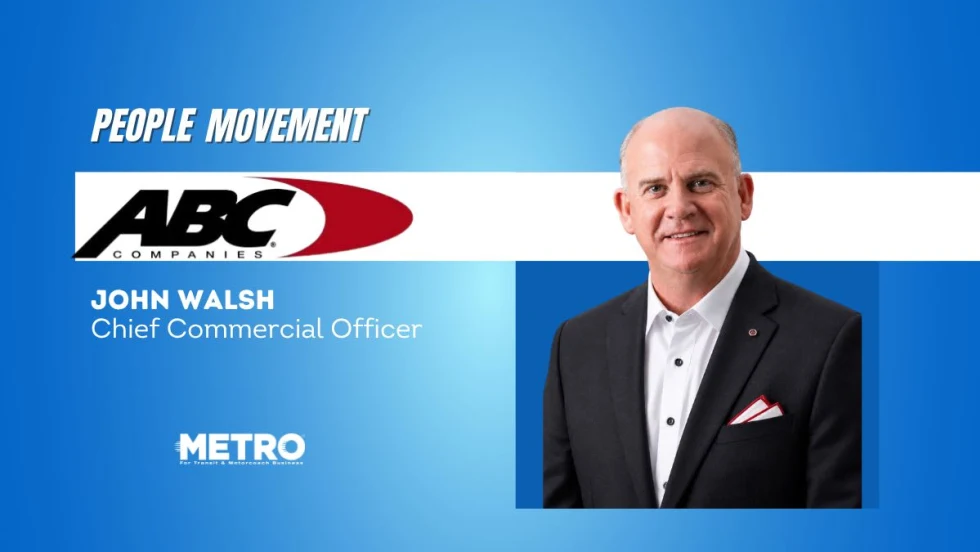
People Movement: ABC Names John Walsh as Chief Commercial Officer
In this edition, METRO also covers recent appointments and announcements at the DART, STV, and more, showcasing the individuals helping to shape the future of transportation.
Read More →
From Surviving to Thriving: Building Stronger Transportation Organizations
Bus Business Consultants founder Brian Dickson shares lessons on leadership, organizational health, and creating options for long-term success in a changing transportation industry.
Read More →
Biz Briefs: Luminator Marks Milestone and More
From manufacturers and suppliers to transit agencies and motorcoach operators, these updates offer a snapshot of the projects, partnerships and business moves driving the industry forward.
Read More →