



Sound Transit completes mining first 'Link' light rail tunnel
The 21-foot diameter tunnel boring machine emerged within three millimeters of its target as part of the University Link light rail expansion.

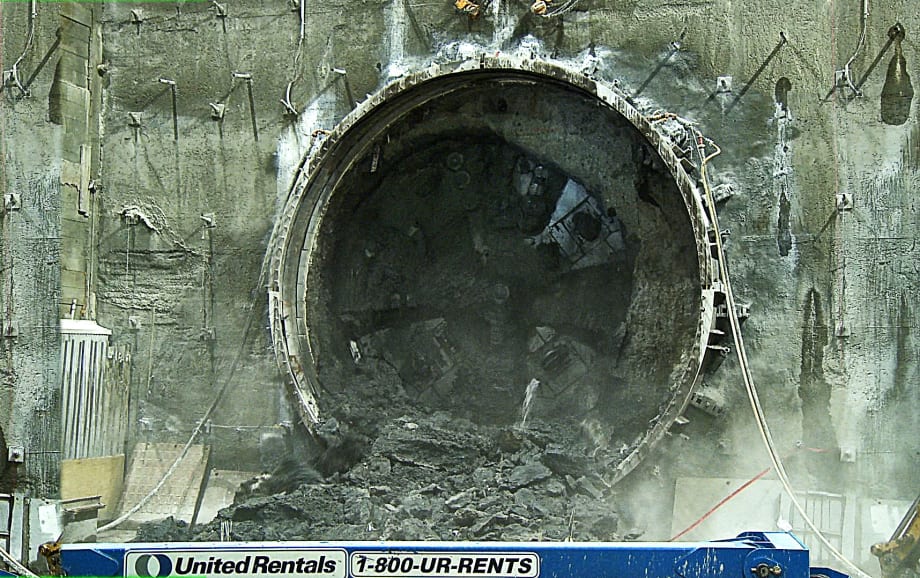
Photo courtesy Sound Transit
Photo courtesy Sound Transit
Seattle-based Sound Transit pushed through the wall into the future Capitol Hill station site to complete a two-mile light rail tunnel from the University of Washington (UW). The 21-foot diameter tunnel boring machine (TBM) emerged within three millimeters of its target as part of the University Link light rail expansion.
When complete, the University Link project will connect UW and Capitol Hill to downtown Seattle with 3.1 miles of new underground light rail service.
The overall $1.9 billion project is about halfway complete and scheduled open in 2016. The expansion, with stations in the heart of Capitol Hill and UW, will provide unparalleled speed and reliability through Seattle's most dense neighborhoods. A trip from Husky Stadium to Westlake will take six minutes and is expected to add 70,000 riders to the system, which today runs from downtown to south Seattle and Sea-Tac International Airport by 2030.
The corridor includes three major universities /colleges —UW, Seattle University and Seattle Central Community College (SCCC) — with a combined enrollment of more than 50,000 students.
The contractor launched the TBM on its two-mile underground journey from the University of Washington Station site near Husky Stadium in May, 2011. The machine, nicknamed "Togo" passed beneath the Montlake Cut and Montlake, Interlake, Volunteer Park and north Capitol Hill neighborhoods. A second TBM, named "Balto," is still mining the second tunnel between UW and Capitol Hill and is expected to arrive in April. Meanwhile, a third TBM is mining the second tunnel between Capitol Hill and downtown. That machine is expected to arrive in June.
Each of the TBMs:
Weighs over one million pounds.
Stretches more than 500 feet long including the conveyor system that removes spoils from the cutterhead to the surface.
Places 21-foot diameter pre-cast concrete tunnel liners as it mines through the earth.
Was built specifically for this job.
The U-Link project has become a major construction jobs driver with almost 1.5 million direct construction work hours into the project. Sound Transit estimates the project will create about 20,000 direct and indirect jobs over the life of the project.
With major tunneling work wrapping up, contractors have begun mining 20 cross passages between the north and southbound tunnels. With that work complete, contractors will build a new track bed in the tunnels and begin laying the rail and communications systems for light rail operations. At the same time, contractors will finish the stations at Capitol Hill and UW.
More Rail

New York MTA Advances Final Contract for Second Avenue Subway Expansion
Contract Four is the largest in the Second Avenue Subway Phase 2 project and includes construction of station infrastructure, tracks, and signals for the subway expansion, MTA officials said. Work on Contract Four will begin in 2027.
Read More →
San Diego MTS Breaks Monthly Trolley Ridership Record
Agency officials said July’s ridership indicates MTS’s continued recovery from the pandemic.
Read More →
Report Examines NJ TRANSIT Reliability, Funding Challenges
The Garden State Initiative analysis examines the roles of Amtrak infrastructure, fleet management, and agency operations while recommending a more performance-based approach to improving reliability.
Read More →
Stadler, CapMetro Sign Long-Term Rail Fleet Support Agreement
Beginning in 2027, Stadler will provide on-site technical expertise, spare parts support, training, and obsolescence management to help extend the reliability and longevity of CapMetro’s GTW fleet.
Read More →
Biz Briefs: Alstom Lands Canadian Contract, LYT to Supply California TSP, and More
In METRO's latest installment, we take a look at recent news from Complete Coach Works, Beep, FlixBus, and more partnerships making headlines across the transportation sector.
Read More →
CATS Gold Line Marks 5 Years of Service, 2.8M Passenger Trips
With a six-mile expansion planned, the Charlotte streetcar is positioned to connect more neighborhoods and major transit hubs across the region.
Read More →
Why Simulating Pedestrian Movement Has Become Essential for Modern Rail Stations
Pedestrian microsimulation is helping rail planners identify bottlenecks, test station designs, and prepare complex transit hubs for growing passenger volumes.
Read More →
Amtrak Begins Major Construction at New York’s Sunnyside Yard
The new maintenance facility will support Amtrak’s Airo trainsets while improving maintenance efficiency and turnaround times in New York.
Read More →
Chicago Leaders Unveil Plans for O’Hare Airport Express Train
The privately developed project would offer a 15-minute trip between downtown and O’Hare’s Terminal 2, with trains operating every 15 minutes on a dedicated track. The service would use battery-electric trains and three existing freight rail rights-of-way.
Read More →
OCTA Maps Out 30-Year Strategy to Protect Coastal Rail Corridor
The draft feasibility report identifies strategies to protect the coastal rail line for decades as the agency continues near-term stabilization and sand placement efforts.
Read More →