



Report probes land 'value capture' to fund transit
Five mechanisms are evaluated in depth, including tax increment financing, special assessment districts, transit impact fees, joint developments and air rights. The report includes policy recommendations.

The Mineta Transportation Institute released its newest research report, “Decision Support Framework for Using Value Capture to Fund Public Transit: Lessons from Project-Specific Analysis,” which investigates the viability of land "value capture" (VC) to help generate revenue for transit provision.
Five VC mechanisms are evaluated in depth, including tax increment financing (TIF), special assessment districts (SADs), transit impact fees, joint developments and air rights. The report includes policy recommendations.
"This report reviews five VC mechanisms and evaluates the performance of each one through numerous case studies using several criteria," said Dr. Shishir Mathur, one of the authors of the study. "These criteria include enabling legal environment, stakeholder support, institutional capacity, revenue yield, revenue stability and equity. We also developed a decision-support matrix to help policy makers, local governments, and transit agencies decide which mechanism or which combination of mechanisms would meet their needs."
Dr. Mathur noted the federal government has reinforced the need to integrate land use with transportation and to provide public transit. However, fiscal belt-tightening at all levels of government has made it more urgent to identify alternate funding sources for public transportation. He said funding transit is especially difficult because transit typically requires large subsidies. Value capture is one possible funding source. Based on the "benefits received" principle, VC captures public infrastructure-led increases in land value.
The report had several findings. Among them:
Revenue yield from TIF and SADs is likely to be the highest among the five VC mechanisms.
Local governments often use a combination of two VC mechanisms. For example, TIF and SAD fund the Portland, Ore. Central Streetcar Project, while TIF and joint development fund Contra Costa Centre Transit Village in Contra Costa County, Calif. and the Ground Transportation Center in Cedar Rapids, Iowa.
Using TIF requires significant institutional capacity, community support, and agreement among taxing agencies.
Transit impact fees are rarely used. Their use benefits from state- and local-level enabling legislation, robust nexus studies, a strong real estate market, and developer support.
Transit impact fees and SADs must be carefully designed and implemented to minimize inequities.
Strong real estate markets, significant institutional capacity, and clear policy guidelines are needed to undertake joint development.
The authors recommend that local governments and transit agencies consider using VC mechanisms to fund public transit. Then they can leverage the income generated from these mechanisms to secure federal and state funds. Further, jurisdictions should determine the existence of enabling legal environment, stakeholder support, and institutional capacity before deciding which one or which combination of VC mechanisms to use.
Finally, the agencies responsible for implementing the VC mechanisms would benefit from clear political direction and policy guidelines that balance a jurisdiction's transit funding needs with other competing objectives.
More Rail
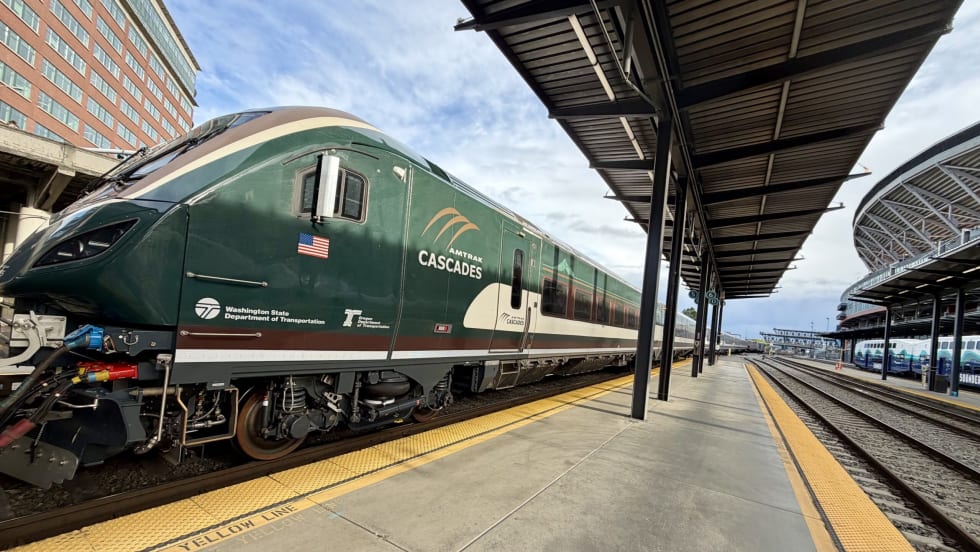
FRA Announces $5.3B in Rail Investments, Including $2B for Amtrak
Funding will support grade-crossing improvements, infrastructure upgrades, and new Amtrak equipment in 23 states.
Read More →
Finding the ‘Happy Medium’: Optimizing Maintenance Without Sacrificing Reliability
The key to maintenance optimization isn’t doing less work—it’s doing the right work at the right time on the right assets.
Read More →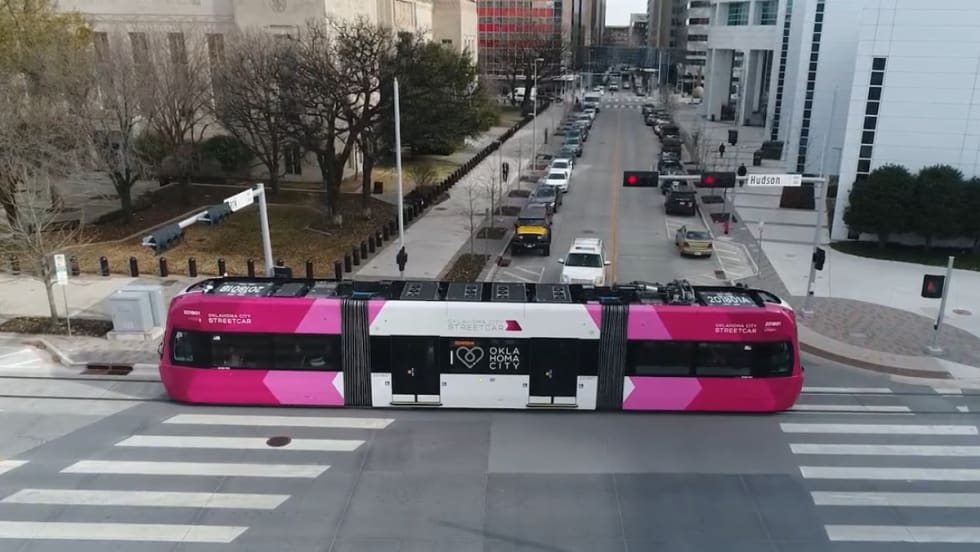
OKC Streetcar Makes Zero-Fare Service Permanent
Ridership increased an average of 71% compared with the same period a year earlier during the fare-free pilot.
Read More →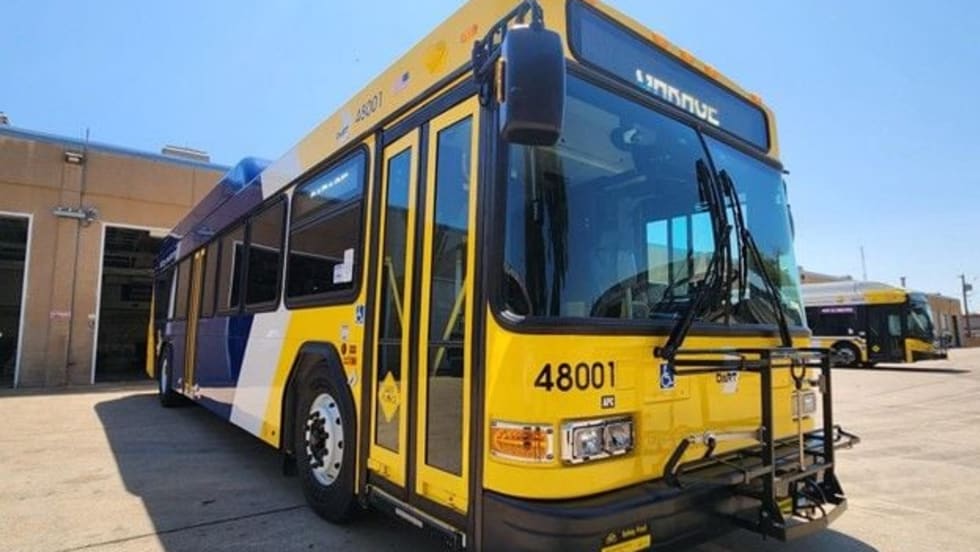
DART Customer Satisfaction Reaches Six-Year High
Overall satisfaction rose to 74.9%, while the agency’s Net Promoter Score reached a record 33.7.
Read More →
How DART's GoPass Is Redefining Regional Mobility
Serving 14 transit agencies, GoPass simplifies multimodal travel by allowing riders to plan, pay for, and manage an entire trip through one app.
Read More →
Amtrak Board Advances Plan to Restructure Organization, Seeks Public Input
The proposal, developed by Amtrak management and approved by the board for further consideration, is intended to modernize the organization's structure while improving accountability, operational efficiency, and customer service.
Read More →
Biz Briefs: STV teams with Amtrak, Motorcoach Operators Boost Fleet and Land Contracts, and More
From manufacturers and suppliers to transit agencies and motorcoach operators, these updates offer a snapshot of the projects, partnerships and business moves driving the industry forward.
Read More →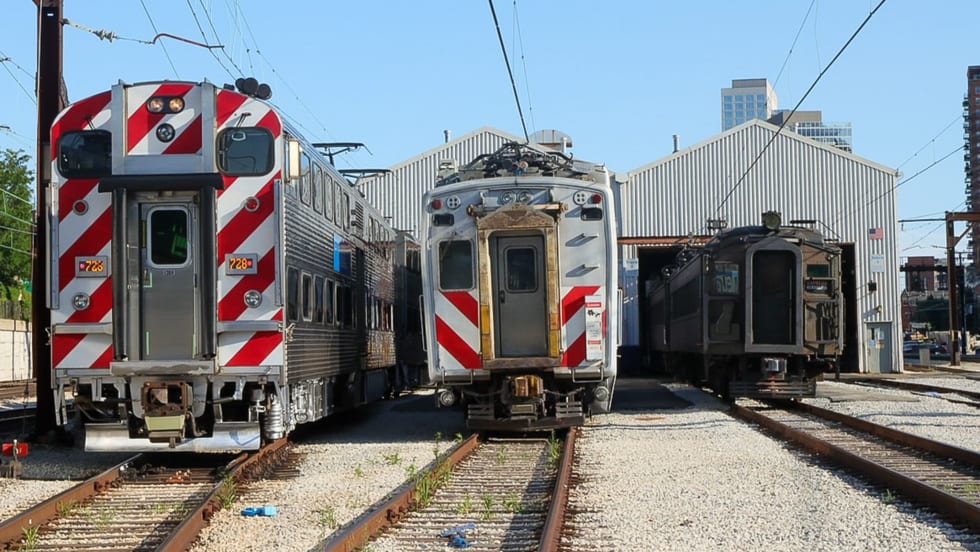
Metra Celebrates 100 Years of Electric Rail, Looks to the Future
The event was also a celebration of recent reforms to public transportation in the Chicago area, changes that could be as transformative in the future as the major civic achievement a century ago, said officials.
Read More →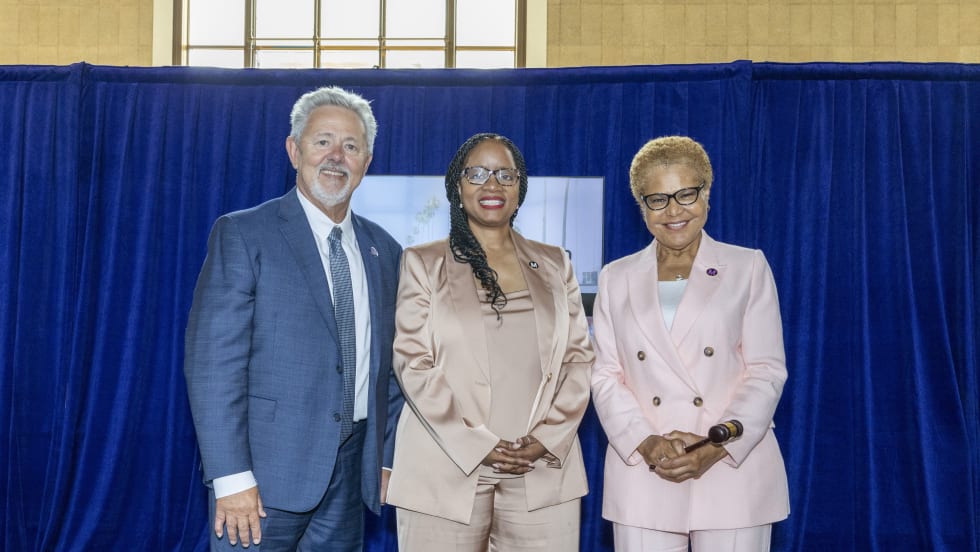
LA Metro Marks Banner Year, Sets Ambitious Goals for New Fiscal Year
Incoming LA Metro Board Chair and Los Angeles Mayor Karen Bass joined outgoing Board Chair Fernando Dutra and LA Metro CEO Stephanie Wiggins to review accomplishments from fiscal year 2026, which included the opening of new rail extensions, advancement of major transit projects, expanded safety programs, and new rider amenities.
Read More →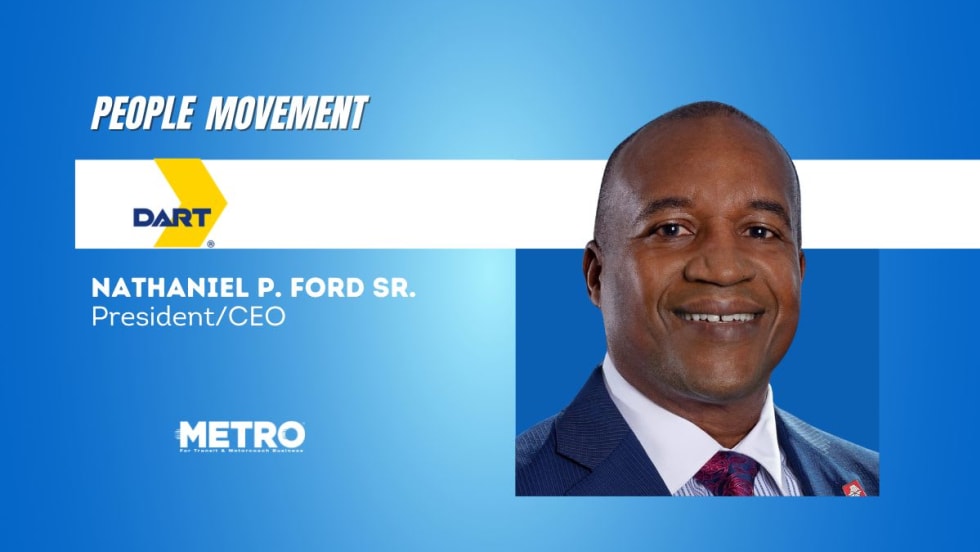
DART Taps Nathaniel P. Ford Sr. as Next President/CEO
Since 2012, Ford has served as the CEO of the Jacksonville Transportation Authority
Read More →