



OCTA breaks ground on $184M ARTIC project
Will house 10 different transportation modes when it opens, including Metrolink, Amtrak, OCTA bus service, taxi, bicycle, international buses and tour and charter buses.

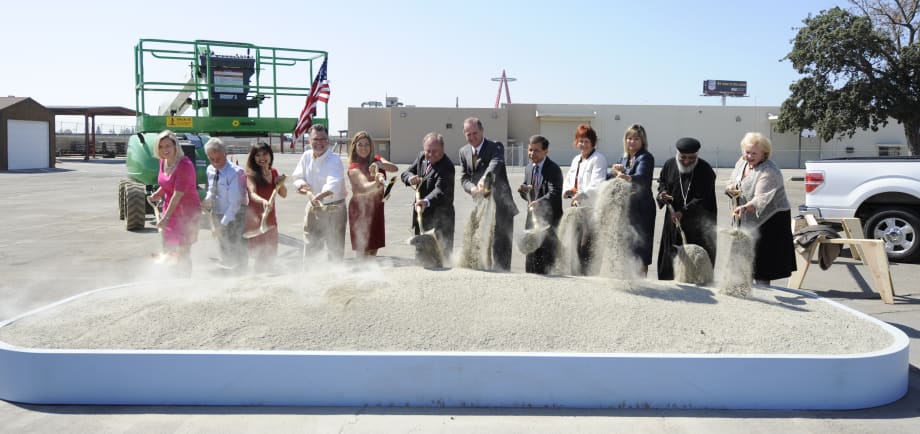

The $184 million Anaheim Regional Transportation Intermodal Center (ARTIC) project, a partnership between the City of Anaheim and the Orange County Transportation Authority, broke ground this week.
The ARTIC is expected to create 5,000 jobs during and following construction and will allow people to move seamlessly between transit services to reach Southern California activity centers and business districts.
Upon completion anticipated for late 2014, those utilizing ARTIC in their commute and travel plans will be greeted by a 67,000 square foot, iconic structure standing 110 feet tall, on 16 acres, within the shadows of Angel Stadium of Anaheim and Honda Center. Designed to provide service for the more than 40 million visitors to Anaheim and Orange County each year as well as Orange County’s three million residents, ARTIC is also planned for future modes of transportation services, as well as retail, restaurant and office space, truly making it a multi-purpose civic space.
According to the Orange County Business Council, research indicates traffic congestion costs California $20 billion per year in wasted fuel and lost time. Upon completion of ARTIC, existing public transportation options in and around Anaheim, Orange County and beyond can expand, thereby reducing vehicle congestion, pollution and greenhouse gas emissions. To accommodate the projected increase in commuters and travelers, ARTIC will house approximately 1,000 parking spaces, a railroad bridge, a pedestrian concourse bridge and tunnel, a baggage tunnel, rail station platforms, as well as aesthetically pleasing environmentally friendly landscaping and artwork depictive of life in Southern California.
ARTIC’s three-level terminal building is designed for LEED Platinum certification. The steel framing, ethylene tetrafluoroethylene (ETFE) roof system (the same material as the 2008 Beijing Olympic Games Water Cube Aquatics Center) and glass cladding will provide for maximum energy efficiency. ARTIC will house 10 different transportation modes when it opens, including Metrolink, Amtrak, OCTA bus service, taxi, bicycle, international buses and tour and charter buses.
More Rail

New York MTA Advances Final Contract for Second Avenue Subway Expansion
Contract Four is the largest in the Second Avenue Subway Phase 2 project and includes construction of station infrastructure, tracks, and signals for the subway expansion, MTA officials said. Work on Contract Four will begin in 2027.
Read More →
San Diego MTS Breaks Monthly Trolley Ridership Record
Agency officials said July’s ridership indicates MTS’s continued recovery from the pandemic.
Read More →
Report Examines NJ TRANSIT Reliability, Funding Challenges
The Garden State Initiative analysis examines the roles of Amtrak infrastructure, fleet management, and agency operations while recommending a more performance-based approach to improving reliability.
Read More →
Stadler, CapMetro Sign Long-Term Rail Fleet Support Agreement
Beginning in 2027, Stadler will provide on-site technical expertise, spare parts support, training, and obsolescence management to help extend the reliability and longevity of CapMetro’s GTW fleet.
Read More →
Biz Briefs: Alstom Lands Canadian Contract, LYT to Supply California TSP, and More
In METRO's latest installment, we take a look at recent news from Complete Coach Works, Beep, FlixBus, and more partnerships making headlines across the transportation sector.
Read More →
CATS Gold Line Marks 5 Years of Service, 2.8M Passenger Trips
With a six-mile expansion planned, the Charlotte streetcar is positioned to connect more neighborhoods and major transit hubs across the region.
Read More →
Why Simulating Pedestrian Movement Has Become Essential for Modern Rail Stations
Pedestrian microsimulation is helping rail planners identify bottlenecks, test station designs, and prepare complex transit hubs for growing passenger volumes.
Read More →
Amtrak Begins Major Construction at New York’s Sunnyside Yard
The new maintenance facility will support Amtrak’s Airo trainsets while improving maintenance efficiency and turnaround times in New York.
Read More →
Chicago Leaders Unveil Plans for O’Hare Airport Express Train
The privately developed project would offer a 15-minute trip between downtown and O’Hare’s Terminal 2, with trains operating every 15 minutes on a dedicated track. The service would use battery-electric trains and three existing freight rail rights-of-way.
Read More →
OCTA Maps Out 30-Year Strategy to Protect Coastal Rail Corridor
The draft feasibility report identifies strategies to protect the coastal rail line for decades as the agency continues near-term stabilization and sand placement efforts.
Read More →