



As traffic worsens, commuters allowing extra time for urgent trips
The Planning Time Index (PTI), a measure of travel reliability, illustrates the amount of extra time needed to arrive on time for higher priority events, such as an airline departure, just-in-time shipments, medical appointments or especially important social commitments.

As traffic congestion continues to worsen, the time required for a given trip becomes more unpredictable, and researchers now have a way to measure that degree of unreliability, introduced for the first time as part of the annual Urban Mobility Report (UMR), published by the Texas A&M Transportation Institute (TTI).
The Planning Time Index (PTI), a measure of travel reliability, illustrates the amount of extra time needed to arrive on time for higher priority events, such as an airline departure, just-in-time shipments, medical appointments or especially important social commitments. If the PTI for a particular trip is 3.00, a traveler would allow 60 minutes for a trip that typically takes 20 minutes when few cars are on the road. Allowing for a PTI of 3.00 would ensure on-time arrival 19 out of 20 times.
PTIs on freeways vary widely across the nation, from 1.31 (about nine extra minutes for a trip that takes 30 minutes in light traffic) in Pensacola, Florida, to 5.72 (almost three hours for that same half-hour trip) in Washington, D.C., according to the study by TTI, a member of The Texas A&M University System.
“We all understand that trips take longer in rush hour, but for really important appointments, we have to allow increasingly more time to ensure an on-time arrival,” says Bill Eisele, a TTI researcher and report co-author. “As bad as traffic jams are, it’s even more frustrating that you can’t depend on traffic jams being consistent from day-to-day. This unreliable travel is costly for commuters and truck drivers moving goods.”
Rankings of the nation’s most congested cities vary slightly from year to year, and many of this year’s top 10 are repeat performers. Washington, D.C. tops the list, followed by Los Angeles, San Francisco-Oakland, New York-Newark and Boston. The second five include Houston, Atlanta, Chicago, Philadelphia and Seattle. The report provides a detailed illustration of traffic problems in a total of 498 U.S. urban areas.
In addition to PTI, the 2012 UMR also debuts an estimate of the additional carbon dioxide (CO2) emissions attributed to traffic congestion: 56 billion pounds — about 380 pounds per auto commuter.
“Including CO2 emissions into the UMR provides another dimension to the urban congestion problem,” says researcher and co-author David Schrank. “It points to the importance of implementing transportation improvements to reduce congestion.” The analysis of CO2 was made possible by funding from the National Center for Freight and Infrastructure Research and Education (CFIRE).
Traffic congestion in U.S. cities has remained relatively stable in recent years and continues to underscore the link between traffic and the economy, according to the UMR. As the nation’s job picture has slowly improved, some congestion measures in 2011 were generally comparable to the year before.
Fuel wasted in congested traffic reached a total of 2.9 billion gallons – enough to fill the New Orleans Superdome four times. That’s the same as 2010, but short of the 3.2 billion gallons wasted in 2005. The Travel Time Index (the difference in time required for a rush hour commute compared to the same trip in non-congested conditions) remained steady at 1.18, still short of the 1.23 level in 2005.
The total financial cost of congestion in 2011 was $121 billion, up one billion dollars from the year before and translating to $818 per U.S. commuter. Of that total, about $27 billion worth was wasted time and diesel fuel from trucks moving goods on the system.
“The methods and measures developed by TTI and used in the Urban Mobility Report have been successfully implemented for policy making and prioritizing congestion-mitigating projects,” says report co-author and researcher Tim Lomax. “In light of the recent signing of the Moving Ahead for Progress in the 21st Century (MAP-21) Act, there is greater importance on using such measures to prioritize transportation improvement spending to get the highest investment return for the public.”
Researchers say that the most effective way to address traffic congestion varies from one urban area to another, but that in all cases, a multi-faceted approach should be used, relying on more efficient traffic management and public transportation in addition to new construction. Travel options such as flexible work hours and telecommuting should also be part of the mix.
The 2012 installment of the study includes 30 years of trend data with which TTI has measured and analyzed traffic congestion and its impact on life in urban America. The report is the third prepared in partnership with INRIX, a leading private-sector provider of travel time information for both commuters and shippers.
TTI, a member of The Texas A&M University System, seeks solutions to the problems and challenges facing all modes of transportation, as well as helping prepare students for transportation-related careers.
More Paratransit

Biz Briefs: RIPTA Unveils New Frontrunners, Clevland RTA Adds New Siemens, and More
In METRO's latest installment, we take a look at recent news from Siemens, Prevost, Dodge, and more partnerships making headlines across the transportation sector.
Read More →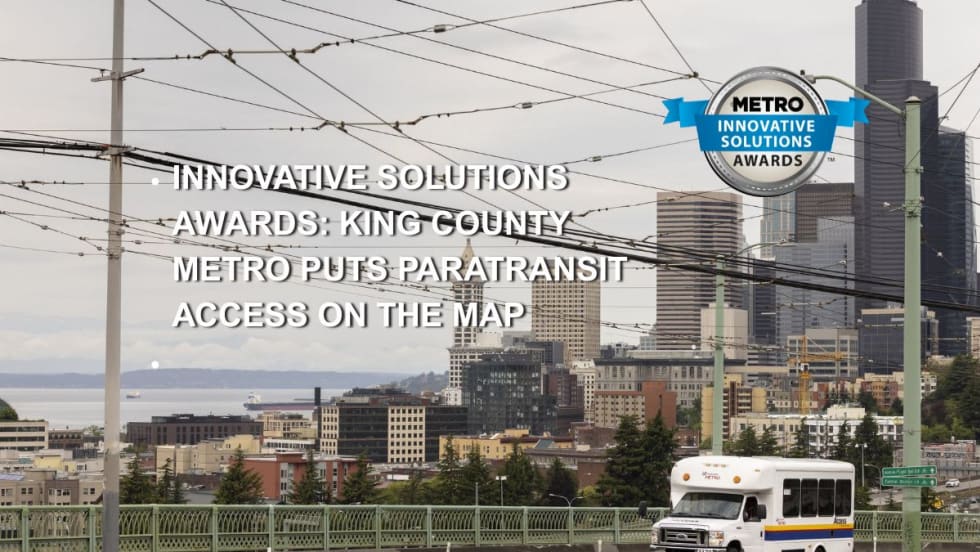
King County Metro Makes ADA Paratransit Easier to Navigate
METRO's Innovative Solutions Award winner replaces complex service-area descriptions with an accessible, interactive map that puts paratransit information directly in customers’ hands.
Read More →
Jacksonville’s NAVI Project Charts a New Course for Autonomous Public Transportation
Through its NAVI program, JTA is showing how autonomous vehicles, intelligent infrastructure, and coordinated operations can work together to deliver everyday public transportation.
Read More →
Driving Smarter Paratransit
John Hanlon shares how AlphaRoute is leveraging AI-powered technology to help paratransit providers optimize operations, support frontline staff, and enhance the rider experience.
Read More →
METRO Magazine Announces 2026 Innovative Solutions Awards Winners
Projects Recognized for Advancing Mobility Through Technology, Accessibility, Workforce Innovation, and Operational Excellence
Read More →
Biz Briefs: STV teams with Amtrak, Motorcoach Operators Boost Fleet and Land Contracts, and More
From manufacturers and suppliers to transit agencies and motorcoach operators, these updates offer a snapshot of the projects, partnerships and business moves driving the industry forward.
Read More →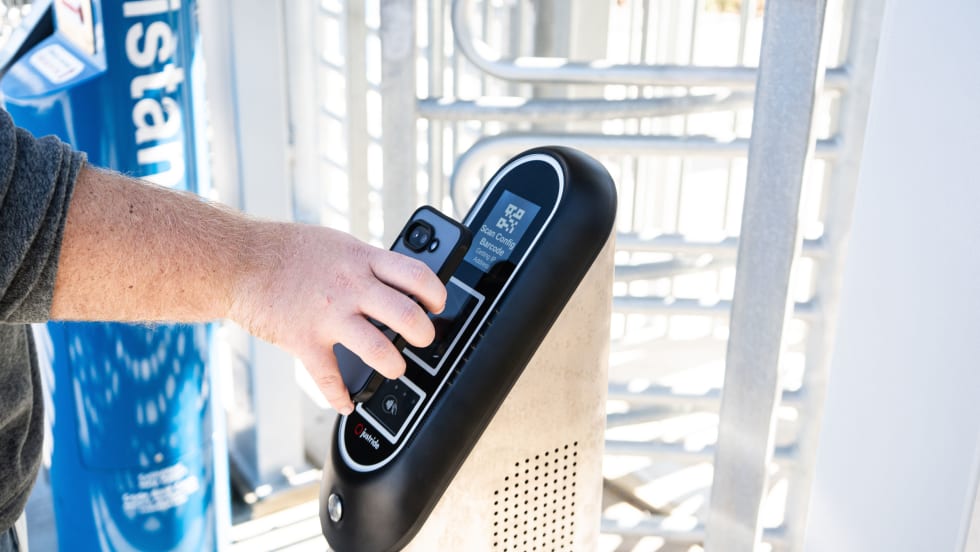
Biz Briefs: Masabi Teams with St. Louis Metro and More
In METRO's latest installment, we take a look at recent news from Transdev, Hitachi, and more partnerships making headlines across the transportation sector.
Read More →
New York MTA Leverages Zoning Program to Advance Station Accessibility
Accessibility enhancements at Nevins St Station will be financed through a development agreement tied to the MTA's Zoning for Accessibility initiative.
Read More →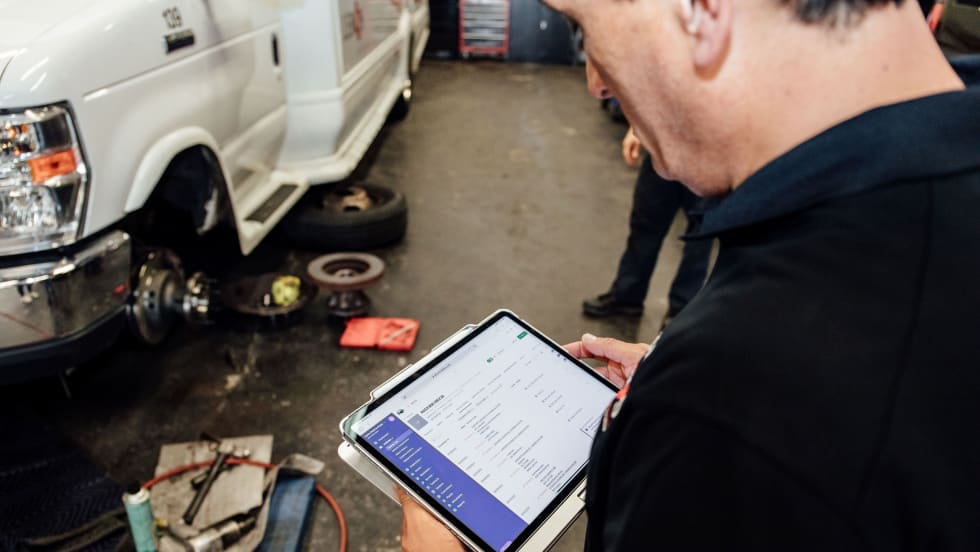
Reinventing Fleet Maintenance with Real-time Visibility and AI
Transit leaders need to know what needs fixing, where to look, who is responsible, when work is completed, and what it costs without having to chase information across disconnected systems.
Read More →
SamTrans Sets Priorities for Potential Connect Bay Area Revenue
The board-approved framework allocates future funding to maintaining service, rider improvements, equity initiatives, and infrastructure repairs.
Read More →