



Report: Reduction in driving likely to continue in U.S.
The Millennial generation is leading the change in transportation trends. Sixteen to 34-year-olds drove a whopping 23% fewer miles on average in 2009 than in 2001 — the greatest decline in driving of any age group.

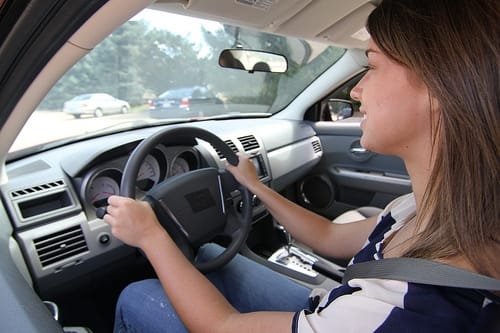
State Farm image via Flickr
As the average number of miles driven by Americans heads into its eighth year of decline, a new report from the U.S. PIRG Education Fund finds the slowdown in driving is likely to continue. Baby Boomers are moving out of the phase in their life when they do the most commuting, while driving-averse Millennials move into that phase.
These demographic changes and other factors will likely keep driving down for decades, according to the report, "A New Direction: Our Changing Relationship with Driving and the Implications for America’s Future."
"The Driving Boom is over," said Phineas Baxandall, sr. analyst at the U.S. PIRG Education Fund and co-author of the report. "The constant increases we saw in driving up until 2005 show no sign of returning. As more and more Millennials become adults, and their tendency to drive less becomes the norm, the reduction in driving will be even larger."
Miles driven per capita peaked in 2004; the total number of miles driven by Americans peaked in 2007. The average American currently drives no more miles than at the end of President Clinton’s first term.
The Millennial generation is leading the change in transportation trends. Sixteen to 34-year-olds drove a whopping 23% fewer miles on average in 2009 than in 2001 — the greatest decline in driving of any age group. In addition, Millennials are more likely to want to live in urban and walkable neighborhoods and are more open to non-driving forms of transportation than the older generation of Americans.
The report finds that under any reasonable scenario, the number of miles driven annually will be far fewer in the future than if Baby Boom trends had continued. During the second half of the twentieth century, low gas prices, rapid suburbanization and an ever-increasing number of women commuters entering the workforce fueled the Driving Boom.
The factors that defined that period have since taken a back seat. Under some conservative scenarios outlined by the report, driving won’t ever regain its 2007 peak during the range of the study, which extends to 2040.
Yet, government forecasts of future vehicle travel continue to assume steady increases in driving, despite the changing trends seen over the past decade. Those forecasts are used to justify spending vast sums on new and expanded highways, even as repairs to existing roads and bridges remain neglected, and even as public transit systems with growing ridership face cutbacks.
"America's transportation leaders need to wake up to the momentous changes that have taken place over the last decade," said Baxandall. "The infrastructure we build today will mainly be used and paid for by the Millennials who are leading the trend away from driving."
The report examines a number of high-profile official transportation forecasts and finds a consistent pattern of overestimating how much Americans will drive. The official forecasts examined all fall above even the most conservative scenarios forecast in the report and all seem to be based on the assumption that the ongoing driving growth of the Driving Boom will last forever.
The change in driving trends will have huge implications for many aspects of Americans' travel life:
Coupled with improvements in fuel efficiency, reduced driving means Americans will use about half as much gasoline and other fuels in 2040 than they use today, making the real value of gas taxes fall as much as 74%. Gas taxes provide the chief source of federal transportation funds and a major source for many states.
Traffic congestion will be less of a problem.
Toll roads will be less financially viable.
Many highway expansion projects will start to look like wasteful boondoggles.
Forms of travel that are expanding in use, like public transit, will be a better investment.
"Given the magnitude of these trends and the implications for the future, we need to press the reset button on our transportation policy,” said Baxandall. "Public officials can’t just stay on the only course they’ve known. They need to learn from current trends to rethink whether it's worth building all those extra highway miles that were planned based on an obsolete understanding of future driving trends."
More Bus

People Movement: Dan Dipert Coaches Adds Third-Generation Leader, Keolis Names New Valley Metro VP/GM, and More
In this edition, we also cover recent appointments and announcements at the Wabtec, SilverRide, HNTB, and more, showcasing the individuals helping to shape the future of transportation.
Read More →
New York MTA Plans Largest Bus Fleet Upgrade in More Than a Decade
The agency is seeking manufacturers for 650 new CNG buses to replace aging vehicles, improve reliability, and advance its broader fleet modernization strategy.
Read More →
Building a Flexible Path to Transit Electrification
John Hroncich discusses BAE Systems’ modular and scalable approach, lessons learned from decades of real-world operations, and how agencies can identify electrification strategies that fit their fleets.
Read More →
Bus Tech Talk: Keeping Transit Technicians Ahead of the Technology Curve
LA Metro’s Obed Mejia discusses technician training, evolving maintenance technology, fleet replacement, and strategies for getting the most out of today’s transit fleets.
Read More →
Biz Briefs: RIPTA Unveils New Frontrunners, Clevland RTA Adds New Siemens, and More
In METRO's latest installment, we take a look at recent news from Siemens, Prevost, Dodge, and more partnerships making headlines across the transportation sector.
Read More →
People Movement: Holly Arnold Joins Transdev and More
In this edition, we also cover recent appointments and announcements at Pace, CamTran, MCI, and more, showcasing the individuals helping to shape the future of transportation.
Read More →
The High Cost of Transit Buses: Industry Leaders Look to Procurement Reform
Transit leaders and policymakers examine how standardized bus designs, streamlined procurement, and predictable funding could help agencies stretch budgets and deliver better service.
Read More →
The Business Voice Behind Public Transportation
As chair of APTA’s Business Members Board of Governors, Ray Melleady explains how more than 850 business members are partnering with transit agencies to advance funding, innovation, and industry-wide collaboration.
Read More →
From Surviving to Thriving: Building Stronger Transportation Organizations
Bus Business Consultants founder Brian Dickson shares lessons on leadership, organizational health, and creating options for long-term success in a changing transportation industry.
Read More →
Finding the ‘Happy Medium’: Optimizing Maintenance Without Sacrificing Reliability
The key to maintenance optimization isn’t doing less work—it’s doing the right work at the right time on the right assets.
Read More →