



TriMet upgrades ticket vending machines
About one month ago the agency finished replacing its oldest ticket machines — referred to as type 3s — with new, type 6 machines. Now 117 – or more than 50% – of the 213 ticket machines along the MAX and WES systems are new.

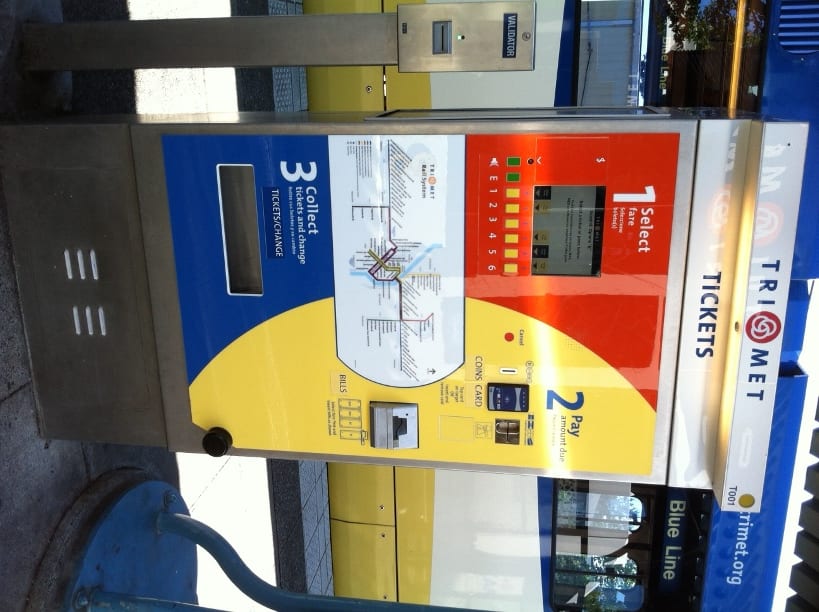
Photo courtesy TriMet.

Portland, Ore.-based TriMet upgraded its oldest ticket vending machines (TVMs) on the MAX system.
About one month ago the agency finished replacing its oldest ticket machines — referred to as type 3s — with new, type 6 machines, supplied by Scheidt Bachmann. Now 117 — or more than 50% — of the 213 ticket machines along the MAX and WES systems are new.
The old type 3 ticket machines are headed for the recycling bin. Most of the parts inside were salvaged and sent back to the supplier. The metal cases will be turned into scrap.
Thanks to the culmination of the new machines, software upgrades and fixes, and creating dedicated work groups to identify issues and speed up improvements, complaints about ticket machine transactions dropped 50% in June from the previous 12-month average. That’s the lowest level of complaints in at least the past six years, according to the agency.
“We’re encouraged to see the number of complaints dropping,” said TriMet GM Neil McFarlane. “But we’re focused on continuing to improve the performance of our fare machines whether it is with new hardware, software or preventive maintenance — the end goal is to make it easier for our customers.”
While not the top method for purchasing fares, one-fifth of TriMet’s customers used TVMs in year-to-date FY13:
• 36% purchased at retail outlets
• 22% group passes such as through employers
• 22% paid at the fare box on buses
• 20% purchased at TVMs
More Bus
Washington's Community Transit Sets Six-Year Roadmap for Growth, Expansion
Approved TDP targets more bus service, new mobility options, Swift BRT expansion, and a potential Everett Transit annexation.
Read More →
DART Customer Satisfaction Reaches Six-Year High
Overall satisfaction rose to 74.9%, while the agency’s Net Promoter Score reached a record 33.7.
Read More →
How DART's GoPass Is Redefining Regional Mobility
Serving 14 transit agencies, GoPass simplifies multimodal travel by allowing riders to plan, pay for, and manage an entire trip through one app.
Read More →
Biz Briefs: OCTA Taps Clean Energy for Hydrogen Station, Stadler to Supply Via Rail Vehicles, and More
From manufacturers and suppliers to transit agencies and motorcoach operators, these updates offer a snapshot of the projects, partnerships and business moves driving the industry forward.
Read More →
METRO Magazine Announces 2026 Innovative Solutions Awards Winners
Projects Recognized for Advancing Mobility Through Technology, Accessibility, Workforce Innovation, and Operational Excellence
Read More →
Biz Briefs: STV teams with Amtrak, Motorcoach Operators Boost Fleet and Land Contracts, and More
From manufacturers and suppliers to transit agencies and motorcoach operators, these updates offer a snapshot of the projects, partnerships and business moves driving the industry forward.
Read More →
LA Metro Marks Banner Year, Sets Ambitious Goals for New Fiscal Year
Incoming LA Metro Board Chair and Los Angeles Mayor Karen Bass joined outgoing Board Chair Fernando Dutra and LA Metro CEO Stephanie Wiggins to review accomplishments from fiscal year 2026, which included the opening of new rail extensions, advancement of major transit projects, expanded safety programs, and new rider amenities.
Read More →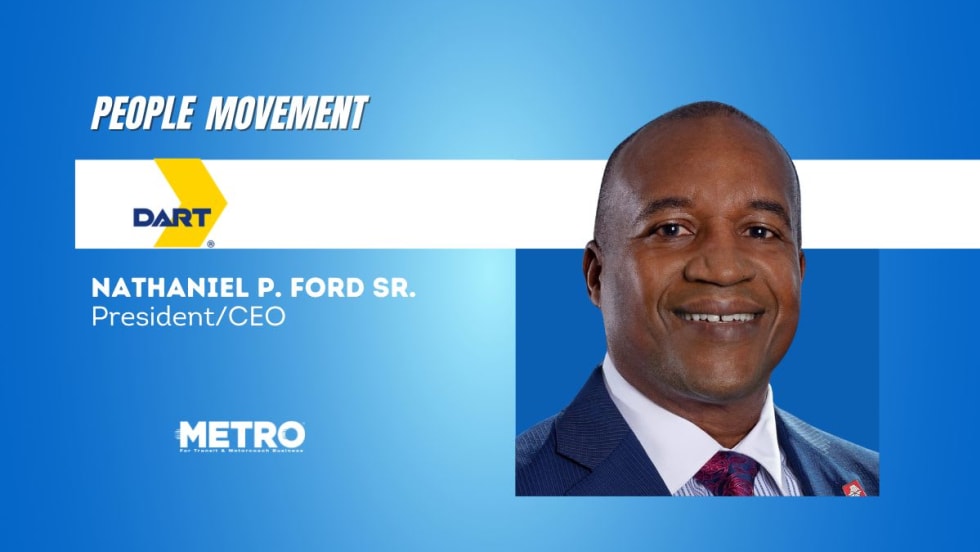
DART Taps Nathaniel P. Ford Sr. as Next President/CEO
Since 2012, Ford has served as the CEO of the Jacksonville Transportation Authority
Read More →
AC Transit’s Cecil Blandon on Building the Next Generation of Transit Maintenance Leaders
The agency’s maintenance chief discusses leadership, workforce development, zero-emission technology, and preparing technicians for the future of public transportation.
Read More →
Building the Next Generation of Transit Technology
In this edition of METROspectives, Luminator CEO Magnus Friberg discusses the company's transformation, the growing role of AI and software, and what's next for transit technology.
Read More →