



Foxx outlines plans to manage impending HTF insolvency
Projections show the shortfall will reach a critical point in the Trust Fund’s Highway Account in just a few weeks, requiring the Department to institute cash management procedures for highways at that time, with a similar plan to follow for the Mass Transit Account when it is expected to reach a similar point this Fall.

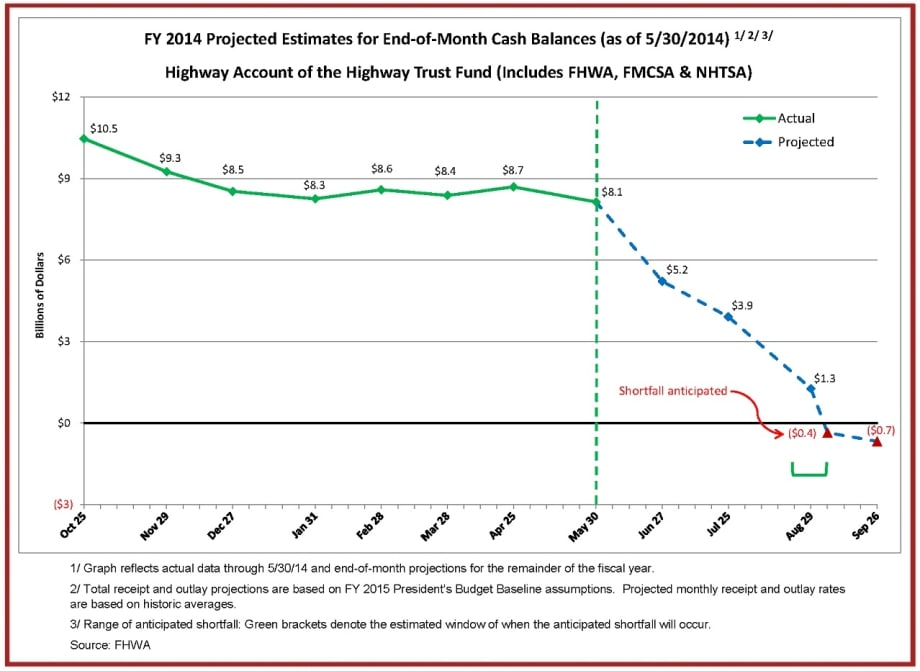
U.S. Secretary of Transportation Anthony Foxx today sent letters to state transportation departments and transit agencies outlining steps the Department of Transportation (DOT) will soon be forced to take to manage the impending insolvency of the Highway Trust Fund. In both letters, Secretary Foxx outlined the Department’s proposed plan while emphasizing the need for Congress to act in order to avoid such a shortfall.
RELATED:U.S. Senators push to raise gas tax
“There is still time for Congress to act on a long term solution,” said Secretary Foxx. “Our transportation infrastructure is too essential to suffer continued neglect, and I hope Congress will avert this crisis before it is too late.”
The Department’s most recent projections show the shortfall will reach a critical point in the Trust Fund’s Highway Account in just a few weeks, requiring the Department to institute cash management procedures for highways at that time, with a similar cash management plan to follow for the Trust Fund’s Mass Transit Account when it is expected to reach a similar point this Fall.
Each year, the U.S. Department of Transportation apportions funding to the states for their highway programs based on formula established in Federal law. Starting in August, DOT will use those same percentages to determine how much each state will receive of whatever amount is left in the Trust Fund. Reimbursements to States will be limited to the available cash in the Trust Fund, and new revenues will be added every two weeks as money from the gas tax flows into the Fund. A similar process will be implemented for Federal Transit Administration funds in the fall, when the transit account of the Highway Trust Fund is expected to become insolvent.
This approach by the U.S. Department of Transportation is intended to allow state departments of transportation to direct available cash to what they determine to be the highest transportation priorities and choose which projects receive reimbursement.
The Highway Trust Fund was established in 1956 to finance the United States Interstate Highway System, other roads and bridges. It was expanded in 1982 to include mass transit projects.
More Bus

People Movement: Dan Dipert Coaches Adds Third-Generation Leader, Keolis Names New Valley Metro VP/GM, and More
In this edition, we also cover recent appointments and announcements at the Wabtec, SilverRide, HNTB, and more, showcasing the individuals helping to shape the future of transportation.
Read More →
New York MTA Plans Largest Bus Fleet Upgrade in More Than a Decade
The agency is seeking manufacturers for 650 new CNG buses to replace aging vehicles, improve reliability, and advance its broader fleet modernization strategy.
Read More →
Building a Flexible Path to Transit Electrification
John Hroncich discusses BAE Systems’ modular and scalable approach, lessons learned from decades of real-world operations, and how agencies can identify electrification strategies that fit their fleets.
Read More →
Bus Tech Talk: Keeping Transit Technicians Ahead of the Technology Curve
LA Metro’s Obed Mejia discusses technician training, evolving maintenance technology, fleet replacement, and strategies for getting the most out of today’s transit fleets.
Read More →
Biz Briefs: RIPTA Unveils New Frontrunners, Clevland RTA Adds New Siemens, and More
In METRO's latest installment, we take a look at recent news from Siemens, Prevost, Dodge, and more partnerships making headlines across the transportation sector.
Read More →
People Movement: Holly Arnold Joins Transdev and More
In this edition, we also cover recent appointments and announcements at Pace, CamTran, MCI, and more, showcasing the individuals helping to shape the future of transportation.
Read More →
The High Cost of Transit Buses: Industry Leaders Look to Procurement Reform
Transit leaders and policymakers examine how standardized bus designs, streamlined procurement, and predictable funding could help agencies stretch budgets and deliver better service.
Read More →
The Business Voice Behind Public Transportation
As chair of APTA’s Business Members Board of Governors, Ray Melleady explains how more than 850 business members are partnering with transit agencies to advance funding, innovation, and industry-wide collaboration.
Read More →
From Surviving to Thriving: Building Stronger Transportation Organizations
Bus Business Consultants founder Brian Dickson shares lessons on leadership, organizational health, and creating options for long-term success in a changing transportation industry.
Read More →
Finding the ‘Happy Medium’: Optimizing Maintenance Without Sacrificing Reliability
The key to maintenance optimization isn’t doing less work—it’s doing the right work at the right time on the right assets.
Read More →