



FRA frees up Chicago rail 'chokepoint'
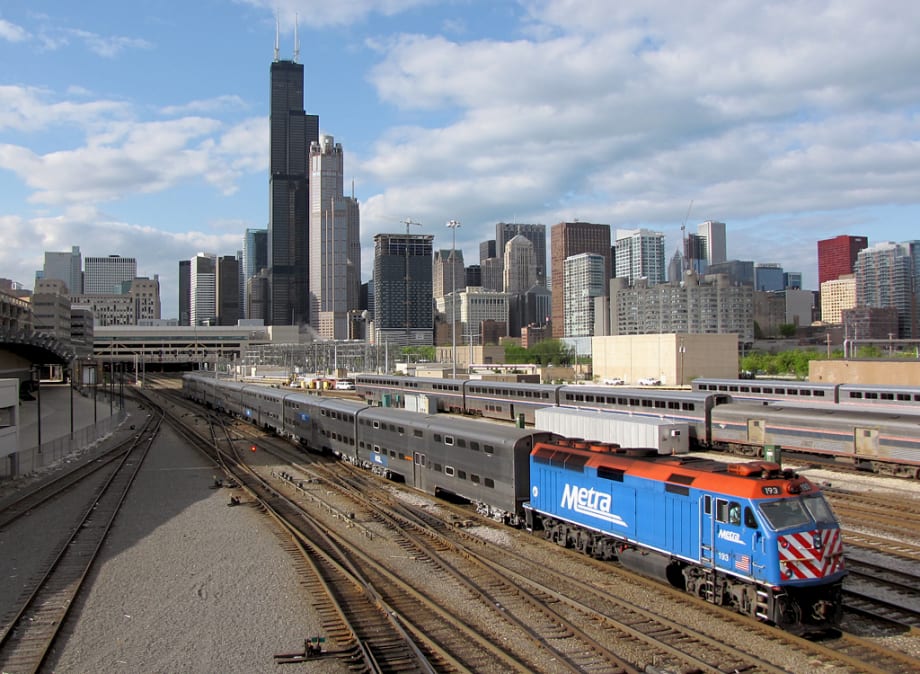
The Englewood Flyover separates Rock Island District Metra commuter trains from Amtrak passenger trains and freight trains traveling on the Norfolk Southern corridor and will relieve Metra riders of more than 7,500 annual passenger hours of delay.

Russ
Russ
Federal Railroad Administrator Joseph C. Szabo joined Illinois Gov. Pat Quinn, Sen. Dick Durbin and other federal, state and local officials for the dedication of the Englewood Flyover project.
The $133 million Flyover, which received $126 million from the Federal Railroad Administration’s (FRA) High Speed Intercity Passenger Rail (HSIPR) Program, will eliminate one of the nation’s largest rail chokepoints. As a result, close to 80 Metra trains per weekday will now travel above the Norfolk Southern mainline avoiding roughly 60 freight and Amtrak trains that use the mainline. The flyover will provide some relief for rail congestion in Chicago, but much work remains to be done to eliminate the issue completely.
In addition to the intercity passenger benefits, the Englewood Flyover will also reduce freight and commuter delays, which will in turn keep more people and freight off the Chicago area’s congested highways. This congestion impacts all modes of transportation, forcing more trucks on to highways, limiting access to airports and reducing the capacity of railroads – limiting the regions effectiveness as a transportation hub.
About one-third of all rail traffic in the United States travels through the Chicago region and the Chicago Region Environmental and Transportation Efficiency (CREATE) Program, a partnership between the State of Illinois, the City of Chicago, freight railroads, Metra and Amtrak, seeks to remove and reduce train congestion throughout the Chicago area. The Englewood Flyover project is one of 70 projects that make up the CREATE program. About one-third of the projects within the program are completed and today funding only exists for half of the overall program.
The Englewood Flyover is a grade separation project south of Chicago’s Union Station that ease congestion one of the most delay-prone intersections in the entire Amtrak system. It separates Rock Island District Metra commuter trains from Amtrak passenger trains and freight trains traveling on the Norfolk Southern corridor and will relieve Metra riders of more than 7,500 annual passenger hours of delay.
More Management

From Surviving to Thriving: Building Stronger Transportation Organizations
Bus Business Consultants founder Brian Dickson shares lessons on leadership, organizational health, and creating options for long-term success in a changing transportation industry.
Read More →
Everett Transit, Community Transit Outline Consolidation Agreement
The proposed agreement calls for a 50% increase in bus service in Everett, a new microtransit zone, continued paratransit service, and the transfer of Everett Transit operations to Community Transit.
Read More →
Strada360’s Steve Lassey on Turning Transit Data Into Better Decisions
From breaking down data silos to preparing for AI, Strada360 CEO Steve Lassey discusses how transit agencies can use technology to improve operations, customer information, and long-term decision-making.
Read More →
People Movement: Phil Washington Joins HNTB, Denver RTD Launches CEO Search, and More
In this edition, we also spotlight recent personnel moves at STV, the Eno Center for Transportation, and more, highlighting the people taking on new roles across the transportation industry.
Read More →
SEPTA Details Accelerate Vision for Transit System
The plan outlines investments in trolley modernization, new Metro and Regional Rail vehicles, accessible stations, and more frequent bus and rail service.
Read More →
FTA Ends Direct Oversight of MBTA Safety Actions
The federal agency closed its remaining special directive to the Massachusetts Department of Public Utilities following a safety review that began in 2022.
Read More →
Report: Transit Bus Manufacturing Supports 34,100 Jobs, $5.1B in GDP
The “Buses Mean Business” report examines the transit bus manufacturing industry’s economic footprint, supply chain, and rising demand for vehicle replacements.
Read More →
LIT Marks 10-Year Milestone at Annual Summit
Hosted by the COTA from September 10 to 13, the Summit carried the theme “Celebrating 10 Years of Excellence, Leadership, and Impact,” with every part of the program honoring the people, agencies, and partners who built LIT over its first decade.
Read More →
People Movement: Dan Dipert Coaches Adds Third-Generation Leader, Keolis Names New Valley Metro VP/GM, and More
In this edition, we also cover recent appointments and announcements at the Wabtec, SilverRide, HNTB, and more, showcasing the individuals helping to shape the future of transportation.
Read More →
METRO Opens Submissions for 2026 Motorcoach Awards
Nominations are now being accepted for METRO Magazine’s Operator of the Year and Innovative Operator of the Year awards.
Read More →