



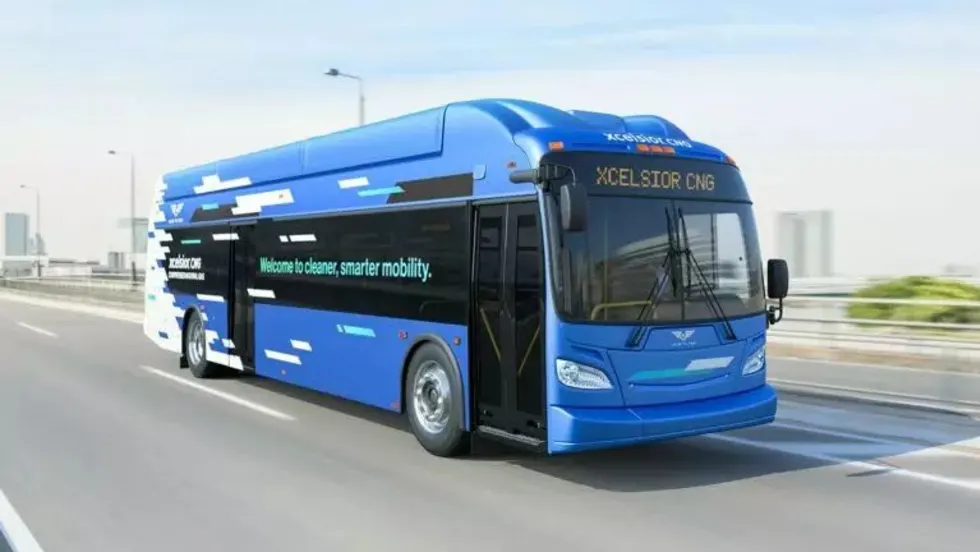
New Flyer to develop 60-foot, electric Xcelsior model
The electric drive bus will allow the fuel cell to operate at a relative steady-state, while the batteries will be able to both capture breaking energy and provide power for acceleration.

New Flyer Industries Inc. is developing the first-ever North American designed and built zero-emission 60-foot battery-electric/fuel-cell bus.
The propulsion system is being integrated into New Flyer’s Buy America compliant and proven Xcelsior® X60 heavy-duty transit bus platform that includes a combination of batteries, a fuel cell and hydrogen storage. The electric drive bus will allow the fuel cell to operate at a relative steady-state, while the batteries will be able to both capture breaking energy and provide power for acceleration.
New Flyer has partnered with Ballard Power Systems Inc. and Siemens on a bus that will be operated by Connecticut Transit (CTTransit) for 22 months of in-revenue-service operations. Ballard will supply a next-generation fuel cell power plant that is smaller, lighter and lower in cost than existing models. A key step in the commercialization will be to complete a full Altoona durability and performance test as part of the Federal Transit Administration’s (FTA) Bus Testing Program. Upon the success of this program, New Flyer will offer this vehicle to customers throughout the U.S. and Canada.
CALSTART, a member-supported organization of more than 140 firms, fleets and agencies worldwide dedicated to supporting a growing high-tech clean transportation industry, is administering the project for the FTA.
“This project is part of our technology roadmap and represents another important step for New Flyer in pursuit of durable, reliable and affordable zero-emission public transportation,” said Paul Soubry, president/CEO of New Flyer. “Over the next decade, we expect to see a continued transition from conventional propulsion towards zero-emission technologies in the heavy-duty transit market and this builds on our natural evolution from: diesel, to hybrid, to natural gas, to electric – all based on the same proven Xcelsior bus platform.”
More Bus
Biz Briefs: New Flyer Delivers in Columbus, Houston, Beep and Freebee Merge, and More
In this edition of Biz Briefs, we spotlight the latest developments shaping the future of mobility.
Read More →
People Movement: Dan Dipert Coaches Adds Third-Generation Leader, Keolis Names New Valley Metro VP/GM, and More
In this edition, we also cover recent appointments and announcements at the Wabtec, SilverRide, HNTB, and more, showcasing the individuals helping to shape the future of transportation.
Read More →
New York MTA Plans Largest Bus Fleet Upgrade in More Than a Decade
The agency is seeking manufacturers for 650 new CNG buses to replace aging vehicles, improve reliability, and advance its broader fleet modernization strategy.
Read More →
Building a Flexible Path to Transit Electrification
John Hroncich discusses BAE Systems’ modular and scalable approach, lessons learned from decades of real-world operations, and how agencies can identify electrification strategies that fit their fleets.
Read More →
Bus Tech Talk: Keeping Transit Technicians Ahead of the Technology Curve
LA Metro’s Obed Mejia discusses technician training, evolving maintenance technology, fleet replacement, and strategies for getting the most out of today’s transit fleets.
Read More →
Biz Briefs: RIPTA Unveils New Frontrunners, Clevland RTA Adds New Siemens, and More
In METRO's latest installment, we take a look at recent news from Siemens, Prevost, Dodge, and more partnerships making headlines across the transportation sector.
Read More →
People Movement: Holly Arnold Joins Transdev and More
In this edition, we also cover recent appointments and announcements at Pace, CamTran, MCI, and more, showcasing the individuals helping to shape the future of transportation.
Read More →
The High Cost of Transit Buses: Industry Leaders Look to Procurement Reform
Transit leaders and policymakers examine how standardized bus designs, streamlined procurement, and predictable funding could help agencies stretch budgets and deliver better service.
Read More →
The Business Voice Behind Public Transportation
As chair of APTA’s Business Members Board of Governors, Ray Melleady explains how more than 850 business members are partnering with transit agencies to advance funding, innovation, and industry-wide collaboration.
Read More →
From Surviving to Thriving: Building Stronger Transportation Organizations
Bus Business Consultants founder Brian Dickson shares lessons on leadership, organizational health, and creating options for long-term success in a changing transportation industry.
Read More →