




RELATED: [Column] Alternative Delivery Methods Depend on Good Outside Expertise
Design Build group releases 'Choosing a Project Delivery' primer
The document defines and describes the most commonly used project delivery methods, and details key considerations owners must make when choosing between each one.
July 7, 2015

DBIA
3 min to read

DBIA
The Design-Build Institute of America (DBIA) announced the release of a new brochure as part of their Design-Build Done Right Primer series. Choosing a Project Delivery Method provides a concise overview of design-build versus other common delivery methods, and provides owners with factors to consider when choosing the method best suited to their needs.
"Choosing a Project Delivery Method very purposely does not encourage one project delivery method over others," says Lisa Washington, Executive Director and CEO of DBIA. "It is important to choose a delivery method that best meets the unique needs of each owner and their project."
The document defines and describes the most commonly used project delivery methods, and details key considerations owners must make when choosing between each one. Those owner considerations fall into five categories:
1. Owner Control – The owner must determine how much control they need to have over design details and prime contractors in order to control project outcome. If the owner wishes to enhance design excellence, and empower more innovative project solutions, they must realize that this often means ceding some control.
2. Owner Relationships – The owner must not only determine how direct they'd like their relationship with the designer or contractor to be, but also which delivery method avoids adversarial relationships and enhances project coordination in order to reduce project claims. This consideration often involves deciding how much the owner wants the contractor involved in the planning process.
3. Project Budget – The owner is always considering project budget, but when it comes to determining the project delivery method, the owner must consider how early they'd like to establish the budget, and if they would like to receive the best value for funds invested. Additionally, if they would like to avoid change orders, certain delivery methods are more likely to achieve that goal.
4. Project Schedule – Project schedule considerations include when the owner would prefer to establish a definitive project scope and a definitive project cost. Owners must also consider which delivery method allows them to fast track a project, shorten project duration, and avoid delays due to disputes or claims.
5. Owner Risk – Owners must consider which project delivery method places liability for success on the most appropriate party. This includes determining the owner's ability to make timely key decisions, and the ability to reduce gaps between services.
"Design-build is only the right choice after the owner has conducted a proactive and objective assessment of the unique characteristics of its organization and the program/project to affirm that design-build is the best choice for that particular project," says InterDesign's Daniel D. Rawlins, RA, DBIA, who serves as co-chair of the committee that created the document.
"Owners choose design-build when senior leadership understands the benefits and challenges of design-build delivery, and are fully committed to implementing best practices for the success of the design-build process. This document helps them make that determination."
BACAR Constructors' Bill Godwin, DBIA, LEED AP, the other co-chair of the committee that created the document, said, "Design-build is likely the best choice when owners want to empower innovative project solutions, avoid adversarial relationships, and/or fast track a project. While DBIA is not in the business of telling owners to always use design-build, we are dedicated to ensuring owners achieve success in building America's infrastructure, and this document is how that begins."
More Rail
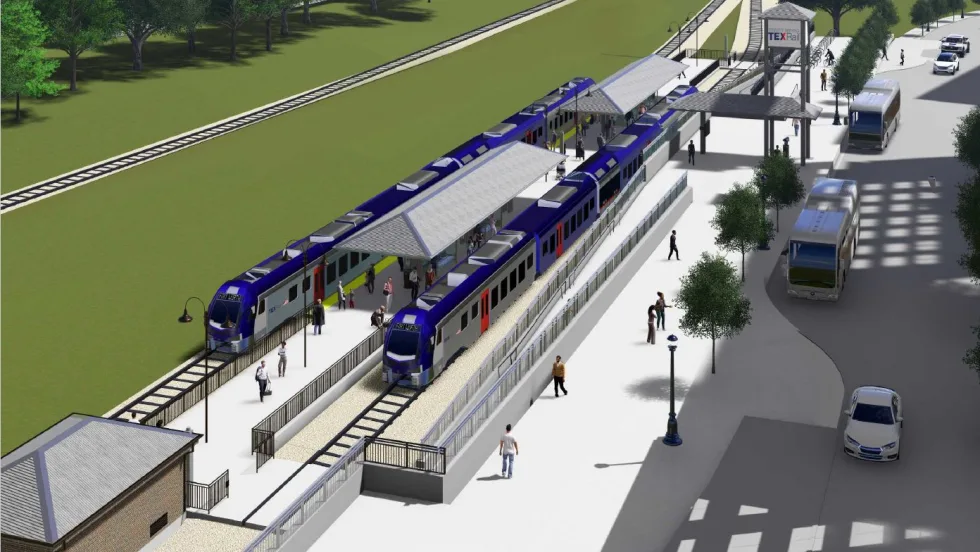
Trinity Metro Breaks Ground on $270M TEXRail Extension
The 2.1-mile extension will connect Fort Worth’s Medical District and Near Southside to downtown, surrounding communities, and Dallas-Fort Worth International Airport.
Read More →
Bringing Austin’s First Light Rail System to Life
Austin Transit Partnership CEO Greg Canally discusses the city's nearly 10-mile light rail project, its collaborative approach to project delivery, the importance of community engagement, and the milestones ahead as construction approaches in 2027.
Read More →
Metra Draft Plan Outlines Costs, Service Improvements for Regional Rail
The Systemwide Network Plan identifies infrastructure needs and potential investments to expand all-day, bidirectional rail service across the Chicago region.
Read More →
Amtrak Completes First Street Tunnel Upgrades, Restores Service
The nine-day construction project included replacing aging track infrastructure and modernizing switch systems near Washington Union Station.
Read More →
FRA Announces $2.3B for Passenger, Freight Rail Projects Nationwide
The CRISI Grant Program funding will support rail infrastructure improvements, safety upgrades, and projects aimed at improving freight and passenger rail service across 45 states and Washington, D.C.
Read More →
Caltrain’s Electrification Drives a New Era of Ridership Growth
The railroad’s shift to electric service has brought more frequent trains, stronger customer satisfaction, and increased ridership, earning it APTA’s Outstanding Public Transportation System award.
Read More →
FTA Advances $164M Broward County Commuter Rail Project
The proposed 10.5-mile commuter rail extension would connect Fort Lauderdale and Aventura, expanding passenger rail options in South Florida.
Read More →
New York MTA Launches Historic $1.9B Signal, Track Modernization Project
Funded in part by congestion pricing revenue, the project will replace nearly century-old signals along the A and C lines in Brooklyn and Queens.
Read More →
LA Metro Breaks Ground on East San Fernando Valley Light Rail Project
The 6.7-mile line will add 11 stations along Van Nuys Boulevard, expand access to jobs and regional transit connections, and support Metro’s broader efforts to improve mobility as rail ridership grows.
Read More →
CSA Group Releases Climate Resilience Standard for Transit, Passenger Rail
Developed with support from the Standards Council of Canada, CSA D700 guides assessing climate-related risks and planning adaptation measures for transit and passenger rail systems.
Read More →