




Related: Cubic's Ventra project hits 1 billionth transaction
Cubic, partners innovate gateless train station tech to speed passenger management
Is working in partnership with Go Ahead Group, Mövement Strategies, Maynard Group and Bristol Robotics Laboratory to develop a concept demonstrator based on advanced ticket detection technologies that can be integrated into a single gateless system.
September 14, 2016
Cubic/CTA
2 min to read
Cubic/CTA
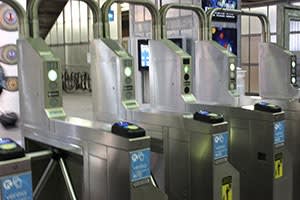
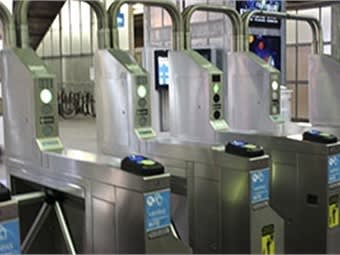
Cubic Transportation Systems (CTS), a business unit of Cubic Corp., along with a diverse team of industry and academic partners, announced a working collaboration to develop a prototype that integrates future ticketing technologies to support a doubled rate of passenger throughput at fare gates in train stations. According to travel projections, the number of journeys for passenger rail is likely to double over the next 30 years.
Cubic’s submitted proposal, titled “FasTrak Gateless Gateline,” to the Railway Standards and Safety Board’s (RSSB) “Future Ticketing Detection” competition is currently being developed at the Cubic Innovation Centre in London. Cubic is among three entrants selected earlier this year by the RSSB to receive funding from the British government to develop a prototype of the proposed solution.

Cubic is working in partnership with Go Ahead Group, Mövement Strategies, Maynard Group and Bristol Robotics Laboratory to develop a concept demonstrator based on advanced ticket detection technologies that can be integrated into a single gateless system. This detection method — which eliminates the physical barrier of the gate — has the potential to double passenger throughput.
FasTrak uses a variety of advanced technologies to seamlessly detect passenger tickets, allowing them to walk normally through fare gates without compromising the operator’s revenue protection. FasTrak will also ensure revenues are collected for their services through an enhanced and secure technology platform providing a simpler means of identifying and apprehending fare evaders.
“Based on our heritage of building and maintaining the hardware, systems and infrastructure for revenue collection, Cubic recognized the need to embrace a wide range of new technologies — some proven, some emerging — that together will transform the traveler experience,” said Roger Crow, executive VP and managing director, Cubic Transportation Systems Europe. “This project is another example of Cubic’s partner collaborations to find innovative solutions and deliver benefits for travelers and operators alike.”
RSSB created the “Future Ticket Detection” competition to explore new ideas for managing crowds in train stations, monitoring crowd density and directing crowd flow, with the goals of improving passenger safety and security, and protecting revenues for operators.
More Rail

New York MTA Advances Final Contract for Second Avenue Subway Expansion
Contract Four is the largest in the Second Avenue Subway Phase 2 project and includes construction of station infrastructure, tracks, and signals for the subway expansion, MTA officials said. Work on Contract Four will begin in 2027.
Read More →
San Diego MTS Breaks Monthly Trolley Ridership Record
Agency officials said July’s ridership indicates MTS’s continued recovery from the pandemic.
Read More →
Report Examines NJ TRANSIT Reliability, Funding Challenges
The Garden State Initiative analysis examines the roles of Amtrak infrastructure, fleet management, and agency operations while recommending a more performance-based approach to improving reliability.
Read More →
Stadler, CapMetro Sign Long-Term Rail Fleet Support Agreement
Beginning in 2027, Stadler will provide on-site technical expertise, spare parts support, training, and obsolescence management to help extend the reliability and longevity of CapMetro’s GTW fleet.
Read More →
Biz Briefs: Alstom Lands Canadian Contract, LYT to Supply California TSP, and More
In METRO's latest installment, we take a look at recent news from Complete Coach Works, Beep, FlixBus, and more partnerships making headlines across the transportation sector.
Read More →
CATS Gold Line Marks 5 Years of Service, 2.8M Passenger Trips
With a six-mile expansion planned, the Charlotte streetcar is positioned to connect more neighborhoods and major transit hubs across the region.
Read More →
Why Simulating Pedestrian Movement Has Become Essential for Modern Rail Stations
Pedestrian microsimulation is helping rail planners identify bottlenecks, test station designs, and prepare complex transit hubs for growing passenger volumes.
Read More →
Amtrak Begins Major Construction at New York’s Sunnyside Yard
The new maintenance facility will support Amtrak’s Airo trainsets while improving maintenance efficiency and turnaround times in New York.
Read More →
Chicago Leaders Unveil Plans for O’Hare Airport Express Train
The privately developed project would offer a 15-minute trip between downtown and O’Hare’s Terminal 2, with trains operating every 15 minutes on a dedicated track. The service would use battery-electric trains and three existing freight rail rights-of-way.
Read More →
OCTA Maps Out 30-Year Strategy to Protect Coastal Rail Corridor
The draft feasibility report identifies strategies to protect the coastal rail line for decades as the agency continues near-term stabilization and sand placement efforts.
Read More →