




Related: Amtrak taps Alstom for next-generation high-speed trains
Part of Amtrak investment package to modernize D.C. Union Station concourse
Early action construction will start in the fall of 2016 and include the relocation of heating and ventilation. Full-phased construction, funded by the new investment package, is anticipated to start in 2017 and will seek to minimize impacts to all station users.
September 28, 2016

KGP Design Studio/ Grimshaw
2 min to read
KGP Design Studio/ Grimshaw
Amtrak will use a portion of its $2.45 billion investment package in next-generation high-speed Acela Express trainsets and Northeast Corridor (NEC) infrastructure improvements to fund construction for the modernization of Washington Union Station’s passenger rail concourse and the expansion of Amtrak’s D.C.-based fleet maintenance facility.
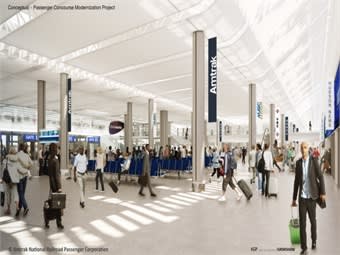
The investment will fund full-phase construction of Amtrak’s Concourse Modernization Project — announced in March — a near-term comprehensive renovation of Washington Union Station’s intercity and commuter concourse that will double the concourse’s current capacity and upgrade key customer amenities including new restrooms, boarding gates, seating and ClubAcela lounge. Design for the project, previously funded with contributions from Amtrak and the Union Station Redevelopment Corporation (USRC), is already well underway.
Early action construction will start in the fall of 2016 and include the relocation of heating and ventilation. Full-phased construction, funded by the new investment package, is anticipated to start in 2017 and will seek to minimize impacts to all station users.
The Concourse Modernization project is the first set of improvements to come to life as part of Washington Union Station’s 2nd Century plan, a comprehensive improvement initiative comprised of multiple projects in coordination with USRC, the Federal Railroad Administration (FRA) and private real estate developer Akridge.
“We are elated that a District of Columbia landmark that is utilized by thousands of residents and visitors each and every day will receive a fresh start,” said D.C. Mayor Muriel Bowser. “This investment in Union Station by the Obama Administration and Amtrak is truly monumental.”
In addition to concourse improvements, funding will be used to modify Amtrak’s fleet maintenance facility in Washington, D.C. The existing two-track high-speed maintenance building in Amtrak’s Ivy City Yard will be expanded to enclose a third track, which supports the creation of highly-technical jobs for the District of Columbia as well as improve the on board and station customer experience that will accommodate the high-speed rail service levels.
Late last month, Amtrak announced it’s contracting with Alstom to produce 28 next-generation high-speed trainsets that will replace the equipment used to provide Amtrak’s premium Acela Express service. Amtrak is funding both the infrastructure improvements as well the new trainsets through the FRA’s Railroad Rehabilitation & Improvement Financing program, which will be repaid through growth in NEC revenues.
In addition to station improvements at Washington Union Station, customers will see improvements at Moynihan Station in New York City, and New Carrollton Station and Baltimore Penn Station in Maryland, as well as track capacity and ride quality improvements to the NEC that will benefit both Acela Express riders and other Amtrak and commuter passengers.
More Rail

New York MTA Advances Final Contract for Second Avenue Subway Expansion
Contract Four is the largest in the Second Avenue Subway Phase 2 project and includes construction of station infrastructure, tracks, and signals for the subway expansion, MTA officials said. Work on Contract Four will begin in 2027.
Read More →
San Diego MTS Breaks Monthly Trolley Ridership Record
Agency officials said July’s ridership indicates MTS’s continued recovery from the pandemic.
Read More →
Report Examines NJ TRANSIT Reliability, Funding Challenges
The Garden State Initiative analysis examines the roles of Amtrak infrastructure, fleet management, and agency operations while recommending a more performance-based approach to improving reliability.
Read More →
Stadler, CapMetro Sign Long-Term Rail Fleet Support Agreement
Beginning in 2027, Stadler will provide on-site technical expertise, spare parts support, training, and obsolescence management to help extend the reliability and longevity of CapMetro’s GTW fleet.
Read More →
Biz Briefs: Alstom Lands Canadian Contract, LYT to Supply California TSP, and More
In METRO's latest installment, we take a look at recent news from Complete Coach Works, Beep, FlixBus, and more partnerships making headlines across the transportation sector.
Read More →
CATS Gold Line Marks 5 Years of Service, 2.8M Passenger Trips
With a six-mile expansion planned, the Charlotte streetcar is positioned to connect more neighborhoods and major transit hubs across the region.
Read More →
Why Simulating Pedestrian Movement Has Become Essential for Modern Rail Stations
Pedestrian microsimulation is helping rail planners identify bottlenecks, test station designs, and prepare complex transit hubs for growing passenger volumes.
Read More →
Amtrak Begins Major Construction at New York’s Sunnyside Yard
The new maintenance facility will support Amtrak’s Airo trainsets while improving maintenance efficiency and turnaround times in New York.
Read More →
Chicago Leaders Unveil Plans for O’Hare Airport Express Train
The privately developed project would offer a 15-minute trip between downtown and O’Hare’s Terminal 2, with trains operating every 15 minutes on a dedicated track. The service would use battery-electric trains and three existing freight rail rights-of-way.
Read More →
OCTA Maps Out 30-Year Strategy to Protect Coastal Rail Corridor
The draft feasibility report identifies strategies to protect the coastal rail line for decades as the agency continues near-term stabilization and sand placement efforts.
Read More →