



Amtrak signs contract with Alstom for new generation, high-speed train
Funding for the trains will come from a $2.45 billion loan via a U.S. DOT railroad rehabilitation program – marking the largest single loan in the agency’s history.

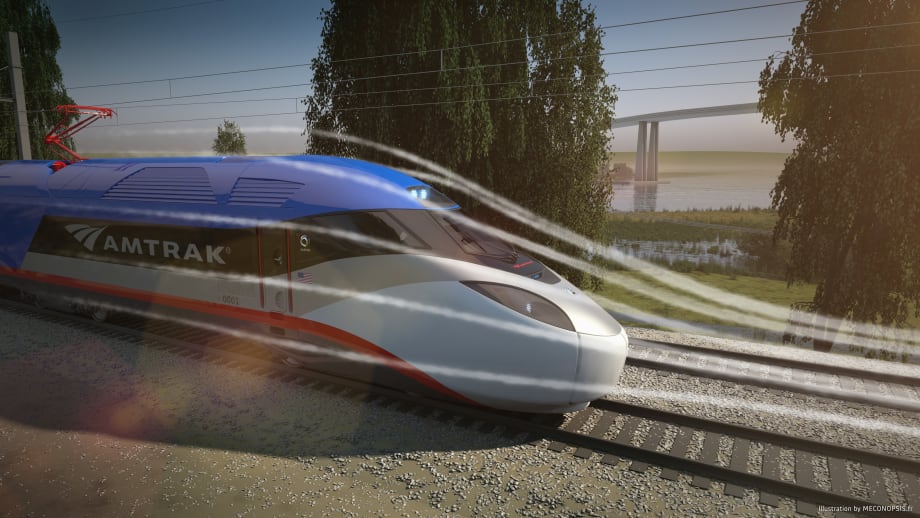
Alstom and Amtrak have signed a contract for Alstom to design and build 28 new high-speed trains, which will run on the Northeast Corridor (NEC) between Boston and Washington D.C. Amtrak and Alstom also signed a long-term contract under which Alstom will provide Amtrak with long-term technical support and supply spare components and parts for the maintenance of the new trainsets. Together, these contracts are worth approximately $2 billion.
The NEC line covers roughly 457 miles. In only 10 years, the number of passengers has increased from 2.4 million passengers in FY 2002 to 3.5 million in FY 2014. As part of an effort to renew and expand their premium product, Amtrak has therefore decided to purchase new trainsets to replace the existing Acela trains, thus increasing passenger capacity, providing more frequent service, minimizing journey times, and improving operating costs and energy efficiency.
Funding for the trains, as well as necessary track upgrades between the New Carrolton and Baltimore stations, and perform station and platform improvements at four of the busiest stations in the NEC, will come from a $2.45 billion loan to Amtrak by the U.S. Department of Transportation's Build America Bureau through its Railroad Rehabilitation and Improvement Financing (RRIF) Program – marking the largest single loan in the Department of Transportation’s history. The loan was announced by Vice President Joe Biden and Deputy Secretary of Transportation Victor Mendez at the Joseph R. Biden Jr. Railroad Station in Wilmington, Del.
“This loan is a key step to providing investments needed to help keep high speed trains moving throughout the region, and to help all commuters in the Northeast Corridor,” Vice President Biden said. “We need these kinds of investments to keep this region — and our whole country — moving, and to create new jobs.”
The train ordered by Amtrak is Avelia Liberty, the latest development of Alstom’s high-speed train range Avelia. The new trainset will be able to carry up to 33% more passengers than the current Acela trains. The trainset configuration includes an innovative compact power car and nine passenger cars, with the possibility of three more being added if demand grows. The train is capable of travelling at speeds up to 186 mph, but will initially operate at a maximum speed of 160 mph, based on NEC track speed limits. Additionally, each concentrated power car is equipped with Alstom’s pioneering Crash Energy Management (CEM) system.
Another key feature is the train’s articulated architecture, which provides greater stability and passenger comfort while enhancing safety. The train also includes Alstom’s innovative Tiltronix anticipative tilting technology, which allows the train to maneuver curves safely and more comfortably at high speeds.
Most of the Avelia Liberty for Amtrak will be manufactured in the U.S. The new trainsets will be manufactured at Alstom’s 150 year-old historic site in Hornell, N.Y. They will be maintained in the depots of Amtrak in Boston, New York and Washington, D.C. under a specific Technical Support and Spare Supply Agreement with additional support from Alstom’s sites in New York, Delaware and Illinois for a period of 15 years, with an option for an additional 15 years.
.
More Rail

New York MTA Advances Final Contract for Second Avenue Subway Expansion
Contract Four is the largest in the Second Avenue Subway Phase 2 project and includes construction of station infrastructure, tracks, and signals for the subway expansion, MTA officials said. Work on Contract Four will begin in 2027.
Read More →
San Diego MTS Breaks Monthly Trolley Ridership Record
Agency officials said July’s ridership indicates MTS’s continued recovery from the pandemic.
Read More →
Report Examines NJ TRANSIT Reliability, Funding Challenges
The Garden State Initiative analysis examines the roles of Amtrak infrastructure, fleet management, and agency operations while recommending a more performance-based approach to improving reliability.
Read More →
Stadler, CapMetro Sign Long-Term Rail Fleet Support Agreement
Beginning in 2027, Stadler will provide on-site technical expertise, spare parts support, training, and obsolescence management to help extend the reliability and longevity of CapMetro’s GTW fleet.
Read More →
Biz Briefs: Alstom Lands Canadian Contract, LYT to Supply California TSP, and More
In METRO's latest installment, we take a look at recent news from Complete Coach Works, Beep, FlixBus, and more partnerships making headlines across the transportation sector.
Read More →
CATS Gold Line Marks 5 Years of Service, 2.8M Passenger Trips
With a six-mile expansion planned, the Charlotte streetcar is positioned to connect more neighborhoods and major transit hubs across the region.
Read More →
Why Simulating Pedestrian Movement Has Become Essential for Modern Rail Stations
Pedestrian microsimulation is helping rail planners identify bottlenecks, test station designs, and prepare complex transit hubs for growing passenger volumes.
Read More →
Amtrak Begins Major Construction at New York’s Sunnyside Yard
The new maintenance facility will support Amtrak’s Airo trainsets while improving maintenance efficiency and turnaround times in New York.
Read More →
Chicago Leaders Unveil Plans for O’Hare Airport Express Train
The privately developed project would offer a 15-minute trip between downtown and O’Hare’s Terminal 2, with trains operating every 15 minutes on a dedicated track. The service would use battery-electric trains and three existing freight rail rights-of-way.
Read More →
OCTA Maps Out 30-Year Strategy to Protect Coastal Rail Corridor
The draft feasibility report identifies strategies to protect the coastal rail line for decades as the agency continues near-term stabilization and sand placement efforts.
Read More →