



First Hitachi-made rail vehicles for Miami-Dade unveiled
The Miami-Dade Metro contract amounts to about $300 million dollars representing a total quantity of 68 trains (136 cars).


Hitachi Rail Italy
Hitachi Rail Italy
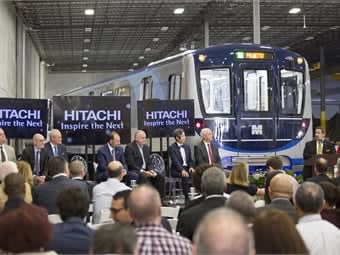
Hitachi Rail Italy unveiled the first rail vehicles for Miami-Dade County.
The October 24, 2016 ceremony took place at the Hitachi Rail Italy factory in Medley, Fla., and saw the unveiling of the first two cars of train number 1 (out of 68 trains in total) that the train maker is manufacturing for the City in Florida.
The Miami-Dade Metro contract amounts to about $300 million dollars representing a total quantity of 68 trains (136 cars). Each vehicle is 45.8 m long, 3.11 m wide and can reach a max speed of 75 km/h. The carbody structure is stainless steel, while the interior fittings are light alloy with integrated lighting and solutions of modular assembly.
“The award of this contract marked the return of Hitachi Rail Italy to the United States after about ten years of absence from the heavy rail market,” said Maurizio Manfellotto, CEO of Hitachi Rail Italy.
The first married pair of Metrorail cars are ready to begin testing, according to the Miami-Dade Department of Transportation and Public Works.
Assembly of the new rail cars, which will replace the current fleet began shortly after the new 140,000-square-foot Hitachi Rail facility opened in March.
These first two new rail cars will undergo a rigorous testing phase that will last approximately eight to nine months. Some aspects of the factory testing include: continuity testing to make sure the wiring is correct; compatibility testing in order to determine if the two cars correctly communicate with each other; high voltage testing to ensure all the wiring is shielded properly; and weight distribution testing to make sure the cars are balanced properly.
Once they are fully operational, the two rail cars will be placed into service. The Department anticipates to have the full fleet of new rail cars (136 total) assembled, tested, and placed into service by the end of 2019.
Aside from the modern exterior, these new trains will include features for riders, such as: Free WiFi, interior bicycle racks, digital displays with media content, a high-quality audio system for announcements, digital signs that will display the name of the next station, and high-efficiency air conditioning units.
More Rail
Florida's Brightline Announces Financial Restructuring
Brightline Florida says train operations will continue as normal as certain parent entities enter Chapter 11 and financial stakeholders provide $490 million in new long-term capital.
Read More →
ENC Lands MATA Contract and More in Biz Briefs
In this edition of Biz Briefs, we spotlight the latest developments shaping the future of mobility.
Read More →
Strada360’s Steve Lassey on Turning Transit Data Into Better Decisions
From breaking down data silos to preparing for AI, Strada360 CEO Steve Lassey discusses how transit agencies can use technology to improve operations, customer information, and long-term decision-making.
Read More →
SEPTA Details Accelerate Vision for Transit System
The plan outlines investments in trolley modernization, new Metro and Regional Rail vehicles, accessible stations, and more frequent bus and rail service.
Read More →
FTA Ends Direct Oversight of MBTA Safety Actions
The federal agency closed its remaining special directive to the Massachusetts Department of Public Utilities following a safety review that began in 2022.
Read More →
Amtrak, CN Reach Agreements to Strengthen Passenger Rail Service, Safety
The agreement resolves a more than decade-long proceeding before the Surface Transportation Board concerning the terms and conditions for Amtrak services, such as the City of New Orleans, Illini/Saluki, and Wolverine.
Read More →
New York MTA Advances Final Contract for Second Avenue Subway Expansion
Contract Four is the largest in the Second Avenue Subway Phase 2 project and includes construction of station infrastructure, tracks, and signals for the subway expansion, MTA officials said. Work on Contract Four will begin in 2027.
Read More →
San Diego MTS Breaks Monthly Trolley Ridership Record
Agency officials said July’s ridership indicates MTS’s continued recovery from the pandemic.
Read More →
Report Examines NJ TRANSIT Reliability, Funding Challenges
The Garden State Initiative analysis examines the roles of Amtrak infrastructure, fleet management, and agency operations while recommending a more performance-based approach to improving reliability.
Read More →
Stadler, CapMetro Sign Long-Term Rail Fleet Support Agreement
Beginning in 2027, Stadler will provide on-site technical expertise, spare parts support, training, and obsolescence management to help extend the reliability and longevity of CapMetro’s GTW fleet.
Read More →