



LA Metro breaks ground on $1.5B Gold Line rail extension
The historic ceremony held over the weekend marks the first Measure M-funded rail project to begin construction.

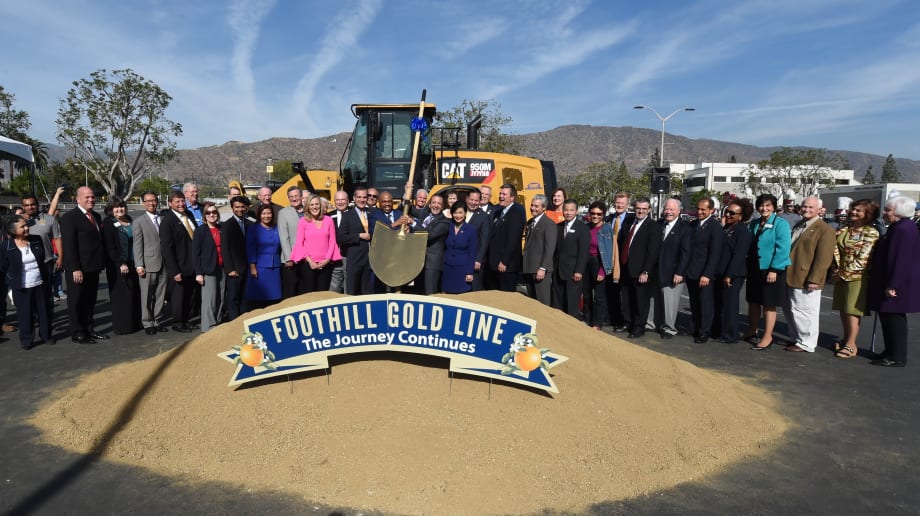
Dozens of elected officials join the Foothill Gold Line Construction Authority to break ground on the Foothill Gold Line light rail extension from Glendora to Montclair.
Dozens of elected officials join the Foothill Gold Line Construction Authority to break ground on the Foothill Gold Line light rail extension from Glendora to Montclair.
Los Angeles’ Foothill Gold Line Construction Authority (Construction Authority) held a groundbreaking ceremony for the $1.5 billion, six-station Foothill Gold Line light rail extension from Glendora to Montclair at Citrus College in Glendora. Attendance at the ceremony was large and diverse, with elected representatives from all levels of government, as well as transportation and higher education officials and hundreds of community stakeholders, joining the Construction Authority to celebrate the start of construction for the 12.3-mile extension. The historic ceremony marks the first Measure M-funded rail project to begin construction.
“When L.A County voters passed Measure M last year, they gave us an unprecedented mandate to create hundreds of thousands of jobs and build one of the most robust public transit systems in the world,” said Los Angeles Mayor Eric Garcetti, Chair of the Metro Board. “Now, it’s our turn to deliver, and that work starts today, with this promising new phase of the Metro Gold Line.”
“Funding the second phase of the Gold Line extension is the perfect example of what we’re trying to achieve through our agency’s comprehensive transportation plan,” said Metro CEO Phillip A. Washington. “As we make transit more available in new communities, we are changing the face of Southern California and creating an infrastructure inheritance for our children and grandchildren.”
The first three years of construction will be used to relocate strategic utilities, conduct pre-construction activities, hire a design-build contractor, and finalize the project design. Major construction will begin in 2020 and consist of two construction phases: (1) relocating/rebuilding the freight/Metrolink systems and (2) building the Gold Line light rail system. Substantial completion is anticipated in 2026.
“The Construction Authority’s team has been working tirelessly over the last few years to ready the Glendora to Montclair segment for construction,” stated Foothill Gold Line CEO Habib F. Balian. “Today is a celebration of that tremendous effort, as well as the partnership that the Construction Authority has with our corridor cities and Metro that allowed this project to be the first Measure M funded project to move forward. We are ready for the work ahead on this transformative project for the San Gabriel Valley.”
Construction alone is expected to generate $2.6 billion in economic output, 17,000 jobs, more than $1 billion in labor income, and nearly $40 million in tax revenues for Los Angeles County. Nearly $2 billion in private investments in transit-oriented developments have already been made or planned within a half-mile of the six future stations from Glendora to Montclair.
When completed, the Glendora to Montclair project will extend the Metro Gold Line light rail line from its eastern terminus in Azusa through the foothill communities in the San Gabriel Valley and into San Bernardino County, adding new light rail stations in Glendora, San Dimas, La Verne, Pomona, Claremont, and Montclair. Each will connect to the expanding rail network in Los Angeles County, as well as the Inland Empire, and provide opportunities for county residents, workers and visitors to connect to many regional and local points of interest along the corridor, including two dozen colleges, the Los Angeles County Fairplex, several outdoor recreation facilities, historical sites and museums, and retail and dining centers.
Funding for the project is coming from both Los Angeles and San Bernardino Counties. The portion of the project within Los Angeles County is being mostly funded by Metro's Measure M half-cent sales tax, as well as residual Measure R funds from the Pasadena to Azusa segment. The portion of the extension from Claremont to Montclair is being funded by San Bernardino County.
More Rail
Trinity Metro Breaks Ground on $270M TEXRail Extension
The 2.1-mile extension will connect Fort Worth’s Medical District and Near Southside to downtown, surrounding communities, and Dallas-Fort Worth International Airport.
Read More →
Bringing Austin’s First Light Rail System to Life
Austin Transit Partnership CEO Greg Canally discusses the city's nearly 10-mile light rail project, its collaborative approach to project delivery, the importance of community engagement, and the milestones ahead as construction approaches in 2027.
Read More →
Metra Draft Plan Outlines Costs, Service Improvements for Regional Rail
The Systemwide Network Plan identifies infrastructure needs and potential investments to expand all-day, bidirectional rail service across the Chicago region.
Read More →
Amtrak Completes First Street Tunnel Upgrades, Restores Service
The nine-day construction project included replacing aging track infrastructure and modernizing switch systems near Washington Union Station.
Read More →
FRA Announces $2.3B for Passenger, Freight Rail Projects Nationwide
The CRISI Grant Program funding will support rail infrastructure improvements, safety upgrades, and projects aimed at improving freight and passenger rail service across 45 states and Washington, D.C.
Read More →
Caltrain’s Electrification Drives a New Era of Ridership Growth
The railroad’s shift to electric service has brought more frequent trains, stronger customer satisfaction, and increased ridership, earning it APTA’s Outstanding Public Transportation System award.
Read More →
FTA Advances $164M Broward County Commuter Rail Project
The proposed 10.5-mile commuter rail extension would connect Fort Lauderdale and Aventura, expanding passenger rail options in South Florida.
Read More →
New York MTA Launches Historic $1.9B Signal, Track Modernization Project
Funded in part by congestion pricing revenue, the project will replace nearly century-old signals along the A and C lines in Brooklyn and Queens.
Read More →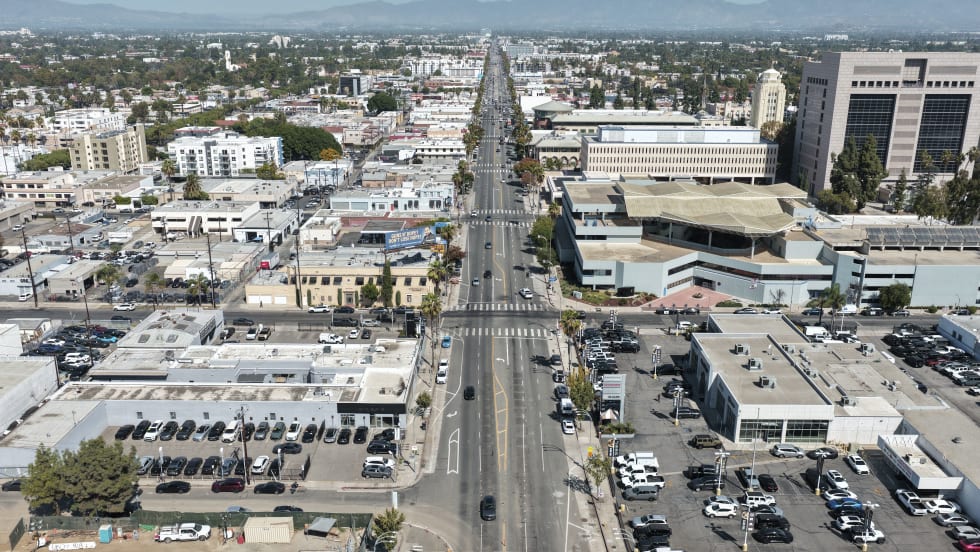
LA Metro Breaks Ground on East San Fernando Valley Light Rail Project
The 6.7-mile line will add 11 stations along Van Nuys Boulevard, expand access to jobs and regional transit connections, and support Metro’s broader efforts to improve mobility as rail ridership grows.
Read More →
CSA Group Releases Climate Resilience Standard for Transit, Passenger Rail
Developed with support from the Standards Council of Canada, CSA D700 guides assessing climate-related risks and planning adaptation measures for transit and passenger rail systems.
Read More →