



NTSB releases preliminary report on NJ Transit crash investigation
In addition, a man who had his finger partially ripped off during the accident is planning to sue the transit agency.


NTS
NTS
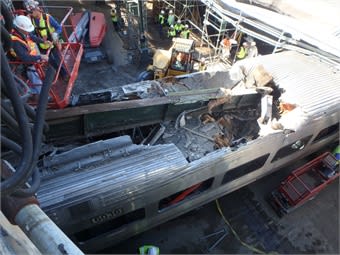
The National Transportation Safety Board released Thursday its preliminary report on the investigation of the Sept. 29, 2016, accident involving New Jersey Transit train 1614 at the Hoboken Terminal, Hoboken, N.J.
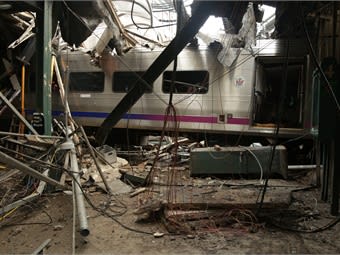
One person died and 110 more were injured when the 400-foot long train, which consisted of a controlling passenger car (cab car), three passenger cars, and one locomotive at the rear, failed to stop, overrode a bumping post, and struck a wall of the terminal.
The preliminary report details factual information gained to date in the investigation. It does not contain analysis and does not state probable cause. The information contained within the preliminary report is subject to change as data is validated.
The NTSB investigator-in-charge formed the following technical groups to gather information and evidence for the investigation: Operations, Human Performance, Survival Factors, Signal Systems, Track and Engineering, Mechanical/Equipment, and Event/Video Data Recorders.
Both the engineer and conductor were interviewed by NTSB investigators. The emergency response to the accident is being reviewed by investigators as are records for operations, signal systems, mechanical equipment, and track and engineering. Investigators inspected the track structure, signal system, and mechanical equipment involved in the accident.
Investigators tested the signal and train control system; the accident route was duplicated with signal alignment and functioned as designed. The signal system was restored to service with the exception of the damaged signal at the end of track 5, the track upon which the accident happened.
NTSB/Chris O'Neil
NTSB investigators found the cab car’s electrical communication network — necessary for brake, signal, and propulsion control — was destroyed in the accident. Conversely, accident damage to the cab car’s air brake system was minor and was repaired for testing. The train brakes functioned as designed during a friction brake test using the rear locomotive to apply the brakes.
To read the full report, click here.
In addition, the New York Daily News is reporting that a man who had one finger partially ripped off in the crash is planning on suing NJ Transit.
The man also suffered deep gashes carved into his head when his train slammed into a restraining barrier at twice the normal stopping speed at the Hoboken station Sept. 29 during his morning commute. For the full story, click here.
More Security and Safety

Transit Agencies Highlight Safety Gains at National Summit
Leaders from 15 major transit systems shared crime-reduction results and safety initiatives while discussing the role of continued federal support.
Read More →
DART Launches Major Security, Fare Enforcement Initiative
The 90-day demonstration will deploy coordinated security teams at five light rail stations while testing controlled access and gathering data to guide future investments.
Read More →
RTD Launches NextRide App to Consolidate Trip Planning, Fares, Security Reporting
The app expands on RTD’s existing NextRide web application and allows customers to view real-time vehicle locations and service alerts, purchase and store digital fares, and access customer support.
Read More →

TAPTCO Updates OSHA Compliance Training for Transit Maintenance Operations
The revamped program addresses 26 OSHA standards for maintenance facilities, with TAPTCO pointing to training, documentation, and everyday shop hazards as continuing challenges for transit operations.
Read More →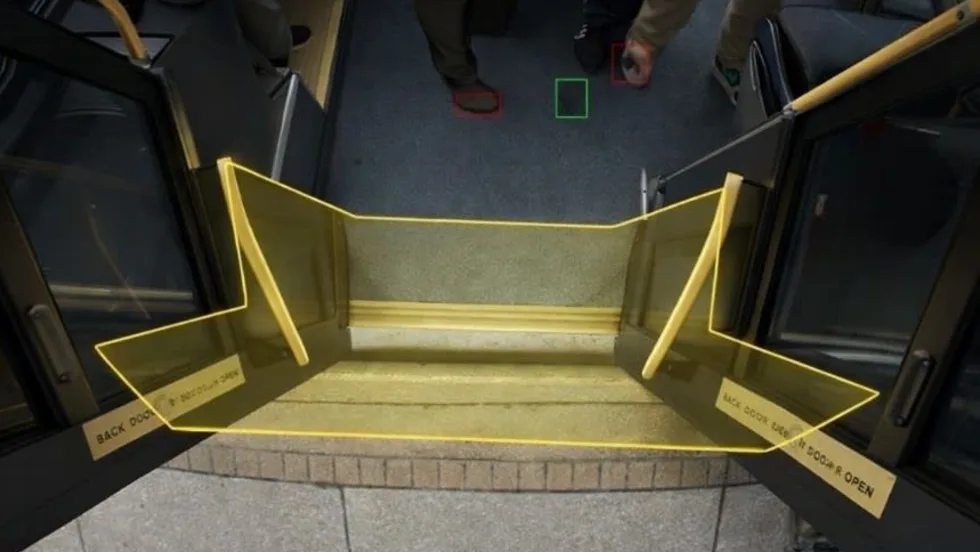
How VaporVision Adds Value to Transit Door Systems
Wabtec engineers explain how the system improves doorway detection, strengthens diagnostics and gives transit agencies and OEMs greater operating flexibility.
Read More →
FRA Announces $5.3B in Rail Investments, Including $2B for Amtrak
Funding will support grade-crossing improvements, infrastructure upgrades, and new Amtrak equipment in 23 states.
Read More →
Chicago, Maryland Expand Non-Law-Enforcement Safety, Rider Support
The CTA and MTA are launching new programs aimed at de-escalation, crisis response, rider assistance, and greater transparency.
Read More →
LA Metro, City of West Hollywood, and Partners Advance Smarter Bus Lane Enforcement
The award-winning partnership combines AI-powered detection with human oversight to improve bus reliability, accessibility, and enforcement efficiency.
Read More →
LA Metro Reports 57% Decline in Homelessness on Transit System Since 2024
The agency's latest homelessness count offers new data on how care-based services and cross-sector partnerships can complement traditional transit security strategies.
Read More →
FTA Launches 'Transit Moves America' Dashboard to Highlight Agency Safety and Performance
The online dashboard transforms National Transit Database information into a public-facing resource that allows users to compare transit agencies on key operational and safety metrics.
Read More →