



What's New in Electric Buses?
METRO spoke to several suppliers in the industry to find out what’s new with the electric vehicles they currently have on the market, their thoughts on the future of electric buses and more.
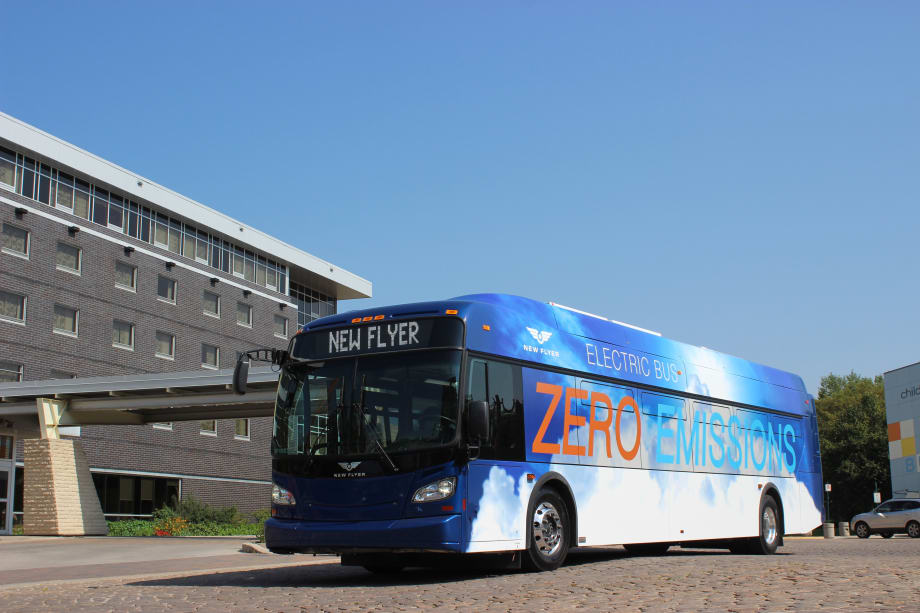
As electric bus technology continues to mature, its place in public transportation vehicle fleets continues to grow more and more viable.
METRO spoke to several suppliers in the industry to find out what’s new with the electric vehicles they currently have on the market, their thoughts on the future of electric buses and more.
Complete Coach Works (CCW)
www.completecoach.com
Earlier this year, CCW delivered the last of 21 rehabilitated Zero Emission Propulsion System-powered (ZEPS) electric buses to the Indianapolis Public Transportation Corp. (IndyGo).
The remanufactured ZEPS bus is rebuilt with lightweight flooring, low-resistance tires, and energy-efficient heating and cooling, while ensuring a reach of 130-mile range on a single battery charge. Each of IndyGo’s 40-foot electric buses carries 36 seated passengers, plus standees, and is equipped with air-operated doors, brakes, suspension, hydraulic power-steering, stainless steel bike racks, LED lighting and lightweight seats.
With the completion of the order, IndyGo now has the largest remanufactured electric fleet in the country. The rehabbed buses were acquired at a fraction of the cost of new all-electric buses, helping minimize cost and environmental impact, with the agency reporting positive results since putting its first ZEPS buses into service in July 2015.
“As agencies across the country are evaluating the Indianapolis project, we are seeing a great influx in more technical questions, which points to agencies becoming more receptive to possibly electrifying their fleet,” explains Ryne Shetterly, ZEPS sales manager. “As the IndyGo project continues to provide real-world information, transit properties are starting to realize just how easy going electric can be.”
CCW is set to deliver two more buses to Gardena, Calif.’s GTrans and five ZEPS buses to TransIT Services of Frederick County, Md., this year.
The cost of the five Frederick County buses and charging stations are being covered through a combination of federal, state and local grant funding, with construction set to include laying conduit for up to 10 more charging station in the future.
Each of TransIT’s ZEPS bus is expected to save the agency $464,000 in maintenance and fuel costs over their 12-year lifespan, totaling $2.3 million of savings over the lifetime of the buses, according to CCW.
New Flyer
www.newflyer.com
New Flyer is expanding its battery-electric portfolio with the addition of a 60-foot battery-electric articulated bus, available with up to five doors.
Built upon the Xcelsior® platform, New Flyer’s battery-electric offerings now include the XE35, XE40 and XE60 models, with battery options ranging from 100 to 300 kWh. Each of these is compatible with plug-in and on-route rapid charging capability.
“Advantages for utilizing a common platform approach have proven successful across many industries. In the aeronautical industry, for example, manufacturers and operators have jointly driven down fleet costs using common airframes, standardized operational procedures and readily available service parts,” says Chris Stoddart, VP, engineering services. “Likewise, integrating the New Flyer electric propulsion on the Xcelsior® platform provides tremendous lifecycle cost advantages, which will yield the best electric bus value.”
Now available on all New Flyer battery-electric buses is New Flyer’s Connect® telematics and support system. Connect® provides transit agencies the ability to monitor battery-electric fleet operations, real-time vehicle location and diagnostics, state-of-charge status, and driver-regenerative power performance from any secured computer, anywhere, anytime.
With over 5,900 buses designed and manufactured with electric propulsion, including zero-emission trolley-electric and low-emission hybrids, New Flyer currently has six Xcelsior® battery-electric buses in daily service with the Chicago Transit Authority and Winnipeg Transit.
In mid-2016, the Washington Metropolitan Area Transit Authority will receive their first all battery-electric bus — an Xcelsior® XE40.
This year, New Flyer plans to begin Altoona Testing on two new generations of hydrogen fuel-cell buses with 300-plus miles of range capability. The fuel cells build upon the company’s battery-electric bus architecture and use common propulsion and power management components, according to company officials.
In addition to research and development work to increase range capability and charging infrastructure while reducing costs, New Flyer continues to promote and lead efforts with APTA, the Electric Power Research Institute and the Society of Automotive Engineers toward non-proprietary charging systems. This cooperative effort will ensure the future interoperability amongst vehicles and infrastructure investments, and lead to lower costs and long-term infrastructure stability to effectively deploy battery-electric technology. New Flyer expects these standards will be in affect within 24 to 30 months.
Nova Bus
www.novabus.com
The 100% electric Nova LFSe offers the same options as any Nova LFS vehicles, such as interior layout, seats or ITS equipment. Additionally, the LFSe comes standard with Nova’s new electrified accessories series, which includes an electric power steering, an oil-less air compressor and an electrified air conditioning system.
Externally, the LFSe is differentiated with a new rooftop styling offering a distinctive look while protecting rooftop equipment.
“Driving an LFSe is smooth and straight-forward, just as any other Nova Bus vehicles however, its quiet propulsion creates an unparalleled driving and riding experience for everyone aboard and off-board to enjoy,” says Jean-Yves Vallée, director, product planning for Nova.
The Nova LFSe integrates four Volvo high-voltage lithium-ion batteries in parallel, limiting operational cost for pack replacement. Vehicle on-route charging is completed in approximately five minutes, using an overhead inverted pantograph system, which removes the extra weight and additional parts from the transit bus.
Currently, there are three LFSe buses on the road, with three more about to hit the assembly line to ultimately take part in a Volvo City Mobility Demonstration project in Montreal.
The Volvo City Mobility program is intended to bring together the expertise of public and private-sector players in a joint transportation electrification project, with Montréal the first North American city to take part. The project consists of installing two quick-recharging stations along one of the Société de transport de Montréal’s routes to put three fully-electric Nova LFSe buses into passenger service. The two quick-recharging stations were set to be built this spring 2016, with testing set to begin later this year.
“For Nova Bus, Electro Mobility is the road to the future and we plan to support more electrification projects in North America for the short- and long-terms,” says Vallée on the future of Nova’s electric buses. “Lower energy consumption, lower environmental impact, cleaner exhaust, and more silent operation are properties that are highly interesting to both bus operators and society. Accordingly, demand is rapidly increasing for transport solutions using vehicles that operate completely or partly on electricity.”
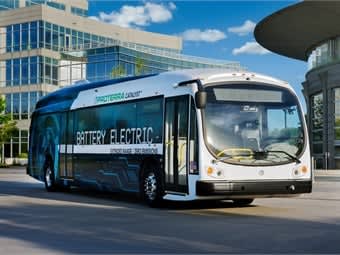
Proterra
www.proterra.com
To accommodate increased customer demand for advanced mass transit buses, Proterra introduced a new 35-foot vehicle based on the same technology platform as its 40-foot Catalyst vehicle. The new 35-foot Catalyst provides customers with nimble maneuvering and enhanced automated features, including collision avoidance and traction control in a smaller model for dense urban areas, building on the performance of the 40-foot Catalyst vehicle.
Dallas Area Rapid Transit (DART) will be the first customer to receive seven, 35-foot Catalyst buses. The seven buses will reduce DART’s emissions footprint while providing a clean, quiet ride for the agency’s 250,000 daily riders.
“We’re pleased to have Dallas as our first customer as they redefine their urban core and invest in a Smart City vision, prioritizing infrastructure, mobility and connected living,” said Proterra’s CEO Ryan Popple, when the announcement was made.
The Catalyst offers customers the flexibility to change or upgrade the energy storage and charging systems as their transit needs evolve. By choosing from two base vehicle sizes, then configuring each bus with the right type of energy storage and charging systems, transit agencies can meet each route’s daily range requirements, remain adaptable to future changes, eliminate fossil fuel emissions in their communities and ultimately save money over the lifetime of their vehicles, explains Steven Brewster, Proterra’s communications manager.
Currently, there are 60 Proterra vehicles on the road, which have logged two million service miles and eliminated more than seven million pounds of CO2 emissions.
“Conducive policies, public support and lowering battery-technology costs are all playing critical roles in accelerating continued adoption of advanced technology transit vehicles and improving heavy-duty mobility solutions throughout the U.S.,” says Brewster on the public transportation industry’s growing usage of electric buses. “In the meantime, there are still 70,000 diesel buses on the road that make our air less healthy. Diesel is the most dangerous transportation pollutant out there. Nobody should be running diesel buses five years from now, but we know it won’t be that easy and will do our part to help propel the electric bus industry toward a critical adoption tipping point.”
More Technology

Beyond the Checklist: A Structured Approach to Transit Maintenance
Reliability-Centered Maintenance helps transit agencies move beyond routine checklists to focus limited resources on the assets and failures that have the greatest impact on safety, reliability, and service.
Read More →
NJ TRANSIT Advances Bus Technology Upgrades Across Statewide Fleet
More than 1,500 buses now feature upgraded technology designed to improve arrival predictions and provide free Wi-Fi, with deployment expected to reach nearly 2,000 buses by the end of 2026.
Read More →
Building a Flexible Path to Transit Electrification
John Hroncich discusses BAE Systems’ modular and scalable approach, lessons learned from decades of real-world operations, and how agencies can identify electrification strategies that fit their fleets.
Read More →

Biz Briefs: Alstom Lands Canadian Contract, LYT to Supply California TSP, and More
In METRO's latest installment, we take a look at recent news from Complete Coach Works, Beep, FlixBus, and more partnerships making headlines across the transportation sector.
Read More →
From Legacy Silos to Conversational Intelligence
What if transit leaders could ask any operational question and get a trusted answer in seconds? Conversational AI is transforming how agencies use their data.
Read More →
USDOT Announces Rail Vehicle Replacement Grants, Chattanooga AV Shuttle Funding
More than $191 million in federal funding will help three transit agencies replace aging rail vehicles and support a new autonomous shuttle service in Chattanooga.
Read More →
Bus Tech Talk: Keeping Transit Technicians Ahead of the Technology Curve
LA Metro’s Obed Mejia discusses technician training, evolving maintenance technology, fleet replacement, and strategies for getting the most out of today’s transit fleets.
Read More →
Biz Briefs: RIPTA Unveils New Frontrunners, Clevland RTA Adds New Siemens, and More
In METRO's latest installment, we take a look at recent news from Siemens, Prevost, Dodge, and more partnerships making headlines across the transportation sector.
Read More →
Why Simulating Pedestrian Movement Has Become Essential for Modern Rail Stations
Pedestrian microsimulation is helping rail planners identify bottlenecks, test station designs, and prepare complex transit hubs for growing passenger volumes.
Read More →
APTA Transform Conference & EXPO Exhibitor Spotlight
METRO’s Exhibitor Spotlight provides a quick look at some of the companies exhibiting at this year’s event, including where to find them on the show floor.
Read More →