




Related: Louisville's TARC Charges Toward the Future with Green Fleet Upgrades
Proterra's Catalyst breaks Altoona records in energy efficiency and more
Additional records include gradeability, weight and acceleration. While conventional diesel buses average 3.86 MPG, the Proterra Catalyst achieved the best efficiency rating ever for a 40-foot transit bus at 22 MPGe.
June 10, 2015
3 min to read
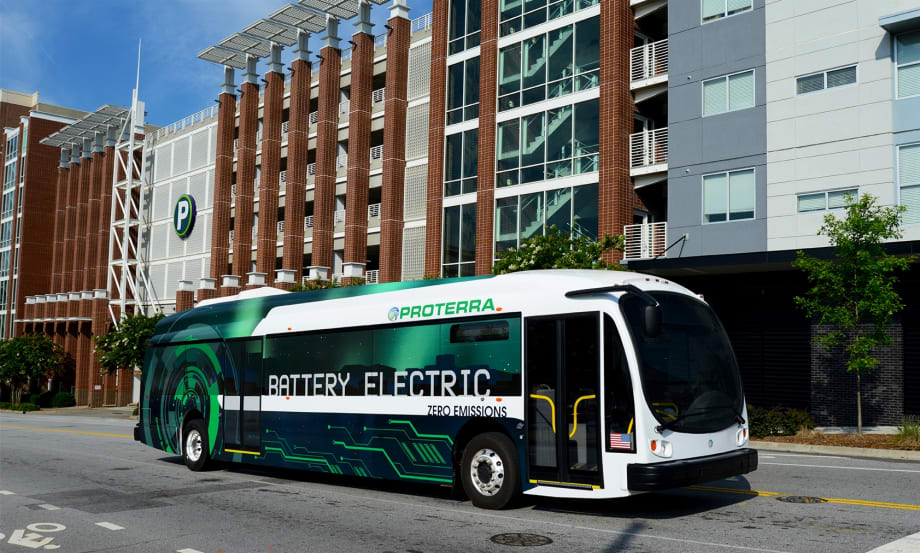
Proterra, provider of zero-emission battery-electric buses, announced it has not only completed the structural testing program at the Altoona Bus Research and Testing Center, the transportation industry’s gold standard, but its new Catalyst bus broke records for efficiency, gradeability, weight and acceleration.
While conventional diesel buses average 3.86 MPG, the Proterra Catalyst achieved the best efficiency rating ever for a 40-foot transit bus at 22 MPGe. Nearly six times more efficient than a diesel or CNG bus, the Catalyst is also 15% more energy efficient per mile than the closest competitors’ electric bus on the same test, which translates to a lower lifetime energy consumption of 15%, according to the company.
Notably, Proterra’s new 40-foot bus is more energy efficient per mile than most light-duty trucks and SUVs on the road today.
“The goal of our second-generation vehicle, the 40-foot Catalyst, was to prove that EVs can outperform fossil fuels in transit and the Altoona test results are a testament to how compelling EVs are for this application,” said Proterra’s CEO Ryan Popple. “This level of vehicle performance signals a very promising future for EVs in transit — likely the first major vehicle market that will be able to completely transition to zero-emission vehicles.”
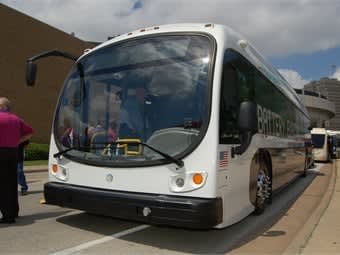
In addition to energy efficiency, the Proterra Catalyst broke records in gradeability, weight and acceleration.
Gradeability has been a historic obstacle for electric buses, which until now, weighed more and had less power, making steep inclines difficult if not impossible to climb. The Catalyst conquered a 15.5% grade, unprecedented in this test by an electric bus, making it an ideal option to serve metropolitan areas with challenging topography in West Coast cities including San Francisco and Seattle.
Made of carbon fiber and advanced composite materials, Proterra’s unibody design is a prime driver for its high performance with regard to weight and durability. With a curb weight of only 27,370 lbs., the Proterra Catalyst is not only lighter than any other electric bus, leading to greater efficiency, but is also more durable than buses made of aluminum or steel and less prone to corrosion. The transit industry has traditionally struggled with vehicle weight, especially for new technologies like hybrid, CNG and EV. By designing the vehicle from the ground-up, using the most advanced technology and materials, Proterra has eliminated the vehicle weight concern for EV.
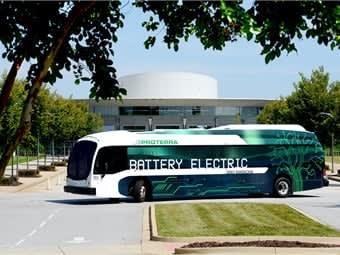
As proof of the vehicle’s superior power-to-weight ratio, the Proterra 40-foot Catalyst also achieved 0-20 acceleration in just 6.7 seconds. Rapid acceleration is particularly critical for keeping routes running on time, allowing bus operators to move in and out of traffic with greater ease.
“To break not one, but four records at Altoona is a major milestone not just for us, but for the industry as a whole and is a testament to how far electric bus technology has come,” said Popple. “In an industry hungry for innovation, to receive these kinds of results from rigorous testing organizations such as Altoona helps to assure transit managers and civic leaders that electric buses can outperform fossil fuel vehicles and are a durable and reliable investment.”
More Technology

From Hardware to Digital Partner: Luminator Charts Its Next Chapter
CEO Magnus Friberg discusses Luminator’s shift toward becoming a digital partner, the growing importance of software and interoperability, and how AI can help agencies improve operations and passenger experience.
Read More →
Beyond the Checklist: A Structured Approach to Transit Maintenance
Reliability-Centered Maintenance helps transit agencies move beyond routine checklists to focus limited resources on the assets and failures that have the greatest impact on safety, reliability, and service.
Read More →
NJ TRANSIT Advances Bus Technology Upgrades Across Statewide Fleet
More than 1,500 buses now feature upgraded technology designed to improve arrival predictions and provide free Wi-Fi, with deployment expected to reach nearly 2,000 buses by the end of 2026.
Read More →

Building a Flexible Path to Transit Electrification
John Hroncich discusses BAE Systems’ modular and scalable approach, lessons learned from decades of real-world operations, and how agencies can identify electrification strategies that fit their fleets.
Read More →
Biz Briefs: Alstom Lands Canadian Contract, LYT to Supply California TSP, and More
In METRO's latest installment, we take a look at recent news from Complete Coach Works, Beep, FlixBus, and more partnerships making headlines across the transportation sector.
Read More →
Sponsored•September 8, 2026
From Legacy Silos to Conversational Intelligence
What if transit leaders could ask any operational question and get a trusted answer in seconds? Conversational AI is transforming how agencies use their data.
Read More →
USDOT Announces Rail Vehicle Replacement Grants, Chattanooga AV Shuttle Funding
More than $191 million in federal funding will help three transit agencies replace aging rail vehicles and support a new autonomous shuttle service in Chattanooga.
Read More →
Bus Tech Talk: Keeping Transit Technicians Ahead of the Technology Curve
LA Metro’s Obed Mejia discusses technician training, evolving maintenance technology, fleet replacement, and strategies for getting the most out of today’s transit fleets.
Read More →
Biz Briefs: RIPTA Unveils New Frontrunners, Clevland RTA Adds New Siemens, and More
In METRO's latest installment, we take a look at recent news from Siemens, Prevost, Dodge, and more partnerships making headlines across the transportation sector.
Read More →
Why Simulating Pedestrian Movement Has Become Essential for Modern Rail Stations
Pedestrian microsimulation is helping rail planners identify bottlenecks, test station designs, and prepare complex transit hubs for growing passenger volumes.
Read More →