



FTA to provide 9 cities with TOD technical assistance
As part of the FTA’s nationwide transit-oriented development initiative, the technical assistance will create opportunities that jumpstart local economies and strengthen communities, with a focus on boosting disadvantaged areas.

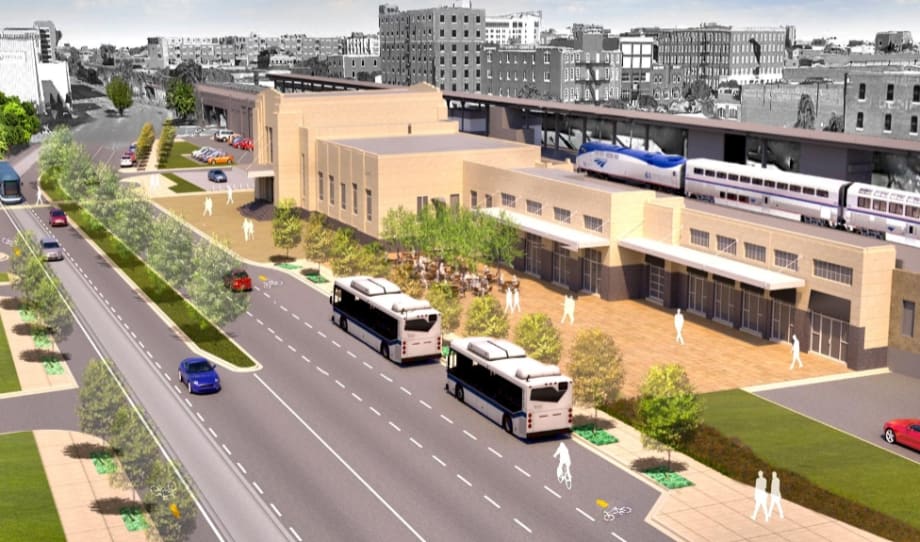
City of Oklahoma City rendering of its Santa Fe Transportatin Hub.
City of Oklahoma City rendering of its Santa Fe Transportatin Hub.
To help communities benefit from existing or planned public transportation projects, the Federal Transit Administration (FTA) selected nine cities to receive technical assistance to encourage economic development around local transit service. As part of the FTA’s nationwide transit-oriented development (TOD) initiative, the technical assistance will create opportunities that jumpstart local economies and strengthen communities, with a focus on boosting disadvantaged areas.
“Helping local leaders leverage their transit investments to attract more affordable housing, commercial development, and jobs is a critical priority for the Department,” said U.S. Transportation Secretary Anthony Foxx. “We’re also extending ladders of opportunity directly to residents, using strategies that support equitable, appropriate development linked to transit service. In these communities, people will now more easily get to where they need to go without relying solely on cars.”
After a competitive process, FTA chose communities in Stamford, Conn.; Honolulu; Moline, Ill.; Louisville, Ky.; Kansas City, Mo.; Oklahoma City; San Antonio; Lynwood, Wash.; and Richmond, Va. for TOD technical assistance, ranging from in-depth, multi-day visits to one-day, targeted workshops.
FTA engaged Smart Growth America to provide a variety of planning and analysis tools tailored to meet local needs. The technical assistance will include planning for and managing economic development near transit through effective zoning and land use as well as expert advice on preserving affordable housing and securing advantageous commercial development, among other opportunities.
Technical assistance will help Lynnwood, Wash., a suburb of Seattle, create strategies to attract development along a planned extension of the Lynnwood Link light rail line. Lynnwood leaders want to plan for a dense, mixed-use community with affordable options for home buyers and renters, as well as ways to attract new businesses to complement local commercial uses.
In Oklahoma City, city leaders will use the technical assistance when they host a series of workshops and neighborhood planning sessions to prepare for the restoration of the city’s historic Santa Fe station transit hub. The project will transform the station into a regional transit center, expanding the Amtrak station and bus depot to include connections to future streetcar, light rail, and commuter rail as well as offices and retail shops. The station renovation project received a $13.6 million 2013 U.S. DOT TIGER grant.
Richmond, Va. also was chosen for technical assistance to further the city’s work to spur TOD along its planned 7.6-mile bus rapid transit (BRT) line. Richmond’s “Pulse” BRT project received a $24.9 million TIGER grant in 2014. Last year, Richmond was named a LadderSTEP city, part of U.S. DOT’s initiative that focuses on revitalization as part of future transportation projects.
More New Mobility

ENC Unveils ZAVIR Medium-Duty Electric Shuttle at APTA EXPO
The new ZAVIR brand targets shuttle and paratransit operations with battery-electric and range-extended electric vehicle options.
Read More →
Public Transit Conference Returning to GFX in 2027, Call for Papers Now Open
The Call for Papers is now open, allowing transit agency professionals and industry experts to help shape the PTC educational program by submitting session ideas for consideration.
Read More →
Everett Transit, Community Transit Outline Consolidation Agreement
The proposed agreement calls for a 50% increase in bus service in Everett, a new microtransit zone, continued paratransit service, and the transfer of Everett Transit operations to Community Transit.
Read More →
What Multimodal Data Can Tell Transit Agencies About Rider Demand
See how bike-on-bus data is giving transit agencies new insight into rider demand, capacity constraints, and gaps in first- and last-mile connections.
Read More →
From Hardware to Digital Partner: Luminator Charts Its Next Chapter
CEO Magnus Friberg discusses Luminator’s shift toward becoming a digital partner, the growing importance of software and interoperability, and how AI can help agencies improve operations and passenger experience.
Read More →
Biz Briefs: Alstom Lands Canadian Contract, LYT to Supply California TSP, and More
In METRO's latest installment, we take a look at recent news from Complete Coach Works, Beep, FlixBus, and more partnerships making headlines across the transportation sector.
Read More →
CharterUP’s Armir Harris on Technology, AI, and the Future of Group Mobility
In a recent episode of METROspectives, CharterUP Founder/CEO Armir Harris discussed the company’s evolution from an online charter bus marketplace into a technology platform supporting public- and private-sector mobility and much more.
Read More →
Jacksonville’s NAVI Project Charts a New Course for Autonomous Public Transportation
Through its NAVI program, JTA is showing how autonomous vehicles, intelligent infrastructure, and coordinated operations can work together to deliver everyday public transportation.
Read More →
Biz Briefs: Luminator Marks Milestone and More
From manufacturers and suppliers to transit agencies and motorcoach operators, these updates offer a snapshot of the projects, partnerships and business moves driving the industry forward.
Read More →
New Tricks for Old Bureaucracies: Joshua Schank on Making Transit Innovation Stick
Former LA Metro Chief Innovation Officer Joshua Schank discusses why good ideas aren't enough, how transit agencies can overcome resistance to change, and why today's challenges demand more innovation.
Read More →