



Delaware Express attends U.S. DOT’s Earth Day Fair in MCI J4500
With nearly zero emissions and generous hip-to-leg room for 56 passengers, Delaware Express removes more than 50 cars from the road.

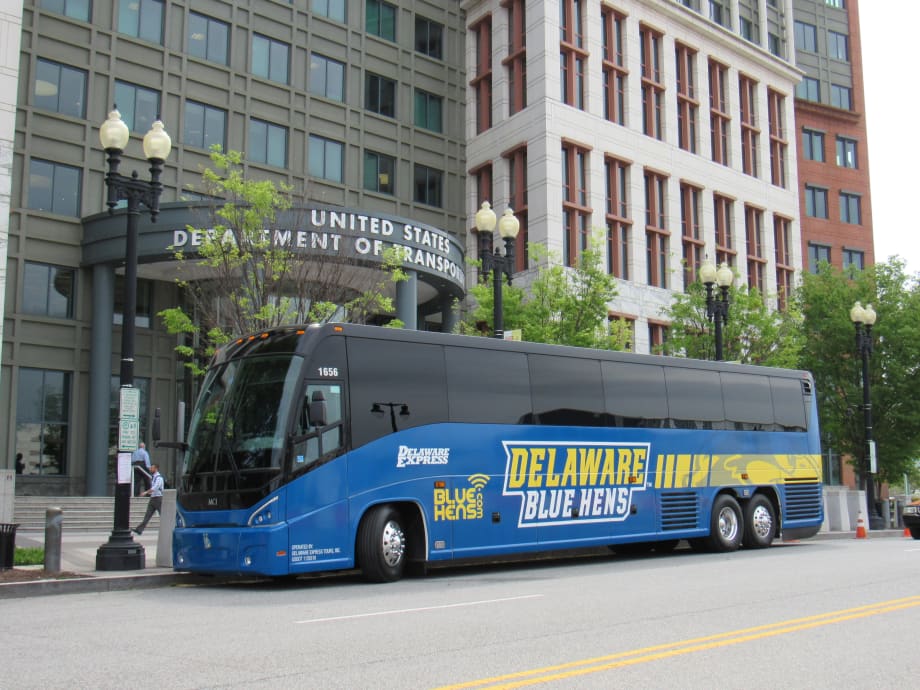

Delaware Express arrived at the U.S. Department of Transportation’s (DOT) Earth Day Fair in the 2016 clean diesel MCI J4500 it uses to carry the University of Delaware’s 22 athletic teams to their competitions. With nearly zero emissions and generous hip-to-leg room for 56 passengers, Delaware Express removes more than 50 cars from the road.
Delaware Express’ specially designed J4500 features an REI Entertainment System with flat screen monitors, power outlets at each seat and Wi-Fi connectivity assuring athletes, coaches, and other passengers a productive and comfortable trip. The MCI J4500 features include Electronic Stability Control and tire pressure monitoring systems.
“We consider it a privilege to transport these student athletes in such comfortable surroundings with the latest in green technology,” said Gerry Frenze, president of Delaware Express. “Environmentally friendly transportation is really important to the university audience and we’re very proud MCI has created a vehicle that can do it all — passenger comfort, state-of-the-art safety features and the greenest form of transportation on the road.”
Motorcoaches are the most fuel-efficient, per-passenger-mile mode of motor transportation, surpassing the car, plane or train, according to an MCI release. Plus, coaches can travel any road to entertainment, sports and vacation destinations. Increasingly, distance commuters are discovering coach transport for comfort, onboard electronics and express scheduling to their workplace with a clean-air option.
Delaware Express’ commitment to the environment
The Newark, Delaware tour and charter company was founded by Frenze in the early 1980s fresh out of the University of Delaware himself. As a student, he noticed an opportunity for providing safe, economical and environmentally sound group transportation, so he started with airport shuttle vehicles.
Today, Delaware Express is one of the East Coast’s major independent transportation companies, growing fast and going green. At 110 employees and 30 years in business, Delaware Express was the first to feature clean-diesel engine technology throughout its entire 24-coach fleet running from Canada to Florida. The company also has 51 vans, a minibus and one limousine.
It continues to add new coaches featuring the latest in emission control, and also runs its fleet of vans and shuttle buses using alternative fuels. Its fuel conservation efforts include GPS systems on its fleet of motor coaches and a driver policy to limit unnecessary idling.
ABA’s Getting There Greener report
The American Bus Association (ABA) has issued a report from the Union of Concerned Scientists entitled “Getting There Greener: The Guide to Your Lower Carbon Vacation.” The report recommends best vacation travel options for various demographics and endorses coach transportation for “using the lowest carbon dioxide emissions per passenger mile” against all competing forms of road, rail or air transport. It’s a helpful guide in planning carbon-efficient vacation travel. To view the report, click here.
More Technology
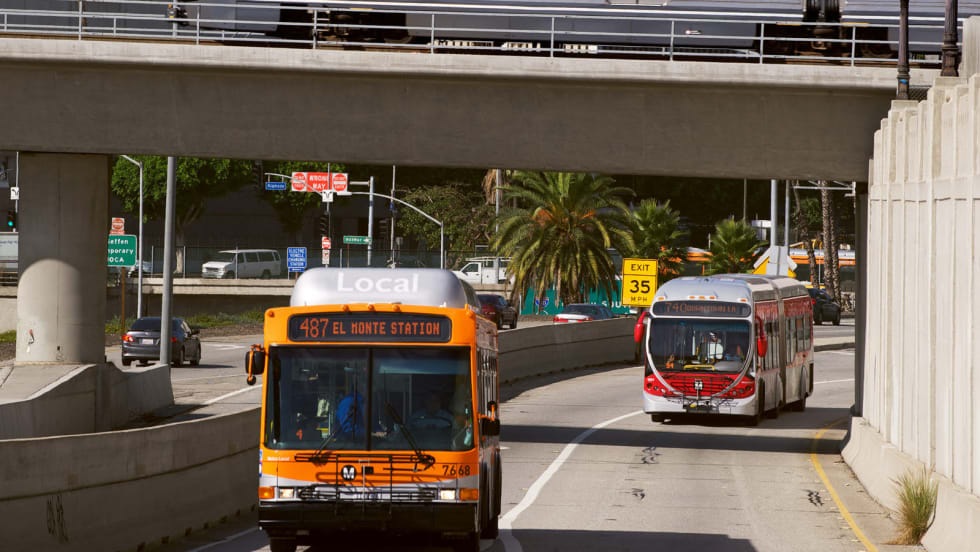
New Tricks for Old Bureaucracies: Joshua Schank on Making Transit Innovation Stick
Former LA Metro Chief Innovation Officer Joshua Schank discusses why good ideas aren't enough, how transit agencies can overcome resistance to change, and why today's challenges demand more innovation.
Read More →
How Data, Strategy, and Community Engagement Are Reshaping Transit
In this edition of METROspectives, strada360 CEO Steve Lassey discusses how transit agencies can better align planning with operations, leverage data to improve decision-making, and build public trust as they prepare for the future of mobility.
Read More →
How DART's GoPass Is Redefining Regional Mobility
Serving 14 transit agencies, GoPass simplifies multimodal travel by allowing riders to plan, pay for, and manage an entire trip through one app.
Read More →
Turn Transit Data Into Action
Discover how leading agencies are using connected technology to gain real-time visibility across operations, improve service reliability, and reduce disruptions.
Read More →
Biz Briefs: OCTA Taps Clean Energy for Hydrogen Station, Stadler to Supply Via Rail Vehicles, and More
From manufacturers and suppliers to transit agencies and motorcoach operators, these updates offer a snapshot of the projects, partnerships and business moves driving the industry forward.
Read More →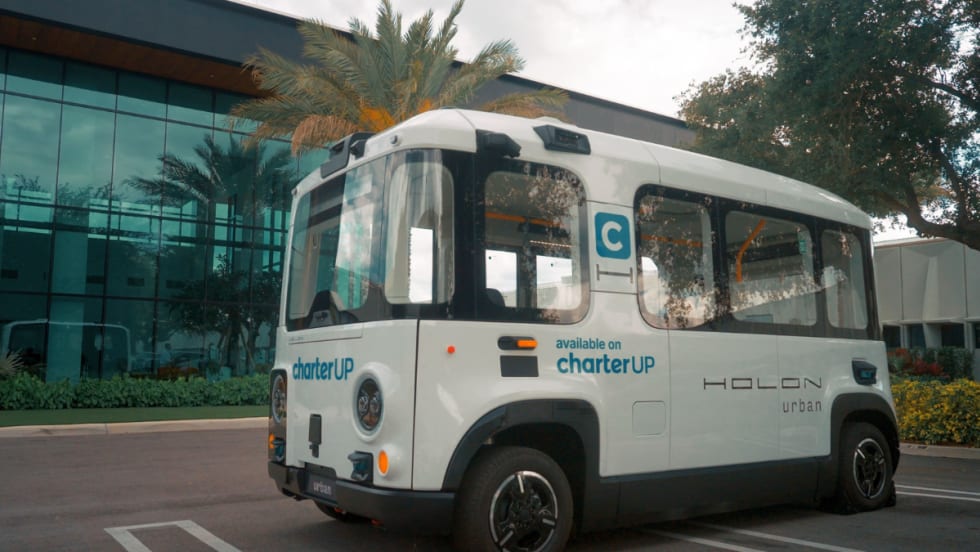
CharterUP Expands Into New Mobility and Autonomous Transportation
Vice President of New Mobility Stephen Joos discusses how CharterUP is leveraging its nationwide transportation network, technology platform, and autonomous vehicle partnerships to expand into workforce mobility, campus shuttles, and transit solutions.
Read More →
METRO Magazine Announces 2026 Innovative Solutions Awards Winners
Projects Recognized for Advancing Mobility Through Technology, Accessibility, Workforce Innovation, and Operational Excellence
Read More →
Cummins Introduces Phased Model Year 2027 Launch Strategy
According to officials, the approach is designed to maintain regulatory compliance, support customer production schedules, and provide additional time to ramp production in a disciplined manner that helps ensure a successful transition for the industry.
Read More →
Biz Briefs: STV teams with Amtrak, Motorcoach Operators Boost Fleet and Land Contracts, and More
From manufacturers and suppliers to transit agencies and motorcoach operators, these updates offer a snapshot of the projects, partnerships and business moves driving the industry forward.
Read More →
DART Taps Nathaniel P. Ford Sr. as Next President/CEO
Since 2012, Ford has served as the CEO of the Jacksonville Transportation Authority
Read More →