



U.S., China kickoff 'Race to Zero Emissions Challenge'
The initiative is a collaborative and friendly competition that encourages cities and metropolitan transit districts in the U.S. and China to deploy innovative and advanced non-polluting Zero Emission Buses in their transit systems.

U.S. Transportation Secretary Anthony Foxx and China’s Minister of Transport Yang Chuantang unveiled the U.S.-China Race to Zero Emissions (R2ZE) Challenge during the eighth U.S.-China Transportation Forum in Los Angeles.
The R2ZE Challenge is a collaborative and friendly competition that encourages cities and metropolitan transit districts in the U.S. and China to deploy innovative and advanced non-polluting Zero Emission Buses (ZEBs) in their transit systems.
“This challenge will hasten the development of new and emerging technologies that will move us away from fossil fuels and race us closer to our ultimate goal of zero emissions, while creating good jobs and economic growth in both the United States and China,” said Secretary Foxx. “This is a win for both of our nations, and an important milestone in our ongoing efforts to deepen technical cooperation and our ties together in support of green-energy transportation objectives.”
Secretary Foxx and Minister Yang Chuangtang also signed a Memorandum of Cooperation to further cement the transportation partnership between the two countries and their cooperation in other areas of mutual interest. These areas of interest include safety, innovation and technology, energy efficiency, urban congestion, and public-private partnerships.
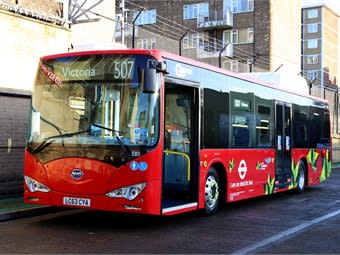
The Race to Zero Emissions Challenge aims to reduce greenhouse gas and criteria emissions while fostering demand and innovation for zero emission heavy-duty vehicle technology. The R2ZE Challenge calls for a long-term commitment by transit agencies to expand green-energy transit fleets with interim targets and a finish line.
The focus on the zero emission technologies stems from the proven benefits of these vehicles to the environment, business and fleet operations. These benefits include pollutant emission reduction, better fuel efficiency over conventional fuels, operational/maintenance cost savings, and market acceleration and job creation. For the purpose of this program, a “zero emissions bus” is a bus that operates in electric-only mode, whether the electricity is supplied by batteries, a fuel-cell or catenary.
The Challenge is open to all U.S. and China cities/metropolitan transit districts. All cities/metropolitan transit districts that voluntarily commit to and subsequently achieve the targets will be recognized as R2ZE Challenge participants. Participants will be able to use the R2ZE logo in promotional materials, attend the annual summit and be featured in U.S.-China press releases.
In addition, a competition will highlight specific categories of achievers, and each year, the U.S. and China will select and recognize cities and metropolitan transit districts in several categories. The U.S. and China will convene an annual conference that will bring together R2ZE participants to share progress made toward the R2ZE goals and lessons learned. The R2ZE participants and winners from the prior year will be announced and recognized during the event.
For more information and details on the challenge and to enroll, click here.
More Technology

From Hardware to Digital Partner: Luminator Charts Its Next Chapter
CEO Magnus Friberg discusses Luminator’s shift toward becoming a digital partner, the growing importance of software and interoperability, and how AI can help agencies improve operations and passenger experience.
Read More →
Beyond the Checklist: A Structured Approach to Transit Maintenance
Reliability-Centered Maintenance helps transit agencies move beyond routine checklists to focus limited resources on the assets and failures that have the greatest impact on safety, reliability, and service.
Read More →
NJ TRANSIT Advances Bus Technology Upgrades Across Statewide Fleet
More than 1,500 buses now feature upgraded technology designed to improve arrival predictions and provide free Wi-Fi, with deployment expected to reach nearly 2,000 buses by the end of 2026.
Read More →

Building a Flexible Path to Transit Electrification
John Hroncich discusses BAE Systems’ modular and scalable approach, lessons learned from decades of real-world operations, and how agencies can identify electrification strategies that fit their fleets.
Read More →
Biz Briefs: Alstom Lands Canadian Contract, LYT to Supply California TSP, and More
In METRO's latest installment, we take a look at recent news from Complete Coach Works, Beep, FlixBus, and more partnerships making headlines across the transportation sector.
Read More →
From Legacy Silos to Conversational Intelligence
What if transit leaders could ask any operational question and get a trusted answer in seconds? Conversational AI is transforming how agencies use their data.
Read More →
USDOT Announces Rail Vehicle Replacement Grants, Chattanooga AV Shuttle Funding
More than $191 million in federal funding will help three transit agencies replace aging rail vehicles and support a new autonomous shuttle service in Chattanooga.
Read More →
Bus Tech Talk: Keeping Transit Technicians Ahead of the Technology Curve
LA Metro’s Obed Mejia discusses technician training, evolving maintenance technology, fleet replacement, and strategies for getting the most out of today’s transit fleets.
Read More →
Biz Briefs: RIPTA Unveils New Frontrunners, Clevland RTA Adds New Siemens, and More
In METRO's latest installment, we take a look at recent news from Siemens, Prevost, Dodge, and more partnerships making headlines across the transportation sector.
Read More →
Why Simulating Pedestrian Movement Has Become Essential for Modern Rail Stations
Pedestrian microsimulation is helping rail planners identify bottlenecks, test station designs, and prepare complex transit hubs for growing passenger volumes.
Read More →