




RELATED: Zero-Emission New Flyer bus deliveries increase by 48% in 2016
MARTA completes New Flyer electric-bus demonstration project
All-electric propulsion system has many benefits including zero tailpipe emissions, reduced noise inside and outside the bus, and low operational and maintenance costs.
January 23, 2017
CNW Group/New Flyer Industries Inc.
2 min to read
CNW Group/New Flyer Industries Inc.
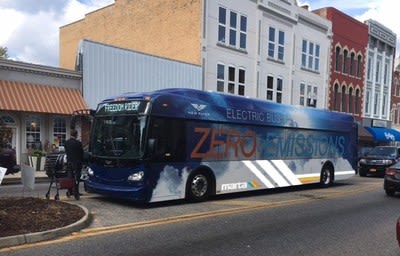
New Flyer of America Inc., a subsidiary of New Flyer Industries Inc., announced a successful three-week demonstration of the New Flyer Xcelsior® XE40 battery-electric bus for the Metropolitan Atlanta Rapid Transit Authority (MARTA).
The three-week electric bus demonstration, which concluded on Dec. 23, transported over 2,200 passengers throughout the region on seven different service routes and yielded over 1,600 in-service miles.
New Flyer's all-electric propulsion system has many benefits including zero tailpipe emissions, reduced noise inside and outside the bus, and low operational and maintenance costs.
"Our electric bus met MARTA's bus rollout each and every day over the course of this demonstration, said Paul Smith, New Flyer’s executive VP, sales and marketing. “Having built over 6,400 buses with electric motors, New Flyer has the proven experience and unique qualifications to deploy electric buses and provide the support our customers rely on for the entire life of the bus."
Xcelsior® electric buses are manufactured in St. Cloud, Minn.; one of New Flyer's three U.S.-based transit production facilities. New Flyer integrates Michigan-sourced lithium-ion batteries into a durable energy storage system designed for North American applications. Close to MARTA in nearby Alpharetta, Ga., Siemens manufactures high-efficiency electric motors and power systems for the Xcelsior's propulsion and regenerative braking system.
New Flyer electric buses have the ability to quick-charge at an equipped bus stop. This capability typically requires only six minutes of re-charge for every hour of service operation. New Flyer also builds extended-range electric buses with more battery capacity. These buses can operate for longer periods during the day, then recharged over-night using plug-in charging. MARTA is considering both types of charging methods for bus operations.
Southern Company, its subsidiary Georgia Power (MARTA's regional utility company), and New Flyer are jointly participating with Electric Power Research Institute and the Society of Automotive Engineers to implement standardized charging equipment and infrastructure to accompany the electric buses.
"We clearly understand the important role we play in supporting continuous air quality improvement in the communities we serve, consistent with our sustainability mission of 'a better product — a better workplace — a better world,'” said Smith. “Our zero-emissions battery-electric bus demonstration in Atlanta follows MARTA's debut of New Flyer's clean-air compressed natural gas (CNG) articulated buses in May 2016. Whether it's battery-electric or low-emissions CNG, each propulsion system with New Flyer's Xcelsior® platform offers both tremendous environmental and operational benefits."
More Technology

From Hardware to Digital Partner: Luminator Charts Its Next Chapter
CEO Magnus Friberg discusses Luminator’s shift toward becoming a digital partner, the growing importance of software and interoperability, and how AI can help agencies improve operations and passenger experience.
Read More →
Beyond the Checklist: A Structured Approach to Transit Maintenance
Reliability-Centered Maintenance helps transit agencies move beyond routine checklists to focus limited resources on the assets and failures that have the greatest impact on safety, reliability, and service.
Read More →
NJ TRANSIT Advances Bus Technology Upgrades Across Statewide Fleet
More than 1,500 buses now feature upgraded technology designed to improve arrival predictions and provide free Wi-Fi, with deployment expected to reach nearly 2,000 buses by the end of 2026.
Read More →

Building a Flexible Path to Transit Electrification
John Hroncich discusses BAE Systems’ modular and scalable approach, lessons learned from decades of real-world operations, and how agencies can identify electrification strategies that fit their fleets.
Read More →
Biz Briefs: Alstom Lands Canadian Contract, LYT to Supply California TSP, and More
In METRO's latest installment, we take a look at recent news from Complete Coach Works, Beep, FlixBus, and more partnerships making headlines across the transportation sector.
Read More →
Sponsored•September 8, 2026
From Legacy Silos to Conversational Intelligence
What if transit leaders could ask any operational question and get a trusted answer in seconds? Conversational AI is transforming how agencies use their data.
Read More →
USDOT Announces Rail Vehicle Replacement Grants, Chattanooga AV Shuttle Funding
More than $191 million in federal funding will help three transit agencies replace aging rail vehicles and support a new autonomous shuttle service in Chattanooga.
Read More →
Bus Tech Talk: Keeping Transit Technicians Ahead of the Technology Curve
LA Metro’s Obed Mejia discusses technician training, evolving maintenance technology, fleet replacement, and strategies for getting the most out of today’s transit fleets.
Read More →
Biz Briefs: RIPTA Unveils New Frontrunners, Clevland RTA Adds New Siemens, and More
In METRO's latest installment, we take a look at recent news from Siemens, Prevost, Dodge, and more partnerships making headlines across the transportation sector.
Read More →
Why Simulating Pedestrian Movement Has Become Essential for Modern Rail Stations
Pedestrian microsimulation is helping rail planners identify bottlenecks, test station designs, and prepare complex transit hubs for growing passenger volumes.
Read More →