




RELATED: Is Your Garage Ready for Alt Fuels?
Laketran opens $1.6M propane autogas fueling station, new buses
The three-phase capital project included engineering, construction of the fueling station, and installation of indoor propane detectors for safety inside Laketran’s 122,000 square foot vehicle storage and maintenance area.
May 18, 2017
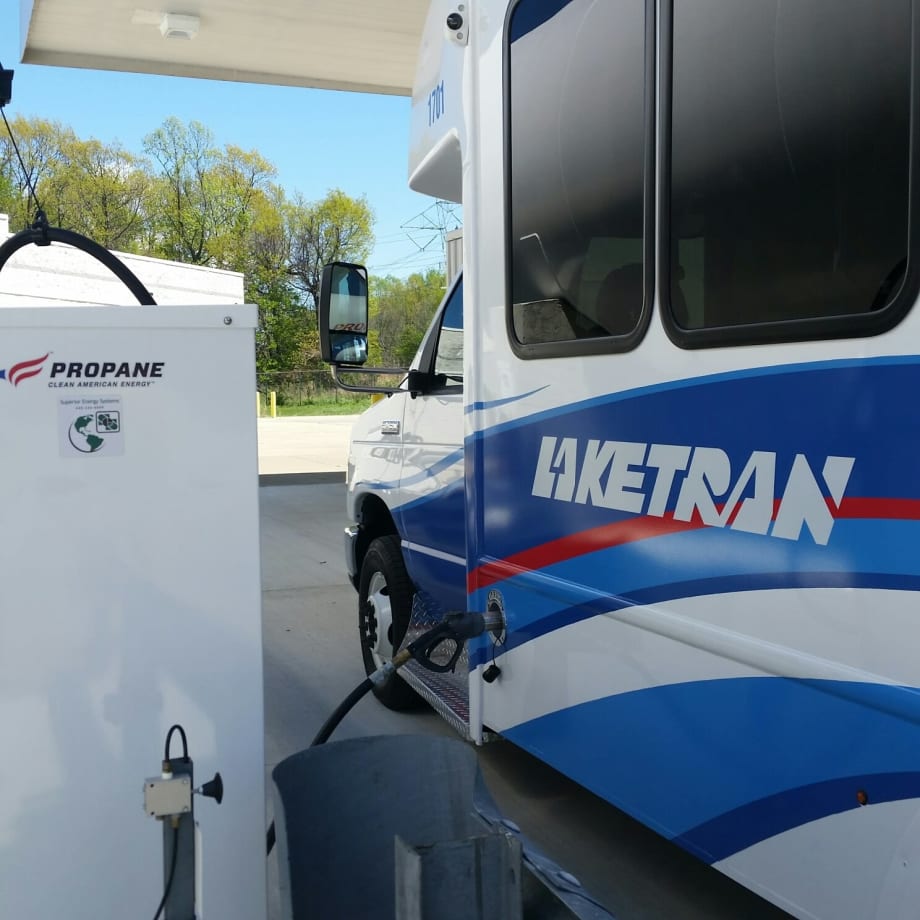
Laketran recently added new propane fueling infrastructure and new vehicles.
2 min to read
Laketran recently added new propane fueling infrastructure and new vehicles.
Officials from Lake County, Ohio’s Laketran commemorated a new 30,000 gallon propane fueling station and propane autogas-fueled public transit buses, which will be used for the agency’s Dial-a-Ride door-to-door, demand-response service.
Laketran will be saving green and going green — the $1.6 million infrastructure investment will bring long term environmental and economic benefit to both Laketran and Lake County, according to the agency’s estimates.
“Tightening standards for emissions and shrinking budgets have been driving the transportation industry toward alternative fuels now more than ever before,” explained Ben Capelle, Laketran’s deputy GM. “Laketran is always looking for more efficient ways to operate and reduce cost. Right now it costs about $64 a day per vehicle to fuel a Dial-a-Ride bus on diesel. We will reduce the cost to about $40 a day per vehicle running on propane.”
The three-phase capital project included engineering, construction of the fueling station, and installation of indoor propane detectors for safety inside Laketran’s 122,000 square foot vehicle storage and maintenance area.
Mentor-based CT Consultants led the engineering effort and the construction of the fueling station was completed by Superior Energy Systems based in Columbia Station, Ohio.
Laketran would not be able to make this transition or maintain its Dial-a-Ride fleet without the support of federal funding. A $416,000 federal investment from the FTA’s Bus and Bus Facilities grant and a $754,000 Congestion Mitigation Air Quality federal grant funds paid for 80% of the cost of the fueling station and vehicles. Laketran provided a local 20% match funded by the agency’s 0.25% local sales tax revenue.
While the agency expects to reduce air pollutants, the low cost and stability of propane fuel helps manage costs during a time when the demand of service continues to grow.
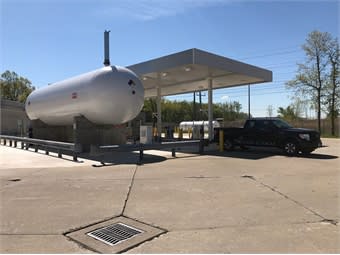
Laketran's newly opened propane autogas fueling station.
Laketran’s Dial-a-Ride ridership has increased 14% over the last three years and has no sign of slowing down. To date, the 2017 Dial-a-Ride ridership is up 3% over 2016 ridership.
The new fleet is made up of Turtle Top’s VT3 and Terra Transit buses that seat either eight or 10 passengers and can accommodate up to three wheelchairs. The entire fleet is ADA accessible and each bus is equipped with a wheelchair lift, fold-up seats to accommodate wheelchairs, slip-resistant flooring, an electronic transit door, and a central heating and cooling unit in response to customer concerns about vehicles being too hot or too cold. To assist with operations each bus as an automatic vehicle locator systems and electronic fareboxes installed along with additional safety amenities include retractable seat belts, clearance lights, and safety cameras.
More Technology

From Hardware to Digital Partner: Luminator Charts Its Next Chapter
CEO Magnus Friberg discusses Luminator’s shift toward becoming a digital partner, the growing importance of software and interoperability, and how AI can help agencies improve operations and passenger experience.
Read More →
Beyond the Checklist: A Structured Approach to Transit Maintenance
Reliability-Centered Maintenance helps transit agencies move beyond routine checklists to focus limited resources on the assets and failures that have the greatest impact on safety, reliability, and service.
Read More →
NJ TRANSIT Advances Bus Technology Upgrades Across Statewide Fleet
More than 1,500 buses now feature upgraded technology designed to improve arrival predictions and provide free Wi-Fi, with deployment expected to reach nearly 2,000 buses by the end of 2026.
Read More →

Building a Flexible Path to Transit Electrification
John Hroncich discusses BAE Systems’ modular and scalable approach, lessons learned from decades of real-world operations, and how agencies can identify electrification strategies that fit their fleets.
Read More →
Biz Briefs: Alstom Lands Canadian Contract, LYT to Supply California TSP, and More
In METRO's latest installment, we take a look at recent news from Complete Coach Works, Beep, FlixBus, and more partnerships making headlines across the transportation sector.
Read More →
Sponsored•September 8, 2026
From Legacy Silos to Conversational Intelligence
What if transit leaders could ask any operational question and get a trusted answer in seconds? Conversational AI is transforming how agencies use their data.
Read More →
USDOT Announces Rail Vehicle Replacement Grants, Chattanooga AV Shuttle Funding
More than $191 million in federal funding will help three transit agencies replace aging rail vehicles and support a new autonomous shuttle service in Chattanooga.
Read More →
Bus Tech Talk: Keeping Transit Technicians Ahead of the Technology Curve
LA Metro’s Obed Mejia discusses technician training, evolving maintenance technology, fleet replacement, and strategies for getting the most out of today’s transit fleets.
Read More →
Biz Briefs: RIPTA Unveils New Frontrunners, Clevland RTA Adds New Siemens, and More
In METRO's latest installment, we take a look at recent news from Siemens, Prevost, Dodge, and more partnerships making headlines across the transportation sector.
Read More →
Why Simulating Pedestrian Movement Has Become Essential for Modern Rail Stations
Pedestrian microsimulation is helping rail planners identify bottlenecks, test station designs, and prepare complex transit hubs for growing passenger volumes.
Read More →