




RELATED: BYD unveils North America's largest electric bus plant
Calif.'s Fresno Transit to add 2 BYD battery-electric buses
The purchase was made possible through funding from the Fresno County Transportation Authority Measure C New Technology funds.
March 30, 2018
2 min to read
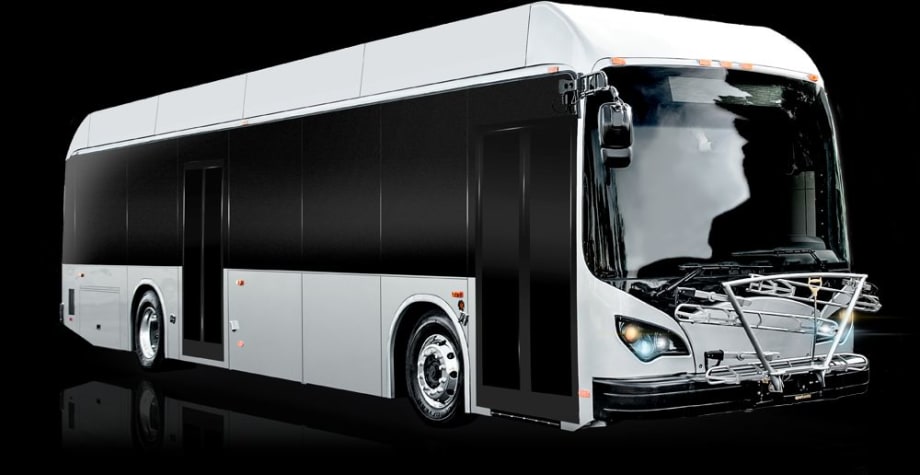
BYD announced a new order that will see two American-made BYD K9S electric buses delivered to the Fresno County Rural Transit Agency (FCRTA). The purchase was made possible through funding from the Fresno County Transportation Authority Measure C New Technology funds.
“We are excited to expand our transportation services with these two new zero-emission buses,” said Moses Stites, GM of FCRTA. “We are one step closer to reaching our goals of providing Fresno County residents with reliable, cost-effective, and environmentally-friendly transportation. The primary reason we selected the BYD K9S electric bus is its expanded range to serve our rural communities.”
FCRTA will unveil a new Express Route that will provide transportation services for individuals that live in Fresno’s surrounding rural communities. The K9S electric buses will be exclusive to the new route due to its range of approximately 150 miles on a single charge.
The K9S features a capacity of up to 32 passengers, depending on the precise configuration. The buses are projected to cost roughly $1 less per mile to operate than typical diesel-powered buses. The new buses also will produce no emissions, make oil changes a thing of the past, and offer dramatically lower maintenance costs.
“We are thrilled to partner with FCRTA to create a more sustainable world,” said Macy Neshati, sr. VP of BYD Heavy Industries. “It’s an exciting time to witness transit agencies, large and small, continue to shift towards electrification — particularly in areas once thought hard to serve.”
The proprietary BYD Iron-Phosphate battery that powers the K9S is manufactured in Lancaster, Calif. The revolutionary battery is non-toxic, 100% recyclable, fire-safe, and incredibly long-cycled. BYD is the first and only electric bus manufacturer to offer a 12-year warranty on its batteries.
FCRTA’s present fleet includes four electric vans (12 passenger) and 44 clean-burning vehicles, alternatively fueled by compressed natural gas in accordance with the Clean Air Act. The K9S buses from BYD will be the first full-sized electric transit buses in the fleet.
More Technology
Almaviva Looks to Open Architecture to Advance Transit Technology
Eric Reese discusses how interoperability, open architecture, and modular design can help transit agencies control costs, reduce vendor lock-in, and upgrade technology without starting over.
Read More →
Driving Smarter Paratransit
John Hanlon shares how AlphaRoute is leveraging AI-powered technology to help paratransit providers optimize operations, support frontline staff, and enhance the rider experience.
Read More →
From Hardware to Digital Partner: Luminator Charts Its Next Chapter
CEO Magnus Friberg discusses Luminator’s shift toward becoming a digital partner, the growing importance of software and interoperability, and how AI can help agencies improve operations and passenger experience.
Read More →

Beyond the Checklist: A Structured Approach to Transit Maintenance
Reliability-Centered Maintenance helps transit agencies move beyond routine checklists to focus limited resources on the assets and failures that have the greatest impact on safety, reliability, and service.
Read More →
NJ TRANSIT Advances Bus Technology Upgrades Across Statewide Fleet
More than 1,500 buses now feature upgraded technology designed to improve arrival predictions and provide free Wi-Fi, with deployment expected to reach nearly 2,000 buses by the end of 2026.
Read More →
Building a Flexible Path to Transit Electrification
John Hroncich discusses BAE Systems’ modular and scalable approach, lessons learned from decades of real-world operations, and how agencies can identify electrification strategies that fit their fleets.
Read More →
Biz Briefs: Alstom Lands Canadian Contract, LYT to Supply California TSP, and More
In METRO's latest installment, we take a look at recent news from Complete Coach Works, Beep, FlixBus, and more partnerships making headlines across the transportation sector.
Read More →
Sponsored•September 8, 2026
From Legacy Silos to Conversational Intelligence
What if transit leaders could ask any operational question and get a trusted answer in seconds? Conversational AI is transforming how agencies use their data.
Read More →
USDOT Announces Rail Vehicle Replacement Grants, Chattanooga AV Shuttle Funding
More than $191 million in federal funding will help three transit agencies replace aging rail vehicles and support a new autonomous shuttle service in Chattanooga.
Read More →
Bus Tech Talk: Keeping Transit Technicians Ahead of the Technology Curve
LA Metro’s Obed Mejia discusses technician training, evolving maintenance technology, fleet replacement, and strategies for getting the most out of today’s transit fleets.
Read More →