




RELATED: SEPTA, Intersection to bring digital upgrades to Suburban Station
NYCT's customer service center taps tech to keeps riders informed
The facility has reconfigured its seating arrangements, installed new signage, a queuing system, integrated digital media and an On the Go Travel Station kiosk.
October 17, 2017
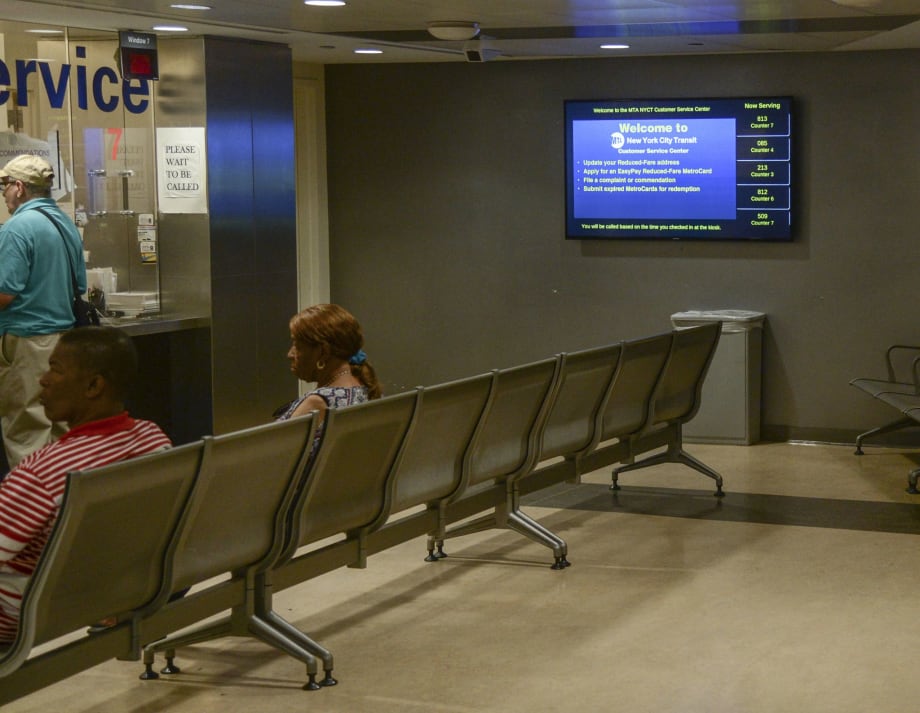
The MTA New York City Transit Customer Service Center, which serves nearly 100,000 customers each year, has undergone an innovative upgrade that provides customers with greater comfort and improved directions on how to navigate the center.
4 min to read
The MTA New York City Transit Customer Service Center, which serves nearly 100,000 customers each year, has undergone an innovative upgrade that provides customers with greater comfort and improved directions on how to navigate the center.
Since the mid 90’s, the MTA New York City Transit Customer Service Center (CSC) has served as the centralized location for customers to visit and access information or assistance for all things related to the services that NYC Transit provides.
The NYC Transit CSC is now in its second home, the first being at the agency’s old Jay Street headquarters in Downtown Brooklyn. The entrance, at 3 Stone Street in Lower Manhattan, is around the corner from MTA headquarters and just steps away from Whitehall Street, Bowling Green and South Ferry subway stations and served by several local and express bus routes.
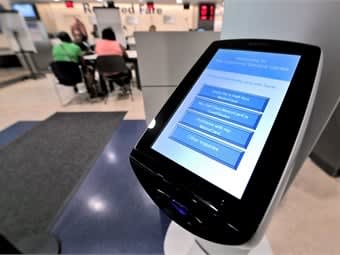
Now instead of standing in line, NYCT customers can use the Qmatic touchpad to self-select the reason for their visit.
Customers visit the CSC seeking services and information on reduced-fare MetroCards, train delay verifications, lost and stolen MetroCards, malfunctioning and damaged MetroCards and change of address notifications for reduced-fare customers.
While still serviceable, the facility was in need of a major update that would allow it to more efficiently serve customers, and make them as comfortable as possible during their visits. The overall goal was to bring the facility into the 21st century. To that end, the facility has reconfigured its seating arrangements, installed new signage, a queuing system, integrated digital media and an On the Go Travel Station kiosk. The improvements are aimed at enhancing the customer service experience.
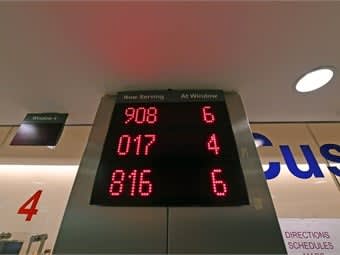
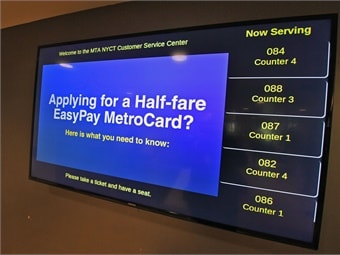
The installation of the QMatic Orchestra queuing system to help improve customer flow throughout the facility.
Before the rehabilitation, customers were faced with long lines, poor space utilization, inadequate navigational signage and limited technology. An important new feature is the installation of the QMatic Orchestra queuing system to help improve customer flow throughout the facility.
Now instead of standing in line, customers can use the Qmatic touchpad to self-select the reason for their visit. The touchpad produces a number, corresponding to the type of service they require. With that number, customers can then sit comfortably and wait to be called. When they’re called, the Customer Service Representative (CSR) is prepared to handle the type of transaction the customer selected. The new system is heavily based on digital displays and touch-screen technology to keep customers engaged and informed.
“By incorporating digital signage, we’re dramatically upgrading our ability to serve and communicate to our customers who visit the CSC while reducing customer friction points,” said Paul Fleuranges, VP, Corporate Communications. “Instead of the static signage we’ve relied on in the past, we can now dynamically change and update information about the products and services we offer at the Center as well as provide engaging agency messaging.”
The Qmatic system installed at the Customer Service Contract (CSC) consists of:
1 QMatic Intro 8 Touch Screen Ticket Printer, which dispenses customer queuing numbers;
3 Qmatic D948 LED Matrix Displays (9x48 pixels) tiered and positioned in the center of the CSC windows to call customers to the next available Customer Service Representative;
7 QMatic D917R LED Matrix Displays (9x17 pixels) with one (1) positioned above every window to direct customers to the proper Customer Service Representative;
QMatic Choral – the audio voice announcer that calls up the customer;
2 65-inch Samsung LCD monitors strategically located within the CSC to that are used to play agency messaging and have a side display to call customers.
Pulling all these items together is Qmatic Orchestra and the Qmatic Cinematic Media Player, which alleviates the need to use a PC or LIVE streaming. The ability to control still and HD moving images allows CSC staff to be creative and deliver important, entertaining and engaging content including queue information, pop-ups and moving images on the right screen at the right time during the customer visit.
The CSC’s interactive On The Go kiosk displays bus and train arrival information, maps, service changes and delays.
The CSC’s interactive On The Go kiosk displays bus and train arrival information, maps, service changes and delays. It also gives customers the chance to match wits with a subways inspired interactive game of Tic-Tac-Toe. The CSC, which serves nearly 100,000 customers each year, has undergone an innovative upgrade that provides customers with greater comfort and improved directions on how to navigate the center.
“The customer experience is the next competitive battleground. They are paying for a service and it is our job to work hard to give them the services that they deserve,” said Cross Siclare, NYC Transit’s assistant VP, Customer Relations. “The more we engage with our customers, the clearer things become and the easier it is to determine what they need. The upgraded Customer Service Center will go a long way towards that effort.”
The Qmatic system, which also provides for better tracking of employee — customer engagement and other metrics went live in early September 2017.
More Technology
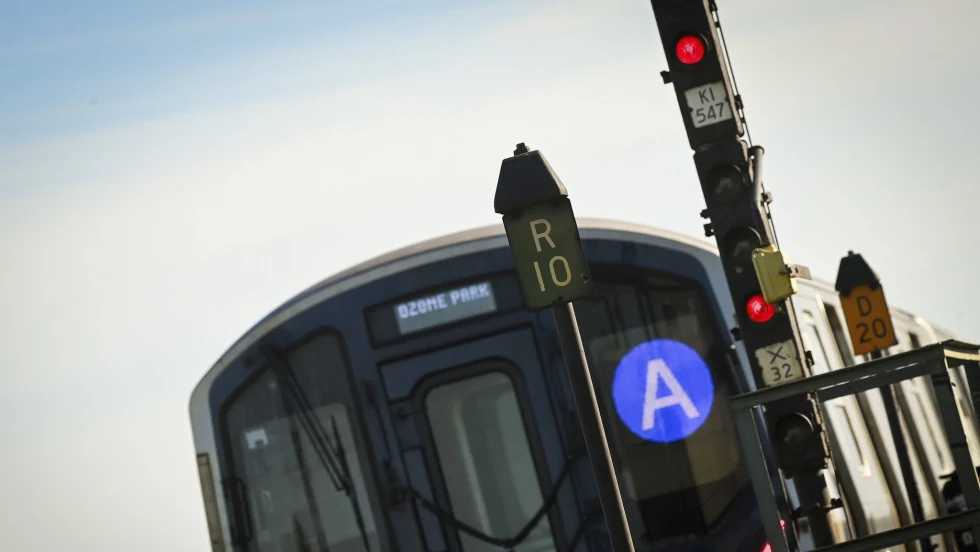
New York MTA Launches Historic $1.9B Signal, Track Modernization Project
Funded in part by congestion pricing revenue, the project will replace nearly century-old signals along the A and C lines in Brooklyn and Queens.
Read More →
Biz Briefs: New Electric Offering from Alexander Dennis/Volvo, Transdev in Boston, and More
In METRO's latest installment, we also take a look at recent news from STV, WSP, Prevost, and more partnerships making headlines across the transportation sector.
Read More →
Roman Cornell on ABC Companies’ Evolution and the Future of Passenger Transportation
The company’s CEO discusses carrying forward a third-generation family legacy, ABC’s continued evolution in passenger transportation, support for increasingly complex fleets, and how technology and continued investment could help operators improve uptime.
Read More →
ETA CEO John Maglio on Transit Technology, Innovation, and Building Agency Trust
ETA founder and CEO John Maglio explores the evolution of transit technology, the importance of reliable systems, and how stronger partnerships can help agencies improve operations and the passenger experience.
Read More →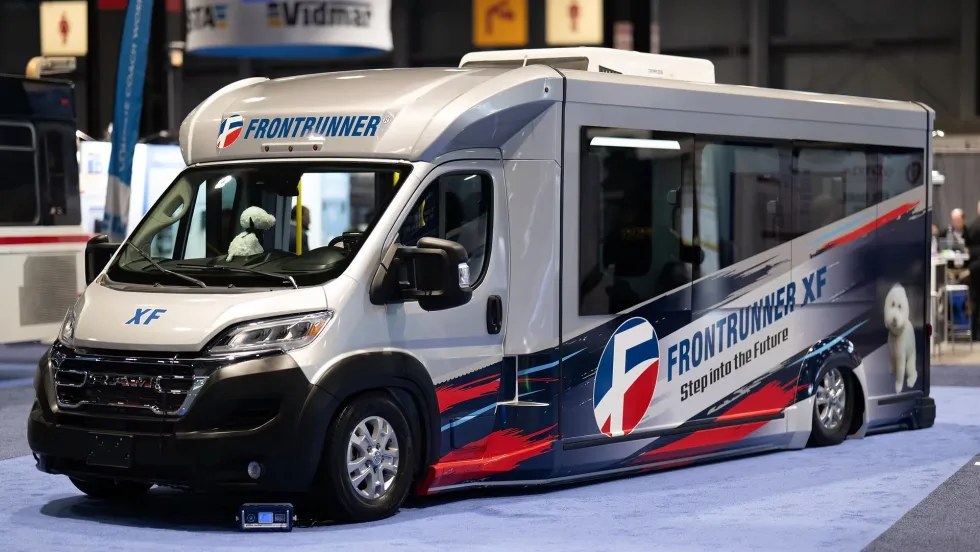
Frontrunner Bus Group Introduces XF Low-Floor Bus with Enhanced Accessibility
The new mid-sized bus features a full flat-floor design, eight-inch curbside step-in height, and zero-entry rear ramp to improve passenger access and operational flexibility.
Read More →
Building a Flexible Path to Transit Electrification with BAE's John Hroncich
John Hroncich discusses BAE Systems’ modular and scalable approach, lessons learned from decades of real-world operations, and how agencies can identify electrification strategies that fit their fleets.
Read More →
Scenes from APTA TRANSform & EXPO 2026
Transit leaders, manufacturers, and industry professionals gathered in Chicago to explore new technologies, share ideas, and discuss the future of public transportation.
Read More →
Biz Briefs: New Flyer Secures Additional 100-Bus Order from WMATA and More
In METRO's latest installment, we also take a look at recent news from Masabi, MCI, Samsara, and more partnerships making headlines across the transportation sector.
Read More →
MTA Fare Gate Pilot Reduces Fare Evasion by 35%
Following a 20-station pilot, the agency plans to install new fare gates at 20 additional subway stations as part of a $1.1 billion modernization initiative.
Read More →
California Law Extends AC Transit’s Bus Lane Camera Enforcement
The new law allows AC Transit to continue using forward-facing bus cameras to enforce parking violations in bus-only lanes and at bus stops.
Read More →