



U. of Waterloo team creates winning transit routing app
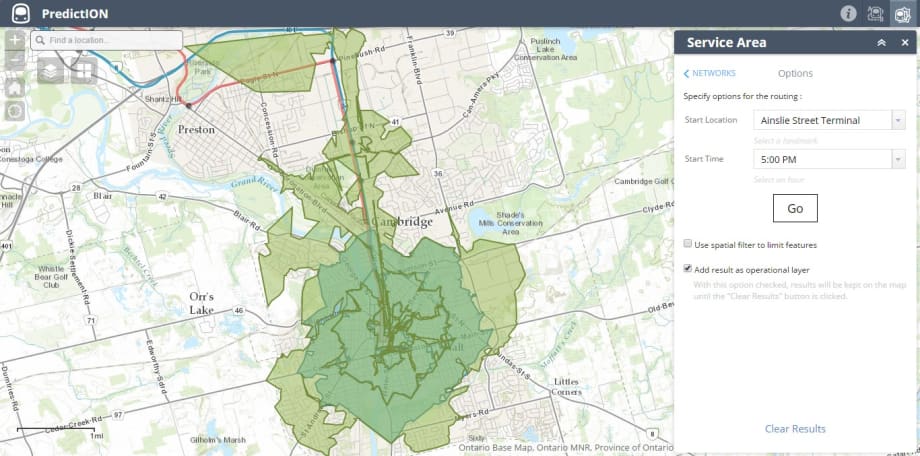
Working as a team, the three students developed PredictION, a transit modeling and routing application that helps citizens to visualize, analyze, and compare routes and service areas between existing and proposed transit systems.

A team from the University of Waterloo won the Esri Canada GIS Centers of Excellence in Higher Education App Challenge. The week-long coding competition encouraged students within the network to build innovative Web apps that use open data and Esri’s geographic information system (GIS) technology to address a specific theme.
Working as a team, the three students developed PredictION, a transit modeling and routing application that helps citizens to visualize, analyze, and compare routes and service areas between existing and proposed transit systems.
“PredictION is an excellent example of how governments, such as transit authorities, can use spatial Web apps to engage citizens in new projects,” said Dr. Brent Hall, director of education and research, Esri Canada. “It’s a powerful and practical tool for informing citizens of possible changes in the transit system, allowing them to make better travel decisions and improve their quality of life.”
For the competition, the team used PredictION to demonstrate the impact on travel times and service areas of the coming ION Rapid Transit lines to the Region of Waterloo’s Grand River Transit network. They used Esri’s ArcGISplatform to integrate, process and display various open datasets, including road and bus networks, transit routes and schedules, regional boundaries and local points of interest. They also used Web AppBuilder for ArcGIS (Developer Edition) to create a highly visual and easy-to-use analysis tool for comparing current and proposed transit services.
PredictION was selected by a panel of GIS and industry experts out of 10 entries. As part of their prize, the team will go on an all-expenses paid trip to the Esri International User Conference in San Diego this July.
To view all App Challenge entries, click here.
More Bus

New York MTA Plans Largest Bus Fleet Upgrade in More Than a Decade
The agency is seeking manufacturers for 650 new CNG buses to replace aging vehicles, improve reliability, and advance its broader fleet modernization strategy.
Read More →
Building a Flexible Path to Transit Electrification
John Hroncich discusses BAE Systems’ modular and scalable approach, lessons learned from decades of real-world operations, and how agencies can identify electrification strategies that fit their fleets.
Read More →
Bus Tech Talk: Keeping Transit Technicians Ahead of the Technology Curve
LA Metro’s Obed Mejia discusses technician training, evolving maintenance technology, fleet replacement, and strategies for getting the most out of today’s transit fleets.
Read More →
Biz Briefs: RIPTA Unveils New Frontrunners, Clevland RTA Adds New Siemens, and More
In METRO's latest installment, we take a look at recent news from Siemens, Prevost, Dodge, and more partnerships making headlines across the transportation sector.
Read More →
People Movement: Holly Arnold Joins Transdev and More
In this edition, we also cover recent appointments and announcements at Pace, CamTran, MCI, and more, showcasing the individuals helping to shape the future of transportation.
Read More →
The High Cost of Transit Buses: Industry Leaders Look to Procurement Reform
Transit leaders and policymakers examine how standardized bus designs, streamlined procurement, and predictable funding could help agencies stretch budgets and deliver better service.
Read More →
The Business Voice Behind Public Transportation
As chair of APTA’s Business Members Board of Governors, Ray Melleady explains how more than 850 business members are partnering with transit agencies to advance funding, innovation, and industry-wide collaboration.
Read More →
From Surviving to Thriving: Building Stronger Transportation Organizations
Bus Business Consultants founder Brian Dickson shares lessons on leadership, organizational health, and creating options for long-term success in a changing transportation industry.
Read More →
Finding the ‘Happy Medium’: Optimizing Maintenance Without Sacrificing Reliability
The key to maintenance optimization isn’t doing less work—it’s doing the right work at the right time on the right assets.
Read More →
LA Metro, City of West Hollywood, and Partners Advance Smarter Bus Lane Enforcement
The award-winning partnership combines AI-powered detection with human oversight to improve bus reliability, accessibility, and enforcement efficiency.
Read More →